|
|
|
|
|
|
|
| |
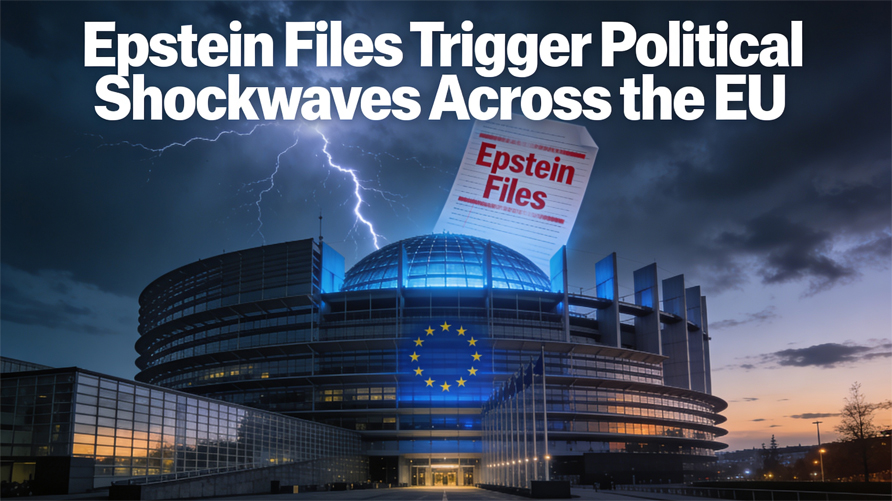
Special
Report:
The
"Epstein
Earthquake"
Rattles
the
European
Union
Patricia
Romero -
International
-
Politics
Tell Us
Worldwide
Network
News
BRUSSELS
/ LONDON
- The
Epstein
files
have
thrown
the
European
Union
into a
deep
political
and
moral
reckoning,
toppling
high‑profile
figures,
triggering
national
investigations,
and
exposing
efforts
to shape
EU
politics
from the
far
right.
Political
fallout
in EU
member
states
Across
Europe,
senior
officials
have
resigned
or been
forced
from
public
roles
after
newly
released
documents
showed
more
extensive
ties to
Jeffrey
Epstein
than
previously
known.
In the
UK,
former
ambassador
to
Washington
Peter
Mandelson
was
fired
and
later
stepped
down
from the
House of
Lords as
police
opened a
misconduct
probe
over his
contacts
and
information
shared
with
Epstein,
contributing
to a
leadership
crisis
for
Prime
Minister
Keir
Starmer.
Similar
turbulence
has hit
Norway,
Sweden,
Slovakia
and
others,
where
high‑ranking
officials
have
quit or
faced
censure
over
trips,
communications,
or
social
ties now
documented
in the
files.
The
documents
also
implicate
former
EU‑linked
figures,
including
Miroslav
Lajčák,
once the
EU’s top
diplomat
in
Bosnia,
who
resigned
as
Slovakia’s
national
security
adviser
after
messages
emerged
discussing
“young
girls”
with
Epstein.
In
Sweden,
UN
official
Joanna
Rubinstein
resigned
after
the
files
detailed
a 2012
visit to
Epstein’s
Caribbean
island,
further
fueling
public
anger
over
elite
impunity.
EU
institutions
and
rule‑of‑law
concerns
The
European
Commission
has
acknowledged
reviewing
parts of
Peter
Mandelson’s
tenure
as EU
trade
commissioner,
when he
exchanged
numerous
emails
with
Epstein,
including
about
visits
and
lobbying
around a
possible
pardon.
Commission
spokespeople
say they
have
reached
“no
concrete
conclusions”
and are
not
proactively
mining
all the
files,
even as
they
admit
they
cannot
rule out
that
other EU
officials
or staff
may be
implicated.
That
cautious
stance
has
sparked
criticism
from
transparency
advocates
and some
MEPs who
argue
that EU
institutions
risk
appearing
complacent
on
corruption,
abuse of
power,
and the
protection
of
minors.
The
scandal
comes as
the EU
promotes
rule‑of‑law
conditionality
and
human‑rights
benchmarks
for
member
states
and
candidate
countries,
creating
a
damaging
perception
gap
between
Brussels’
external
messaging
and its
internal
response.
Legal
experts
warn
that
even if
many
potential
crimes
are
time‑barred,
revelations
about
undisclosed
contacts,
conflict
of
interest,
and
abuse of
office
could
still
carry
political
and
administrative
consequences
inside
EU
structures.
National
investigations
and
security
worries
Several
EU
states
have
launched
or
expanded
investigations
focused
on both
potential
victims
and
national‑security
angles
raised
by the
files.
Latvia,
Lithuania
and
Poland
have set
up
wide‑ranging
reviews
of the
documents,
with
Polish
Prime
Minister
Donald
Tusk
creating
an
analytical
team to
search
for
Polish
victims
and
possible
links
between
Epstein’s
network
and
Russian
intelligence
services.
Warsaw
has
framed
the
issue
not only
as a
child‑protection
matter
but also
as a
question
of
foreign
influence
and
blackmail
risks
among
European
elites.
In
Belgium,
a
political
storm
has
erupted
after
documents
referencing
former
prime
minister
Charles
Michel’s
government
surfaced
in
messages
between
Epstein
and
former
Trump
adviser
Steve
Bannon,
who
boasted
that his
2018
Brussels
speech
helped
precipitate
the
collapse
of the
governing
coalition.
The
Belgian
Socialist
Party
has
warned
that the
episode
may
illustrate
how the
country
served
as a
“test
case”
for
broader
far‑right
strategy
to
destabilize
EU
governments,
drawing
sharp
rebuttals
from
liberal
opponents
who
accuse
them of
conflating
Epstein’s
crimes
with
domestic
political
disputes.
Epstein,
Bannon
and EU
political
engineering
Beyond
personal
scandals,
the
files
shed
light on
attempts
to
reshape
European
politics
from the
fringes.
Newly
disclosed
correspondence
shows
Steve
Bannon
courting
Epstein’s
support
and
funding
to
strengthen
far‑right
and
eurosceptic
parties
ahead of
the 2019
European
Parliament
elections,
including
Marine
Le Pen’s
National
Rally in
France
and
Matteo
Salvini’s
League
in
Italy.
In those
exchanges,
Bannon
boasted
of
advising
leaders
across
the
European
“new
right,”
from Le
Pen and
Salvini
to
Viktor
Orbán
and
Nigel
Farage,
and
predicted
their
bloc in
the
Parliament
could
more
than
double
in size,
enabling
them to
block
“crypto
rules or
anything
we
want.”
Other
messages
reveal
Epstein’s
own
political
musings,
such as
describing
the 2016
Brexit
vote as
“just
the
beginning”
of a
return
to
“tribalism,”
suggesting
he saw
EU
fractures
as part
of a
broader
nationalist
wave he
wanted
to
exploit.
Analysts
at
European
think
tanks
say the
files
highlight
how
access‑driven
networks
around
money,
sex, and
power
blurred
into
projects
to steer
EU
policy,
particularly
on
migration,
financial
regulation,
and
digital
oversight.
Public
trust,
media
scrutiny
and EU’s
next
steps
The
disclosures
have
dominated
headlines
across
Europe,
producing
a level
of elite
accountability
that
contrasts
sharply
with
what
some
observers
describe
as a
more
“muted”
reckoning
in the
United
States.
European
media
have
spotlighted
royal
connections,
disgraced
ex‑ministers
and
ambassadors,
and the
possibility
that
blackmail
or
kompromat
tactics
may have
been
used to
shape
public
policy,
deepening
public
mistrust
toward
governing
classes.
Victims’
advocates
argue
the
scandal
underscores
persistent
failures
to
protect
minors
from
powerful
abusers,
even in
societies
that
pride
themselves
on
robust
legal
safeguards.
Within
the EU,
pressure
is
building
for more
systematic
responses,
including
internal
ethics
reviews,
greater
disclosure
of past
contacts
with
Epstein
and his
associates,
and
potential
EU‑level
inquiries
into
foreign
influence
and
child‑protection
gaps.
With
more
batches
of
documents
expected
and
national
probes
only
beginning
to sift
through
millions
of
pages,
officials
and
analysts
say the
Epstein
files
are
likely
to haunt
European
politics
for
months
or
years,
challenging
the
Union’s
self‑image
as a
global
champion
of human
rights
and the
rule of
law.
|
|
|
|
|
|
|
|
|




 I
HI TECH NEWS
I
SPORTS
I
I
HI TECH NEWS
I
SPORTS
I