|
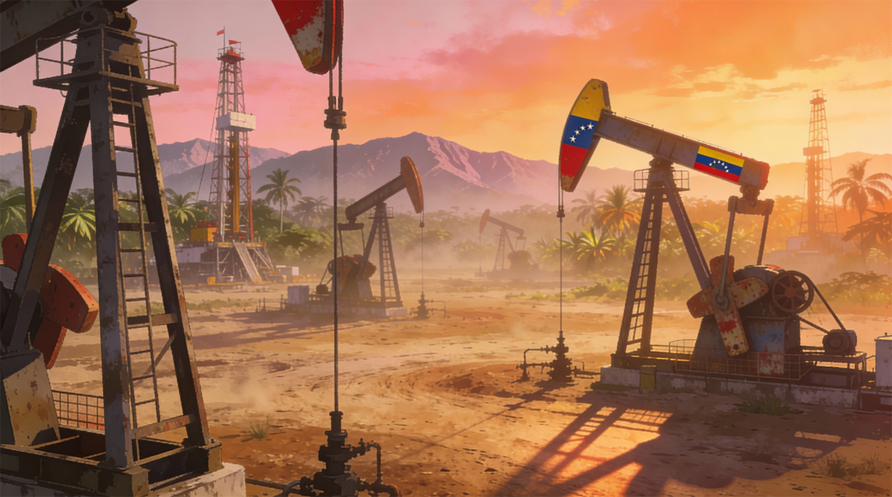
Sunset
bathes a
sprawling
Venezuelan
oil
field in
warm
light as
pumpjacks
rhythmically
work the
dusty
plain
beneath
distant
mountain
silhouettes.
(AI
image
generated
by Tell
Us
Worldwide
Media) |
|
|
|
|
|
 |
 |
 |
|
|
|
|
|
|
 |
|
|
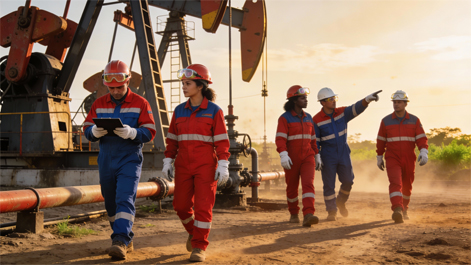
Venezuelan
oil
field
workers
in
bright
safety
gear
move
purposefully
around
towering
pumpjacks
at dusk,
inspecting
equipment
and
coordinating
operations
under
the warm
glow of
the
setting
sun.
(AI
image
generated
by Tell
Us
Worldwide
Media) |
| |
Venezuelan
Oil and
the
Bottom
Line:
What
Texas
Analysts
Really
Think
About
Those
Massive
Reserves
By Clint
Richardson,
Texas
Energy
Analyst
Tell Us
USA News
Network
BEAUMONT,
TX -
Look,
I've
been
covering
the oil
patch
for
thirty
years,
and I
can tell
you this
much:
every
time
Venezuela's
name
pops up
in
energy
circles,
people
start
talking
like
it's the
next big
game-changer.
Three
hundred
billion
barrels
sitting
in the
Orinoco
Belt.
Biggest
reserves
on the
planet.
On
paper,
it looks
like the
kind of
story
that
moves
markets
and
reshapes
economies.
In
reality?
It's a
hell of
a lot
more
complicated
than
that.
Let me
give you
the
straight
talk
from the
analysts
I've
been
talking
to down
here in
Texas.
And I
mean the
serious
ones—the
folks
who've
actually
been in
the
trenches
watching
Venezuela's
oil
sector
implode
over the
past
fifteen
years.
Venezuela's
got
roughly
303
billion
barrels
of
proven
reserves.
That's
not
debatable.
Saudi
Arabia's
sitting
at 267
billion.
So yeah,
Venezuela
owns the
world's
largest
reserves.
It's
real.
The
problem?
Almost
all of
it—we're
talking
the vast
majority—is
extra-heavy
crude
locked
up in
the
Orinoco
Belt,
this
massive
slab of
land
covering
about
21,000
square
miles in
northeastern
Venezuela.
Extra-heavy
crude
doesn't
just
pump out
of the
ground
like
you're
filling
a coffee
cup.
It's
thick.
It's
sour. It
requires
specialized
infrastructure,
expert
technical
knowledge,
and tons
of
capital
investment
just to
get it
out of
the
ground
and
shipped
anywhere
useful.
That's
not a
secret.
Every
analyst
I know
understands
this.
Here's
where
the
disconnect
happens:
people
see
those
barrel
numbers
and
think,
"Well,
that
means
abundant
supply
and
cheap
oil,
right?"
Wrong.
That's
like
saying
you've
got a
billion-dollar
painting
in your
basement
and
getting
excited
about it
when you
can't
sell it
and it's
covered
in mold.
I'll be
blunt.
Venezuela's
currently
producing
around 1
million
barrels
a day.
That's
less
than 1
percent
of
global
production.
A decade
ago,
they
were
pumping
3.5
million
barrels
daily.
That's a
collapse.
And it's
not
happening
because
reserves
dried
up. It's
happening
because
the
infrastructure
is shot,
investment
dried
up, and
the
country's
been in
economic
freefall.
When
you've
got that
kind of
decline,
you're
not
talking
about a
reserve
problem.
You're
talking
about a
political
and
economic
catastrophe
that's
manifested
itself
as an
oil
industry
problem.
And that
matters.
It
matters
a lot.
Michael
Webber
over at
the
University
of
Texas—and
he's
sharp,
one of
the
better
analysts
I
know—has
been
straight
with me
about
this. He
points
out that
multiple
factors
are
driving
energy
markets
right
now, and
Venezuelan
dynamics
are just
one
piece of
a much
larger
puzzle.
He's
right.
People
get
tunnel
vision.
They
want
simple
narratives.
"Oh,
Venezuelan
oil is
coming
back
online,
so gas
prices
will
drop."
It's
never
that
simple.
Phil
Flynn at
Price
Futures
Group
called
this a
"historic
event"
for the
industry,
and
that's
got some
truth to
it. I've
known
Phil for
years.
He
doesn't
oversell
things.
But
here's
what
he's
actually
saying
when you
read
between
the
lines:
yes, if
Venezuelan
production
meaningfully
recovers,
it's a
big
deal.
But—and
this is
the
critical
"but"—the
impact
will be
heavily
shaped
by the
global
competitive
landscape.
Flynn's
point is
that
Venezuelan
crude
would
face
stiff
competition.
You've
got
other
producers
worldwide,
and
they're
not
going to
roll
over.
Canadian
heavy
crude
producers,
Russian
supplies—they're
not
looking
at a
Venezuelan
resurgence
and
thinking,
"Well,
that's
it for
us."
They're
adapting.
They're
competing.
And
Venezuelan
crude,
heavy
and sour
as it
is, can
be
"easily
replaced
by a
combination
of
global
producers,"
in
Flynn's
words.
That's
not
pessimism
about
Venezuela's
reserves.
That's
realism
about
how
global
oil
markets
actually
function.
And
here's
something
else
Flynn
noted
that
stuck
with me:
even if
Venezuelan
oil does
come
back
online,
the net
effect
on the
U.S.
economy
could
end up
being
positive,
despite
creating
more
competition
in the
heavy
crude
market.
More
supply,
assuming
it's
delivered
at
reasonable
cost,
generally
means
more
stable
prices
and
better
energy
security.
That
matters
for
consumers
and for
industrial
competitiveness.
Let me
tell you
what
I've
observed
in the
markets
over the
past
couple
years.
When
people
hear
"Venezuela,"
they
often
expect
fireworks.
Prices
spiking.
Market
chaos.
Reality's
been
different.
Crude's
been in
oversupply.
We've
seen
prices
drop
roughly
20
percent
throughout
2025.
That's
the
condition
of the
market
right
now.
West
Texas
Intermediate's
been
hovering
around
$57 a
barrel.
When the
Trump
administration
seized
Venezuelan
tankers
in
December,
WTI
futures
jumped
about 4
percent.
You know
what
happened
next?
The
market
stabilized.
There
wasn't
this
domino
effect.
There
wasn't
hysteria.
Why?
Because
global
producers
have
spare
capacity.
Because
the U.S.
Strategic
Petroleum
Reserve
exists
as a
buffer.
Because
the
market's
not as
fragile
as
doomsayers
like to
claim.
This is
what
twenty
years in
the
energy
business
teaches
you:
markets
are more
resilient
than
headlines
suggest.
Now, if
Venezuelan
production
suddenly
jumped
to 2
million,
2.5
million
barrels
a day?
Yeah,
you'd
see
downward
pressure
on
prices.
That's
physics,
not
magic.
But
"suddenly"
isn't
how this
works.
Recovery
takes
time.
Serious
time.
Here's
something
worth
paying
attention
to that
doesn't
always
get the
media
spotlight:
diesel.
Venezuelan
crude is
particularly
suitable
for
diesel
production,
and
diesel's
not like
gasoline.
It's the
backbone
of
industrial
logistics.
It
powers
trucking,
shipping,
construction,
agriculture.
It's how
the
economy
actually
moves
goods
around.
The
Atlantic
Council's
been
flagging
this:
lose
Venezuelan
supply,
and
you're
looking
at
potential
diesel
cost
increases
with
inflationary
ripple
effects
throughout
the
economy.
That's
not
theoretical.
That's
something
analysts
have
been
quietly
warning
about in
boardrooms
and
policy
meetings.
It's
worth
watching.
The
Infrastructure
Question
That
Nobody's
Talking
About
Here's
what
frustrates
me as
someone
who's
been
covering
this
sector
for
decades.
People
discuss
Venezuelan
reserves
like
they're
equivalent
to
reserves
anywhere
else on
the
planet.
They're
not.
Extracting
extra-heavy
crude
from the
Orinoco
requires
world-class
infrastructure,
technical
expertise,
and
sustained
capital
investment.
Venezuela's
infrastructure
has been
deteriorating
for over
a
decade.
Chevron's
there.
Houston-based.
They're
operating
in
Venezuela
and
account
for
about a
quarter
of
Venezuelan
production.
But
major
companies?
ExxonMobil?
ConocoPhillips?
They
left
years
ago
after
nationalization
policies.
They're
not
coming
back
without
fundamental
changes
to
Venezuela's
political
and
regulatory
environment.
You want
to know
what
this
means in
practical
terms?
It means
rebuilding
Venezuelan
oil
production
at any
meaningful
scale
isn't a
two-year
project.
It's not
even a
five-year
project.
We're
talking
a decade
or more,
assuming
everything
breaks
right
politically,
economically,
and
diplomatically.
That's
not
pessimism.
That's
based on
talking
to
engineers,
project
managers,
and
executives
who
understand
the
technical
reality.
The
Geopolitical
Wrinkle
I'd be
remiss
if I
didn't
mention
this
because
it's
real and
it
matters:
the U.S.
has cut
Venezuelan
oil
imports
by
roughly
90
percent
over the
past
twenty
years.
China's
the
primary
customer
now.
China's
condemned
any
external
interference
in
Venezuelan
affairs.
If the
U.S.
suddenly
starts
viewing
Venezuelan
oil as
strategically
important
again
and gets
involved
in
helping
rebuild
the
sector,
you're
not just
dealing
with
energy
economics.
You're
dealing
with
U.S.-China
tensions.
You're
dealing
with
questions
about
sovereignty
and
international
relations.
These
aren't
problems
that get
solved
in board
meetings.
They get
solved—or
not—in
geopolitical
power
plays.
What
This
Actually
Means
After
three
decades
covering
this
industry,
I can
tell you
the
consensus
among
serious
Texas
analysts
is this:
Venezuelan
oil is
long-term
important.
It's not
short-term
transformative.
The
reserves
are
real.
The
production
obstacles
are
real.
The
market
is real.
Global
oversupply
means
prices
stay
contained
in the
near
term.
Infrastructure
recovery
would
take a
decade.
The net
economic
impact
for the
U.S.
could be
positive—cheaper,
more
reliable
energy
is good
for
everybody—but
realizing
that
benefit
depends
on
political
stability
and
international
business
relationships
that are
currently
uncertain.
So what
should
you be
watching?
Production
numbers.
Infrastructure
investment.
Political
developments
in
Venezuela.
U.S.-China
relations.
Diesel
prices.
Those
are the
real
indicators
that
matter.
The
bottom
line?
Those
three
hundred
billion
barrels
aren't
going
anywhere.
But
neither
is the
complicated
reality
of
getting
them out
of the
ground,
refined,
and
delivered
to
global
markets
in any
meaningful
way.
That's
not a
headline
story.
That's
just how
the oil
business
works.
|
|
|
|
|
|
|
|
|

 I
HI TECH NEWS
I
SPORTS
I
I
HI TECH NEWS
I
SPORTS
I