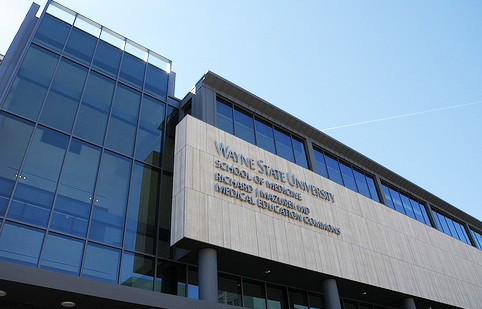
| |
Black
graduation
rates
lowest
in
nation
at 2
area
Universities
By Karen
Hudson
Samuels/Tell
Us
Detroit
DETROIT
(Tell Us
Det) -
Detroit’s
Wayne
State
University
and
suburban
Southfield’s
Lawrence
Technological
University
have the
largest
gaps in
white-black
graduation
rates
among
all
public
and
private
institutions,
respectively
in the
nation.
The
sobering
statistics
are from
a report
released
this
month by
The
Education
Trust
based in
Washington
D.C.
which
studied
graduation
rates
over a
three
year
period,
from
2006 to
2008.
Wayne
State
has the
largest
gap in
black-white
graduation
rates of
all
public
universities
in the
country;
only
9.5% of
black
students
graduated
in the
study
period,
compared
with
43.5% of
whites,
resulting
in a 34%
gap in
graduation
rates.
The
report
noted
that
white
students
at Wayne
State
“are not
being
served
particularly
well”
with
only
four in
ten
graduating
in six
years.
“But
black
students
fare
even
worse”
with
only a
one in
ten
chance
of
graduating
within
six
years.
Lawrence
Technological
University
leads
the
nation
among
private
colleges
and
universities
with the
largest
white-black
graduation-rate
gap. The
LTU gap
was
39.4%,
with a
black
graduation
rate of
19.2%,
compared
with a
58.6%
graduation
rate for
whites.
The
Education
Trust
report
excluded
for-profit
intuitions
and
historically
black
colleges
and
universities.
This
decision
their
report
states
allowed
them to
“concentrate
on the
293
public
and 163
private
nonprofit
colleges
that
have
sufficient
numbers
of
students
of both
races to
calculate
reliable
gaps.”
LESSONS
FROM TOP
PERFORMERS
The
report
cites
three
institutions
in the
University
of North
Carolina
as stand
outs in
serving
African-American
students
well:
UNC-Greensboro,
UNC-Charlotte,
and East
Carolina
University.
Black
and
white
students
graduate
at
similar
rates at
these
institutors
according
to the
report.
Strong
leadership
within
the
North
Carolina
university
system,
a
commitment
to
increasing
the
number
of
residents
earning
college
degrees,
particularly
minority
students,
is cited
by the
report
for the
successful
graduation
rates.
“Recently,
the
system
required
each
institution
to
develop
a plan
and set
realistic
stretch
goals to
raise
retention
and
graduation
rates.’
Administrators
at UNC
institutions
say they
are data
driven;
they
collect
data on
usage of
student-support
services
and then
evaluate
the
programs
to
decide
whether
to
expand
or
eliminate
them.
The
report
lays out
three
reasons
for
student
success
identified
by the
Vice
Provost
a the
UNC-
Greensboro
1) It’s
part of
their
mission
to see
students
succeed,
and not
just
provide
access
to
college..
2) “It
makes
good
financial
sense to
invest
in
helping
students
graduate
because
it costs
even
more
money to
recruit
new
students”.
3)
Campus
retention
and
graduation
goals
are a
high
priority
Read the
full
report

|