|
|
|
|
|
|
 |
|
|
|
|
|
Minneapolis
ICE
Raids:
Latest
Developments
Amid
Escalating
Tensions
Tanya
Somerfield
-
Immigration/Law
Tell Us
USA News
Network
Overview
The Twin
Cities
remain
in
crisis
as
federal
immigration
enforcement
operations
continue
to
escalate,
sparking
widespread
protests
and
legal
challenges.
Since
the
start of
"Operation
Metro
Surge"
in
December
2025,
federal
agents
have
conducted
thousands
of raids
across
the
Minneapolis-St.
Paul
area,
resulting
in over
2,500
arrests
and two
fatal or
near-fatal
shootings
by
federal
officers.
Latest
Developments
Military
Standby
Alert
Approximately
1,500
paratroopers
from
Alaska
have
been
placed
on alert
for
possible
deployment
to
Minnesota,
though
no final
decision
has been
made on
their
use.
This
comes
after
President
Trump
threatened
to
invoke
the
Insurrection
Act to
deploy
federal
troops
if state
officials
could
not
control
protests.
However,
Trump
later
told
reporters
he did
not
think
there
was "any
reason
right
now to
use it."
Second
Shooting
Incident
On
Wednesday,
a
federal
law
enforcement
officer
shot a
person
who had
fled a
traffic
stop and
allegedly
began
attacking
the
officer,
along
with two
other
individuals.
This
incident
occurred
approximately
one week
after a
DHS
agent
shot and
killed
Renee
Good on
January
7, 2026.
Escalated
Protester
Engagement
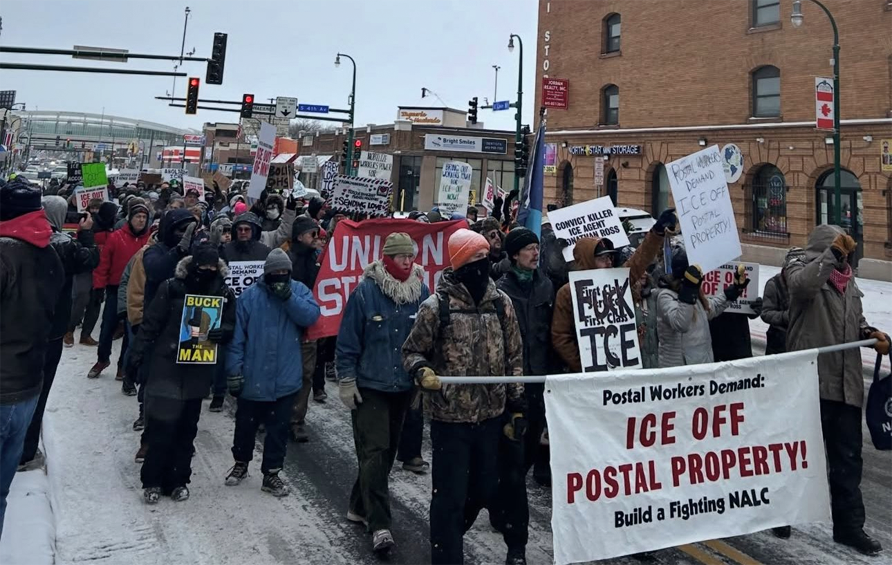
On
Saturday,
an
anti-Islam
influencer
and his
small
group of
allies
were
chased
out of
downtown
Minneapolis
by
hundreds
of
counterprotesters.
Far-right
activist
Jake
Lang,
who
served
four
years in
prison
for
attacking
Capitol
police
during
the
January
6 riot
before
being
pardoned
by
Trump,
organized
a rally
outside
City
Hall but
was
confronted
by
crowds
who
jeered
and
jostled
him. A
federal
judge on
Friday
prohibited
ICE
agents
from
arresting,
detaining,
retaliating
against,
or using
force
and
chemical
irritants
against
peaceful
protesters.
Legal
Action
Minnesota
Attorney
General
Keith
Ellison,
along
with the
cities
of
Minneapolis
and
Saint
Paul,
filed a
federal
lawsuit
against
the
Department
of
Homeland
Security,
asking
the
court to
end the
surge of
DHS
agents
into the
state
and
declare
it
unconstitutional
and
unlawful.
The
lawsuit
cites
allegations
that
agents
have
targeted
individuals
in
sensitive
locations
including
schools,
medical
facilities,
places
of
worship,
daycares,
and
funeral
homes.
Impact
on
Communities
The
raids
have had
severe
consequences
for
Minnesota
residents
and the
local
economy.
Business
at many
local
immigrant-owned
shops
has
plummeted
in
recent
weeks,
down in
some
areas at
least 80
percent.
Members
of the
Minneapolis
City
Council
are
calling
for an
eviction
moratorium
as some
constituents
are
afraid
to leave
their
homes
amid the
ICE
surge,
and
Minneapolis
Public
Schools
has
pivoted
to
virtual
learning
until
mid-February.
Resource
Strain
By
January
9, 2026,
Minneapolis
Police
officers
had
already
worked
more
than
3,000
hours of
overtime,
with an
estimated
cost
exceeding
$2
million
for the
period
between
January
8 and
January
11.
Wrongful
Detentions
and
Arrests
Federal
agents
conducted
a raid
on a
house in
St. Paul
without
a
correct
warrant,
detaining
six
people
including
a
12-year-old
boy who
was
reportedly
flown to
San
Antonio,
Texas,
despite
agents
not
having
proper
documentation.
Additionally,
five
Native
Americans
have
been
detained
by ICE
during
ongoing
raids,
with
community
members
reporting
concerns
that ICE
agents
are
racially
profiling
Native
people,
mistaking
them for
Central
and
South
American
immigrants.
National
Response
The
Department
of
Homeland
Security
states
it has
made
over
2,000
arrests
throughout
its
largest
operation
in
history,
adding
that
"this is
just the
tip of
the
iceberg."
Meanwhile,
President
Trump
has
stated
he is
cutting
off
federal
funds to
so-called
sanctuary
states
and
posted
on Truth
Social
that
"the day
of
reckoning
and
retribution
is
coming"
for
Minnesota.
Looking
Ahead
The
situation
in
Minneapolis
remains
fluid,
with
federal
operations
continuing,
legal
challenges
moving
through
the
courts,
and
tensions
between
state
and
federal
authorities
showing
no signs
of
resolution.
Governor
Tim Walz
has
mobilized
the
Minnesota
National
Guard to
support
local
law
enforcement,
though
troops
have not
yet been
deployed
to city
streets.
|
|
|
|
|
|
|
|
|




 I
HI TECH NEWS
I
SPORTS
I
I
HI TECH NEWS
I
SPORTS
I