|
|
|
|
|
|
|
|
|
|
|
|
Hantavirus
Outbreak
on
Cruise
Ship
Prompts
U.S.
Quarantine,
CDC Says
Public
Risk
Remains
Low
Dr.
Edgar
Williams
-
Primary
Care/Public
Health
Tell Us
USA News
Network
ATLANTA
- Public
health
officials
are
closely
monitoring
a rare
but
deadly
hantavirus
outbreak
that has
drawn
international
attention
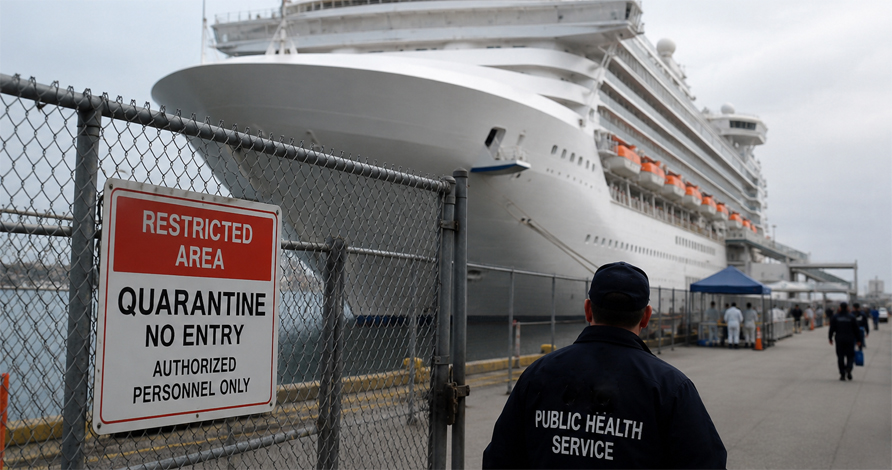
following
a crisis
aboard
the MV
Hondius,
a cruise
ship
operating
near the
South
Atlantic
and West
Africa.
Despite
multiple
fatalities
and the
quarantine
of U.S.
travelers,
experts
stress
that the
risk to
the
broader
American
public
remains
extremely
low.
Cruise
Ship
Outbreak
The
concern
centers
on a
cluster
of
infections
aboard
the
Dutch
expedition
vessel
earlier
this
month.
The
World
Health
Organization
confirmed
the
virus
strain
as Andes
virus, a
hantavirus
variant
native
to South
America.
Unlike
most
hantavirus
strains,
Andes
virus is
particularly
dangerous
because
it is
the only
known
type
capable
of
human-to-human
transmission.
At least
three
deaths
have
been
reported
in
connection
with the
outbreak.
Seventeen
American
passengers
were
evacuated
and
transferred
to a
federal
quarantine
facility
in
Nebraska,
where
they
remain
under
medical
observation.
Health
officials
note the
virus
can
incubate
for up
to 56
days,
requiring
extended
monitoring
of
anyone
exposed.
Understanding
Hantavirus
Hantaviruses
are
primarily
spread
through
contact
with
infected
rodents.
In the
United
States,
the most
common
strain
is Sin
Nombre
virus,
which
causes
Hantavirus
Pulmonary
Syndrome
(HPS), a
severe
and
sometimes
fatal
respiratory
disease.
Humans
are
typically
infected
through
“spillover”
exposure
involving
rodent
carriers
such as
deer
mice,
cotton
rats,
and rice
rats.
The
virus
most
often
spreads
when
contaminated
materials
become
airborne
and are
inhaled,
particularly
during
activities
like
sweeping
or
cleaning
enclosed
spaces.
Transmission
can also
occur
through
direct
contact
with
contaminated
surfaces
followed
by
touching
the
face, or
more
rarely
through
rodent
bites.
Symptoms
and
Severity
Early
symptoms
often
resemble
the flu,
making
early
diagnosis
difficult.
Patients
may
experience
fatigue,
fever,
and
severe
muscle
aches,
particularly
in the
thighs,
hips,
and
back,
along
with
dizziness,
chills,
and
gastrointestinal
issues.
As the
illness
progresses,
it can
rapidly
affect
the
lungs,
causing
fluid
buildup
and
severe
respiratory
distress.
The
mortality
rate for
HPS in
the
United
States
is 38%,
according
to the
CDC.
U.S.
Risk
Assessment
Despite
heightened
attention,
the CDC
reports
no
indication
of
increased
domestic
risk
tied to
the
cruise
ship
outbreak.
Hantavirus
infections
in the
U.S.
remain
rare and
typically
occur as
isolated
cases.
More
than 90%
of cases
are
reported
west of
the
Mississippi
River,
with the
highest
concentrations
in New
Mexico,
Arizona,
and
Colorado.
Recent
high-profile
cases,
including
the 2025
death of
Betsy
Arakawa,
wife of
actor
Gene
Hackman,
along
with
fatalities
in San
Diego
and Mono
County,
have
renewed
focus on
the
virus in
the
Southwest.
Prevention
Measures
There is
no
specific
treatment,
cure, or
vaccine
for
hantavirus.
Medical
care is
limited
to
supportive
interventions
such as
oxygen
therapy
and
mechanical
ventilation.
Health
officials
emphasize
prevention,
particularly
in rural
areas or
during
seasonal
cleaning:
Ventilate
enclosed
spaces
for at
least 30
minutes
before
cleaning.
Avoid
sweeping
or
vacuuming
rodent
droppings;
instead,
disinfect
with a
bleach
solution
and wipe
with
disposable
materials.
Seal
entry
points
in homes
and
store
food in
rodent-proof
containers.
“The
best way
to stay
safe is
to keep
rodents
out,”
the CDC
advises.
“Awareness
and
proper
cleaning
practices
are the
most
effective
defenses
in
endemic
areas.”
|
|
|
|
|
|
|
|
|




 I
HI TECH NEWS
I
SPORTS
I
I
HI TECH NEWS
I
SPORTS
I