|
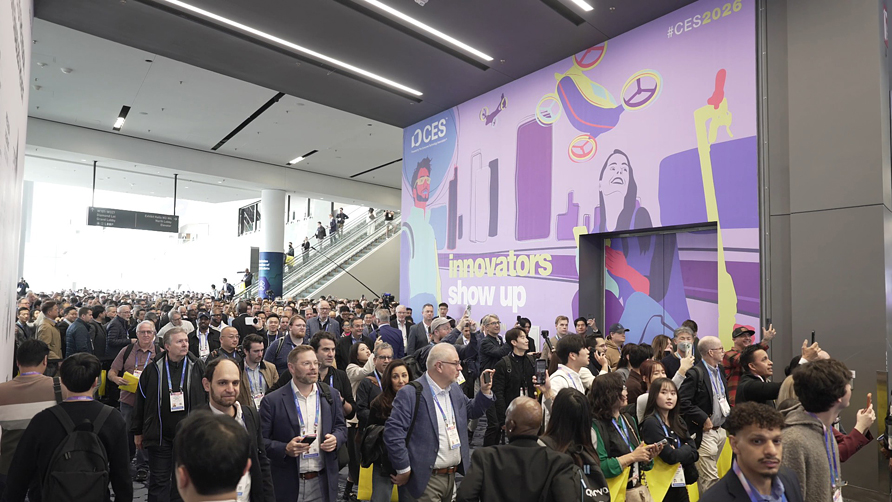
CES 2026
confirms
what the
market
has been
telling
us: AI
infrastructure
is real,
smart
home
integration
is
deepening,
and
display
technology
has
entered
a design
maturity
phase.
What it
doesn't
show—yet—is
a killer
consumer
application
that
drives
upgrade
cycles
independent
of
natural
replacement
schedules.
(Photo
by Tell
Us USA
News
Network-via
2026
CES) |
|
|
|
|
|
 |
 |
 |
|
|
|
|
|
|
 |
|
|
|
| |
| CES 2026: The Year Artificial Intelligence Becomes Infrastructure, Not Innovation |
Nilay
Seetharaman
–
Technology
Tell Us
USA News
Network
LAS
VEGAS -
The 2026
Consumer
Electronics
Show
reveals
something
we've
suspected
for
months:
the
industry
has
pivoted.
We're no
longer
watching
companies
chase
artificial
intelligence
as a
feature.
We're
watching
them
embed it
as a
foundational
layer—and
frankly,
some are
doing it
better
than
others.
The
Physical
AI
Inflection
Point
Nvidia's
emphasis
on
"physical
AI"
isn't
marketing
nomenclature.
It's a
strategic
acknowledgment
that the
real
value of
AI
models
lies not
in their
performance
on
benchmarks,
but in
their
ability
to
operate
in
constrained,
real-world
environments.
Demonstrating
this
through
robotics
is
clever
positioning—it
forces
competitors
to prove
they can
do the
same,
while
simultaneously
creating
demand
for
specialized
silicon
capable
of
handling
inference
at the
edge.
That
said,
I'd be
cautious
about
the
timeline.
Humanoid
household
robots
are
compelling
on a
show
floor.
They're
considerably
less
reliable
in
actual
homes.
LG's
CLOiMe
and
SwitchBot's
Onero H1
are
meaningful
prototypes,
but the
gap
between
"can
fold
laundry
in a
controlled
environment"
and
"folds
your
laundry
reliably"
remains
substantial.
I'd
expect
at least
two more
hardware
iterations
before
consumer
adoption
accelerates
meaningfully.
The
Chipmaker
Tango
What's
striking
about
the
processor
announcements
is how
fragmented
the AI
acceleration
market
has
become.
AMD's
Ryzen AI
push,
Intel's
Panther
Lake,
Qualcomm's
Snapdragon
X2
Plus—each
is
credible,
but none
is
dominant.
Intel's
position
is
particularly
worth
monitoring.
The
company
has been
losing
the
performance
narrative
to AMD
for
consumer
processors,
and "new
AI chips
for
laptops"
isn't
sufficient
differentiation
anymore.
Qualcomm's
claim of
35
percent
single-core
gains is
meaningful
for
everyday
computing,
but it
doesn't
address
the
fundamental
question:
do
consumers
actually
need
this
performance
for
their
current
workloads?
That's
where
the
battle
will be
won or
lost.
The
Display
War Gets
Serious
Samsung's
Micro
RGB TVs
in sizes
up to
130
inches,
coupled
with
LG's
aggressive
OLED
Wallpaper
strategy,
signals
a
maturation
in
high-end
display
technology
and a
direct
challenge
to the
premium
segment's
sustainability.
Here's
what
matters:
both
companies
are now
competing
on form
factor
and
integration,
not just
picture
quality.
Samsung's
Music
Studio
speakers,
LG's
Gallery
TV—these
are
plays to
make
premium
displays
furniture,
not
appliances.
Amazon's
entry
into
this
space
with the
Ember
Artline
is
notable,
though
it feels
somewhat
derivative.
The
$3,000+
price
point
(estimated)
makes
this a
luxury
product,
not a
mass-market
disruptor.
Still,
the
integration
with
Amazon
Photos
and
AI-curated
artwork
signals
the
company's
understanding
that the
television
is
becoming
a
personal
data
display
device.
That's a
significant
strategic
insight
that
bears
watching.
The
Smart
Home
Ecosystem
Becomes
Sticky
Samsung
and
Amazon's
continued
expansion
of their
smart
home
ecosystems
demonstrates
something
fundamental
about
the
market:
the real
margin
isn't in
individual
devices.
It's in
lock-in.
Samsung's
integration
of
Google
Gemini
into
refrigerators,
Amazon's
work
with
Bosch
and
Oura,
these
aren't
product
innovations.
They're
ecosystem
plays
designed
to make
switching
costs
prohibitive.
This is
where
casual
observers
get the
narrative
wrong.
When
Amazon
announces
Alexa+
partnerships,
it's not
selling
you a
better
voice
assistant.
It's
selling
you a
reason
to stay
inside
the
Amazon
ecosystem
when
Google
and
Apple
inevitably
offer
comparable
features.
The
product
is the
moat.
The
Noise
Problem
For
every
genuinely
significant
announcement,
CES 2026
produced
equal
parts
theater.
Lollipop
Star's
music
lollipops
using
bone
induction,
Lego's
Smart
Brick
technology—these
are
technically
interesting
from an
engineering
standpoint,
but
they're
not
market-moving.
They're
the
exhibition
hall's
version
of
feature
bloat.
This
creates
a real
challenge
for
investors
and
analysts:
separating
signal
from
noise.
The
question
to ask
for any
product
unveiled
at CES
is
simple:
does
this
solve a
problem
people
are
spending
time and
money to
solve
today?
If the
answer
is "not
really,
but it
could in
five
years,"
you're
looking
at a
marketing
exercise,
not a
market
opportunity.
The Real
Story:
Margins
Under
Pressure
What I'm
not
hearing
much
about on
the show
floor is
this:
for
established
players,
margin
compression
is
accelerating.
AI
integration
means
higher
chip
costs,
more
complex
supply
chains,
and
commoditization
at the
low end.
Samsung's
push
into
Micro
RGB and
LG's
Wallpaper
TVs are
both
attempts
to
escape
the
price
war.
They're
succeeding
so far,
but how
long can
luxury
positioning
hold?
Similarly,
the
proliferation
of
AI-enabled
processors
from
multiple
manufacturers
suggests
we're
heading
toward a
commodity
market
in AI
acceleration—and
that's
bad news
for
anyone
hoping
to
maintain
pricing
power.
The
Bottom
Line
CES 2026
confirms
what the
market
has been
telling
us: AI
infrastructure
is real,
smart
home
integration
is
deepening,
and
display
technology
has
entered
a design
maturity
phase.
What it
doesn't
show—yet—is
a killer
consumer
application
that
drives
upgrade
cycles
independent
of
natural
replacement
schedules.
The
robotics
story
will be
worth
revisiting
in
eighteen
months.
The
chipmaker
competition
will
shake
out in
favor of
whoever
can
prove
real-world
performance
advantages
fastest.
And the
smart
home
ecosystem
wars
will
continue
with no
clear
winner
until
one
player
successfully
integrates
voice,
visual,
and
biometric
data
into
something
genuinely
transformative.
For now,
CES 2026
is a
reflection
of an
industry
in
transition,
not
revolution.
That's
often
the mark
of a
market
maturing.
|
|
|
|
|
|
|
|
|

 I
HI TECH NEWS
I
SPORTS
I
I
HI TECH NEWS
I
SPORTS
I