|
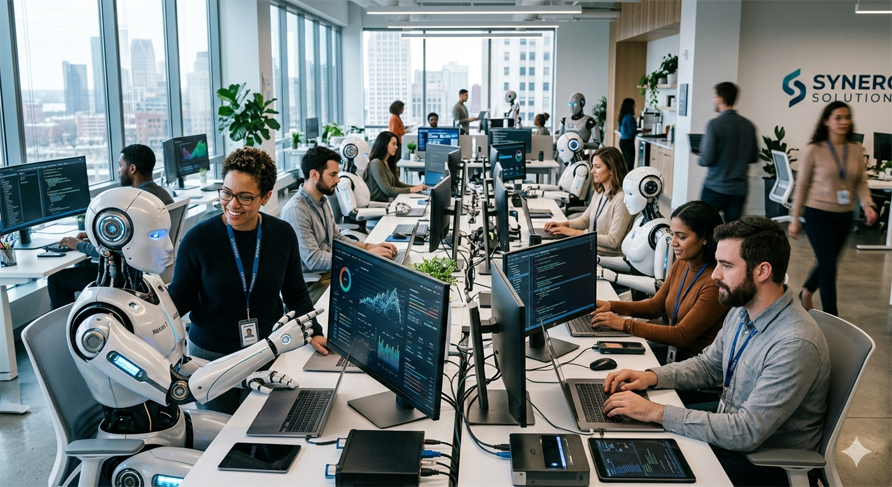
Jobs Are
the
Central
Worry;
Collaborating
at the
intersection
of human
creativity
and
machine
intelligence:
a
glimpse
into the
future
of the
modern,
integrated
workforce. |
|
|
|
|
|
 |
 |
 |
|
|
|
|
|
|
 |
|
|
|
| |
From
Office
Clerks
to
Managers,
AI Could
Upend
Millions
of
American
Jobs
Ashley
Roberts
-
Capitol
Hill
Nilay
Seetharaman
-
Technology
Tell Us
USA News
Network
WASHINGTON
- A
congressional
hearing
on
artificial
intelligence
this
week
quickly
expanded
beyond
tech
policy
into
something
bigger:
a
national
debate
about
jobs,
power,
and
whether
Washington
can keep
up with
a
fast-moving
technology.
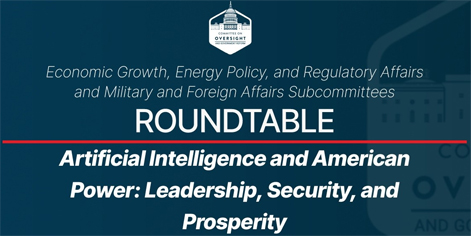
The
roundtable,
titled
"Artificial
Intelligence
and
American
Power:
Leadership,
Security,
and
Prosperity,"
was
convened
by two
House
Oversight
subcommittees
covering
economic
growth
and
military
affairs.
It
brought
together
lawmakers,
industry
executives,
and
policy
experts
— and
revealed
both
excitement
and
anxiety
about
where AI
is
headed.
Jobs Are
the
Central
Worry
The most
urgent
concern
raised
at the
hearing
was the
impact
of AI on
the
American
workforce.
Experts
warned
that the
disruption
will go
well
beyond
tech
layoffs,
touching
customer
service,
data
analysis,
clerical
roles,
marketing,
and even
mid-level
management.
AI tools
can now
draft
reports,
process
data,
and
handle
routine
office
tasks —
work
that
millions
of
Americans
currently
do. That
shift,
witnesses
said,
will
force
workers
to learn
new
digital
skills
faster
than
ever
before.
Experts
urged
Congress
to act
by
investing
in
retraining
programs,
strengthening
labor
protections,
and
setting
clear
rules
for how
companies
can use
AI to
monitor
employees.
The
message
was
blunt:
AI is no
longer
just a
tool for
engineers.
It's
reshaping
how most
Americans
work.
Amazon
was held
up as
the
starkest
example.
The
company
has cut
thousands
of
corporate
jobs
while
crediting
AI with
streamlining
its
operations.
Some
analysts
see this
as an
early
preview
of how
AI could
hollow
out
white-collar
employment.
Pinterest,
Expedia,
and Dow
were
also
mentioned
in
connection
with
AI-linked
layoffs
— though
in each
case,
AI's
role is
difficult
to
separate
from
broader
cost-cutting
pressures.
Lawmakers
Raise
Specific
Concerns
Several
lawmakers
used the
hearing
to
spotlight
distinct
dangers.
Rep.
James
Walkinshaw
(D-VA)
raised
alarms
about
federal
employees
using AI
chatbots
to
process
sensitive
government
data.
Rep.
William
Timmons
(R-SC)
asked
whether
it
should
be a
crime
for AI
to
generate
fake
pornographic
images
using a
real
person's
likeness.
And Rep.
Maxwell
Frost
(D-FL),
the top
Democrat
on the
subcommittee,
warned
that
Congress
may not
move
fast
enough
to put
"common
sense
guardrails"
in place
before
real
harm is
done —
even as
he
acknowledged
AI's
potential
to cure
diseases
and grow
the
economy.
The
National
Security
Angle
Republican
leaders
framed
the
hearing
primarily
as a
competitiveness
question:
how can
the U.S.
use AI
to stay
ahead of
rival
nations?
Mark
Beall, a
former
Pentagon
official
and
president
of the
AI
Policy
Network,
told
lawmakers
that
failing
to
address
key
national
security
concerns
could
cost the
U.S. its
lead in
AI
development.
He and
other
experts
pointed
to
bottlenecks
in
semiconductor
manufacturing,
energy
infrastructure,
and
skilled
labor as
obstacles
that
need
urgent
attention.
A
Familiar
Washington
Divide
The
hearing
ultimately
reflected
a
tension
that has
become
routine
in
Washington
when new
technology
arrives:
enthusiasm
for the
potential
gains,
unease
about
the
speed of
change.
Both
parties
agree
that AI
could be
a
powerful
engine
for
economic
growth
and
national
defense.
Where
they
diverge
is on
urgency
— and on
whether
Congress
has the
will and
the
speed to
set
rules
before
the
technology
races
ahead of
them.
|
|
|
|
|
|
|
|
|

 I
HI TECH NEWS
I
SPORTS
I
I
HI TECH NEWS
I
SPORTS
I