|
|
|
|
|
|
|
|
|
|
|
|
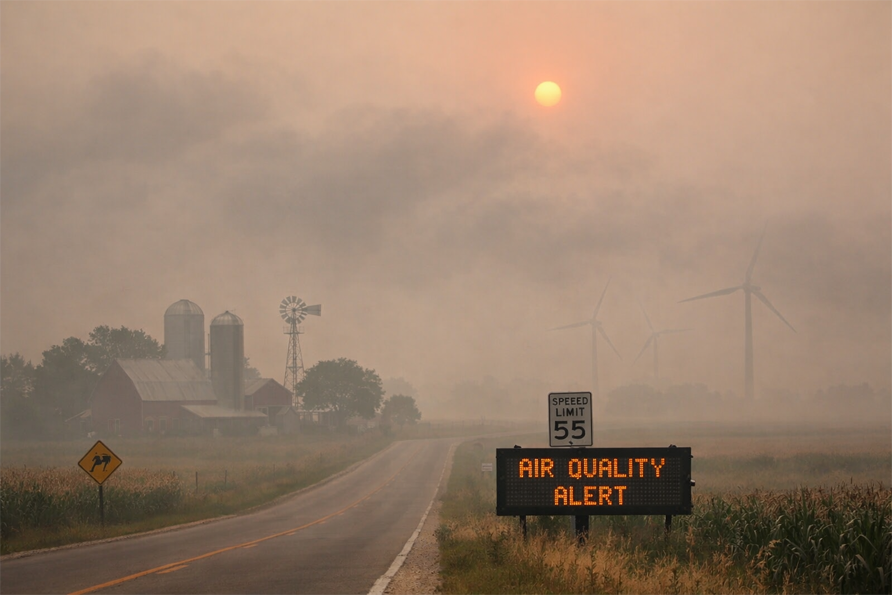
Ontario
wildfire
smoke
blankets
Great
Lakes
region,
raising
health
concerns
Dr.
Edgar
Williams
-
Primary
Care-Public
Health
Tell Us
USA News
Network
DETROIT
— Smoke
from
wildfires
burning
in
western
Ontario
has
pushed
unhealthy
air into
metro
Detroit,
prompting
air
quality
alerts
and
warnings
for
residents
to limit
time
outdoors.
Meteorologists
said a
low-pressure
system
over
Ontario
helped
pull the
smoke
south
and keep
it
closer
to the
surface,
making
it more
difficult
for the
haze to
disperse
before
reaching
southeast
Michigan.
Health
experts
in
Michigan
say the
danger
goes
beyond
eye
irritation
and
coughing.
A
cardiology
expert
at Henry
Ford
Health
said
microscopic
wildfire
particles
can
enter
the
bloodstream
and
trigger
inflammation
that may
worsen
heart
disease
or
contribute
to
medical
emergencies.
Pulmonologists
have
also
reported
patients
coming
in with
symptoms
tied to
the
smoke,
including
itchy
eyes,
shortness
of
breath,
chest
tightness
and
cough.
Doctors
are
advising
people
to stay
indoors
when
possible,
use air
conditioning
and
filters,
and wear
an N95
mask if
they
must go
outside.
On
Tuesday
evening,
Detroit
briefly
ranked
as
having
the
worst
air
quality
of any
major
city in
the
world on
IQAir’s
rankings,
underscoring
how
severe
the
smoke
intrusion
has
become
for the
region.
Public
Health
Risk
The
greatest
concern
is for
children,
older
adults,
pregnant
people
and
anyone
with
asthma,
COPD or
heart
disease,
but
doctors
say even
healthy
residents
can feel
the
effects
when
smoke
levels
are
high.
Officials
are
urging
residents
to
reduce
outdoor
activity,
watch
for
breathing
problems
and seek
medical
attention
right
away if
symptoms
suggest
a
heart-related
emergency.
Context
Wildfire
smoke
has
repeatedly
affected
Michigan
in
recent
years,
but
officials
say the
proximity
of the
Ontario
fires is
helping
keep the
smoke
concentrated
at lower
levels
over
metro
Detroit.
That
combination
has made
the
current
episode
feel
especially
intense
for
residents
who are
seeing a
smoky
sky and
breathing
air that
doctors
say can
aggravate
underlying
health
conditions.
|
|
|
|
|
|
|
|
|




 I
HI TECH NEWS
I
SPORTS
I
I
HI TECH NEWS
I
SPORTS
I