|
|
|
|
|
|
 |
|
|
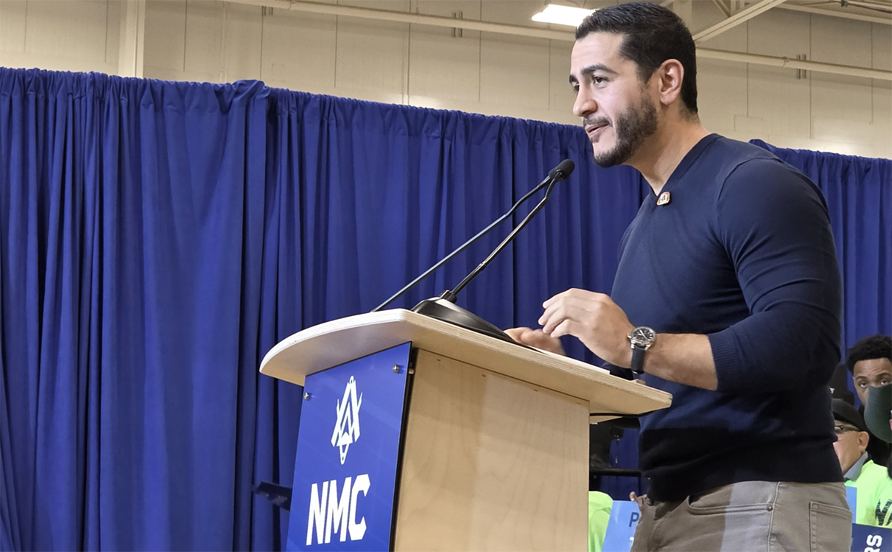
El-Sayed,
who
faces
Republican
former
U.S.
Rep.
Mike
Rogers,
offered
the more
populist
register.
He
called
for
conditions
that
allow
union
organizing
in every
sector
of the
economy
and
attacked
corporate
influence
over
politics.
(Photo
by HB
Meeks/Tell
Us USA
News
Network) |
|
|
Michigan
Democrats
court
labor
and
Detroit
as the
clock
runs
down
Walter
Hargrove
-
Political
Analyst
Tell Us
Detroit
News
Bureau
DETROIT
— With
just 16
days
remaining
before
the Nov.
3
general
election,
Michigan
Democrats
are
making a
high-stakes
bet that
organized
labor
and
Detroit
voters
will
provide
the
political
muscle
needed
to
deliver
statewide
victories.
The
strategy
was on
full
display
Sunday
as
candidates
from
across
the
Democratic
ticket
joined
union
carpenters
at a
Detroit
rally,
turning
a
get-out-the-vote
event
into a
declaration
of the
party’s
allegiance
to
working
people.
But
beneath
the show
of unity
was a
more
urgent
message:
Democratic
candidates
need
supporters
to turn
their
enthusiasm
into
ballots
before
time
runs
out.
Hosted
by the
Michigan
Democratic
Party
and the
Northern
Midwest
Regional
Council
of
Carpenters,
the
rally
took
place at
the
Detroit
Union
Carpenters
and
Millwrights
Skilled
Training
Center
on
Detroit’s
northwest
side.
With
absentee
voting
already
underway
and
statewide
early
voting
scheduled
to begin
Oct. 24,
the
campaign
has
entered
a
critical
stretch.
The
Democratic
lineup
featured
U.S.
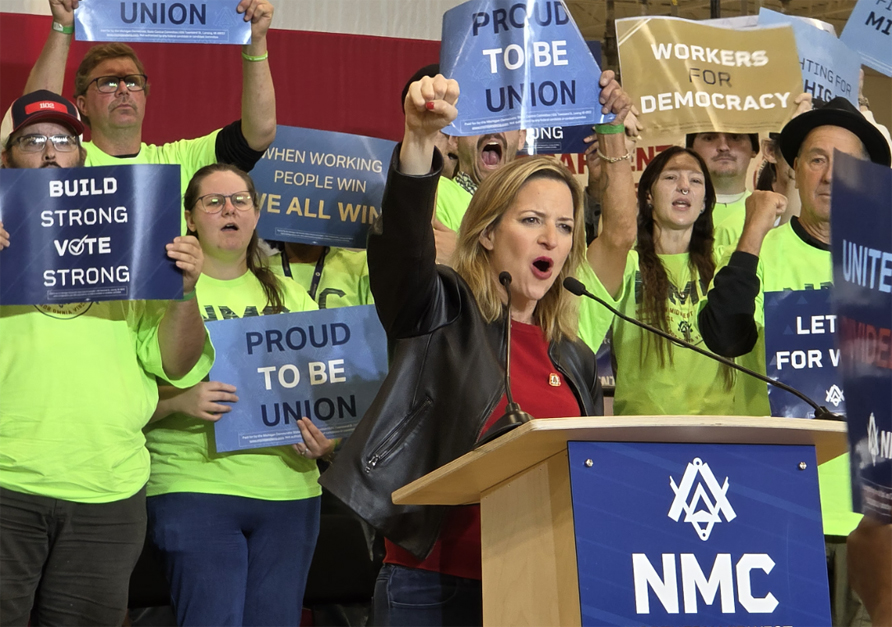
Senate
nominee
Abdul
El-Sayed
and
gubernatorial
nominee
Jocelyn
Benson,
Michigan’s
secretary
of
state,
who
faces
Republican
U.S.
Rep.
John
James in
the
governor’s
race.
Benson
made
jobs,
wages
and the
future
of
Michigan’s
workforce
central
to her
appeal,
promising
to put
workers
at the
heart of
her
economic
agenda
and
expand
opportunities
for
well-paying
union
employment.
“Are you
ready to
build
more
things
in
Michigan
and
create
more
well-paid
union
jobs for
the
people
of this
state?”
she
asked
the
crowd,
according
to
Michigan
Advance.
Benson
also
blamed
tariffs
and the
war in
Iran for
contributing
to
economic
uncertainty,
higher
household
costs
and job
losses,
arguing
that her
Republican
opponents
lack
credible
solutions
to the
challenges
facing
working
families.
Drawing
on her
own
background,
she
credited
her
parents,
both
special
education
teachers,
with
shaping
her
understanding
of the
financial
pressures
confronting
Michigan
households.
“We will
ensure
that
Michigan’s
workers
are the
centerpiece
of
everything
we do
for our
economy,”
Benson
said.
El-Sayed
delivered
a more
confrontational
message,
portraying
the
Senate
race as
a fight
between
working
people
and
powerful
corporate
interests.
He
called
for
stronger
protections
for
workers
seeking
to
organize
unions
across
the
economy
and
accused
corporations
of
exercising
excessive
influence
over
public
policy
at the
expense
of
ordinary
Americans.
“We’re
going to
stand
with
working
people
against
the
corporations
who, for
too
long,
have
been
able to
dictate
terms so
that
they can
make a
second
$1
billion,
while
our
folks
struggle
to make
their
first
$100,000,”
he said,
according
to
Michigan
Advance.
The
Democratic
Senate
nominee,
who
faces
Republican
former
U.S.
Rep.
Mike
Rogers,
also
sought
to frame
the
contest
as a
broader
struggle
over
whose
interests
Washington
serves.
El-Sayed
accused
Rogers
and
President
Donald
Trump of
catering
to
wealthy
interests
while
working
families
struggle
with
rising
costs
and
economic
insecurity.
He also
argued
that
Republican
leaders,
including
Trump
and Vice
President
JD
Vance,
have
focused
their
attacks
on him
personally
rather
than
addressing
the
issues
affecting
voters.
Those
attacks
have
become a
defining
feature
of the
race.
Vance
recently
campaigned
in
Michigan
for
Rogers,
criticizing
El-Sayed’s
political
platform
and
remarks
concerning
his
Muslim
faith.
El-Sayed,
meanwhile,
held a
town
hall in
Flint
earlier
Sunday,
extending
his
outreach
through
Michigan’s
industrial
communities,
where
organized
labor
remains
an
important
political
constituency.
The
Detroit
rally
also
showcased
the
breadth
of the
Democratic
ticket.
Speakers
included
Lt. Gov.
Garlin
Gilchrist,
the
party’s
nominee
for
secretary
of
state;
Washtenaw
County
Prosecutor
Eli
Savit,
the
attorney
general
nominee;
and
state
Rep.
Donavan
McKinney,
the
Democratic
nominee
in the
13th
Congressional
District.
Michigan
House
Minority
Leader
Ranjeev
Puri and
Detroit
Mayor
Mary
Sheffield
also
addressed
the
gathering,
reinforcing
the
party’s
effort
to
present
a united
front
heading
into the
final
days of
the
campaign.
DETROIT
BECOMES
A
BATTLEGROUND
The
location
was no
accident.
Detroit
remains
essential
to
Democratic
hopes of
winning
statewide,
and
Republicans
are
increasingly
looking
to make
inroads
with
voters
the
party
has
traditionally
struggled
to
attract.
Rogers
has been
courting
Black
voters
who
supported
U.S.
Rep.
Haley
Stevens
in the
August
primary,
as well
as
voters
who
remain
skeptical
of
El-Sayed.
His
outreach
has also
included
efforts
to
engage
members
of
Detroit’s
Jewish
community.
Rogers
opened a
Detroit
field
office
over the
weekend,
signaling
that
Republicans
intend
to
compete
more
aggressively
in a
city
long
considered
a
Democratic
stronghold.
El-Sayed
dismissed
the move
in
remarks
to CNN,
suggesting
Rogers
had
relied
on
suburban
supporters
to open
the
office
on his
behalf.
The
exchange
highlights
a
central
question
confronting
both
campaigns:
Can
Republicans
peel
away
enough
Democratic-leaning
voters
to make
the
races
more
competitive,
or will
Democrats
successfully
consolidate
their
coalition
before
Election
Day?
For
Benson
and
El-Sayed,
Detroit’s
turnout
operation
and
organized
labor’s
ability
to
mobilize
members
could
prove
decisive.
Union
endorsements
and
campaign
rallies
can
demonstrate
political
strength,
but they
do not
guarantee
that
supporters
will
cast
ballots.
That
challenge
was
reflected
in
Sheffield’s
closing
appeal
to the
crowd.
“Electing
them is
going to
take all
of us.
We
cannot
take
anything
for
granted,”
she
said.
“Our
voices
have
power.
Our
votes
have
power.
And when
we vote,
we help
decide
what
comes
next.”
Her
remarks
captured
the
stakes
for a
party
seeking
to
translate
its
labor
support,
urban
base and
campaign
organization
into
victories
across
Michigan.
Democrats
left the
rally
projecting
confidence
and
unity.
But the
remaining
days
will
test
whether
that
show of
strength
can
overcome
the
divisions
within
their
coalition,
withstand
Republican
efforts
to
attract
crossover
voters
and
produce
the
turnout
necessary
to win
statewide.
In a
close
election,
the
difference
between
a
successful
campaign
and a
disappointing
result
may come
down to
a simple
calculation:
which
party
gets
more of
its
supporters
to the
polls.
Benson
offered
a
different
kind of
demonstration
of
endurance
later
Sunday,
completing
the
Detroit
Free
Press
Marathon,
her
40th, in
approximately
four
hours
and nine
minutes,
according
to
aides.
For a
candidate
campaigning
on the
promise
of
steady
leadership
and a
long-term
commitment
to
Michigan
workers,
the
symbolism
was
difficult
to miss.
The
political
marathon,
however,
is
entering
its
final
and most
consequential
miles.
This
Tell Us
USA News
Network
report
is
produced
in part
by Ai
and can
make
mistakes.
Please
contact
and let
us know
of any
errors
you may
find.
info@tellususa.com
|
|
|
|
|
|
|
|
|




 I
HI TECH NEWS
I
SPORTS
I