|
|
|
|
|
|
 |
|
|
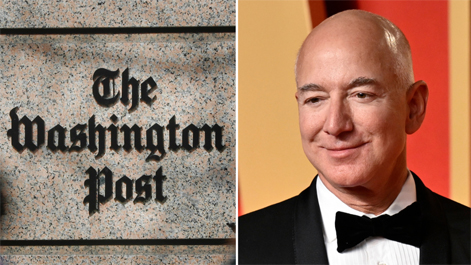
The
tragedy
of the
Post’s
current
trajectory
is that
it was
avoidable.
Under
Jeff
Bezos,
the
paper
initially
experienced
a
renaissance,
hiring
aggressively
and
expanding
its
global
footprint.
But the
recent
pivot
toward
"personal
liberties
and free
markets"
feels
less
like a
strategic
evolution
and more
like a
retreat
into
safety. |
|
|
Democracy
Dies in
Downsizing:
The
Hollowing
of The
Washington
Post
Editorial
Staff
Op-Ed
Tell Us
USA News
Network
WASHINGTON
- For
decades,
the
masthead
of The
Washington
Post has
carried
a
solemn,
almost
ecclesiastical
warning:
"Democracy
Dies in
Darkness."
But as
the
newsroom
reels
from the
"Black
Wednesday"
layoffs
of
February
2026—a
move
that saw
one-third
of its
journalistic
soul
excised
in a
single
afternoon—a
different
kind of
light is
being
extinguished.
It isn't
just the
coverage
that is
shrinking;
it is
the
paper’s
very
identity
as a
national
watchdog.
The
numbers
are, by
any
journalistic
standard,
catastrophic.
A daily
print
circulation
that
once
stood at
a
quarter-million
has
withered
to fewer
than
100,000.
Digital
subscribers,
the
supposed
lifeblood
of the
"Bezos
Era,"
fled by
the
hundreds
of
thousands
following
the
paper’s
decision
to pull
its 2024
presidential
endorsement.
To
witness
a 64%
plummet
in
political
influence
during
the
first
year of
a new
presidential
term is
not
merely a
"market
correction"—it
is an
institutional
collapse.
The
tragedy
of the
Post’s
current
trajectory
is that
it was
avoidable.
Under
Jeff
Bezos,
the
paper
initially
experienced
a
renaissance,
hiring
aggressively
and
expanding
its
global
footprint.
But the
recent
pivot
toward
"personal
liberties
and free
markets"
feels
less
like a
strategic
evolution
and more
like a
retreat
into
safety.
By
shuttering
bureaus
in the
Middle
East and
India
and
dissolving
its
sports
and
books
desks,
the Post
is
signaling
a return
to being
a
"local"
D.C.
paper at
a moment
when the
world
desperately
needs
its
national
and
global
lens.
Critics
will
point to
the "AI
impact"
and the
halving
of
search
traffic
as proof
that the
old
model is
dead.
They
aren't
entirely
wrong.
The
digital
landscape
is
shifting,
and the
"inverted
pyramid"
of news
is being
flattened
by
algorithms.
However,
The New
York
Times
has
proven
that a
"national"
paper
can
thrive
by
leaning
into its
breadth—bundling
games,
cooking,
and deep
investigative
reporting
into a
profitable
juggernaut.
The
Post,
conversely,
is
choosing
the path
of
contraction.
When you
cut the
very
people
who win
Overseas
Press
Club
awards
for Gaza
coverage,
you
aren't
just
cutting
costs;
you are
cutting
your
relevance.
You are
telling
your
readers
that the
"Darkness"
is no
longer
worth
the
investment
required
to
illuminate
it.
If the
Post is
to
survive
as
anything
more
than a
glorified
Beltway
newsletter,
it must
decide
what it
wants to
be. It
cannot
be
"bigger,
relevant,
and
thriving"
while it
is
simultaneously
smaller,
cautious,
and
retreating.
Wealthy
owners
often
view
newspapers
as
trophies
or
utilities,
but a
newspaper
of
record
is a
public
trust.
If the
current
leadership
continues
to
prioritize
corporate
equilibrium
over
journalistic
ambition,
they may
find
that
they
haven't
just
saved
the
bottom
line—they’ve
buried
the
legacy.
|
|
|
|
|
|
|
|
|




 I
HI TECH NEWS
I
SPORTS
I
I
HI TECH NEWS
I
SPORTS
I