|
|
|
|
|
|
 |
|
|
The deal
successfully
averted
immediate
economic
disruptions,
but the
political
cost is
the
creation
of deep,
public
fractures
within
the
Democratic
coalition. |
| |
Democratic
Blow-Back
Surfaces
Amid
Shutdown
Resolution
WASHINGTON
- The
resolution
of the
2025
federal
government
shutdown
has
immediately
triggered
an
internal
crisis
for the
Democratic
Party.
The
deal,
which
reopened
the
government
but
failed
to
secure
an
extension
of key
Affordable
Care Act
(ACA)
tax
credits,
has
exposed
a deep,
damaging
fissure,
with
progressives
and
moderates
alike
casting
out
against
party
colleagues
and
leadership
for what
they
view as
a
critical
retreat
on
policy.
The
Senate
passed
the
legislation
to fund
the
government
through
January
30, with
eight
Democrats
joining
Republicans
to
secure
its
passage.
The bill
ensures
continued
funding
for
programs
like
SNAP
(food
assistance)
and
averts
an
immediate
economic
and
service
disruption.
However,
the
compromise
failed
to
deliver
on a
non-negotiable
demand
from
many
Democrats:
an
extension
of tax
credits
under
the
Affordable
Care Act
(ACA).
The deal
offers
only a
pledge
of a
vote on
the
subsidies
in
December,
leaving
a key
voter
promise
unresolved.
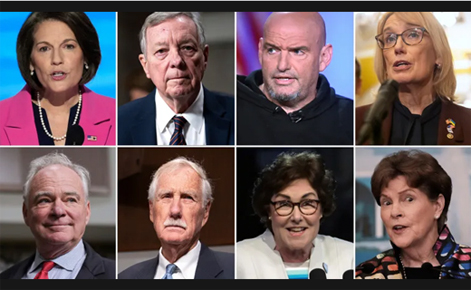
The
internal
ire is
focused
on the
eight
Democratic
(and one
Independent-caucusing)
lawmakers
who
broke
ranks to
support
the
Republican-backed
measure:
Jeanne
Shaheen
(NH),
Maggie
Hassan
(NH),
Tim
Kaine
(VA),
John
Fetterman
(PA),
Dick
Durbin
(IL),
Catherine
Cortez
Masto
(NV),
Jacky
Rosen
(NV),
and
Angus
King
(ME,
Independent).
These
lawmakers
have
been
subject
to sharp
criticism
from
within
their
party
for
negotiating
and
voting
for the
bill
despite
the
absence
of the
previously
non-negotiable
healthcare
concessions.
Progressive
senators,
including
Bernie
Sanders,
described
the vote
as “a
very,
very bad
vote.”
The
backlash
has also
come
swiftly
from the
state
level,
with
California’s
governor
calling
the move
“pathetic”
and
Illinois’s
governor
labeling
the
resulting
compromise
an
“empty
promise.”
The most
significant
target
of the
anger is
party
leadership.
Senate
Minority
Leader
Chuck
Schumer
is
facing
pressure
from
both
progressive
and
moderate
wings of
the
caucus
for
failing
to
prevent
the
defections
and for
perceived
strategic
missteps.
Calls
for
Schumer's
replacement
have
already
emerged
from
progressive
quarters.
The most
tangible
source
of the
backlash
is the
failure
to
extend
ACA
subsidies.
Democrats
had used
the
shutdown
as
leverage,
insisting
the
resolution
be tied
to
healthcare
cost
relief—a
promise
to their
base
that was
not
delivered.
Furthermore,
the
compromise
comes
just
after
significant
electoral
wins,
which
had
fostered
an
expectation
among
many in
the
party
that
they
held
momentum
to push
progressive
priorities,
not
compromise
under
pressure.
This
perceived
retreat
risks
damaging
the
party’s
standing
with its
most
energized
base
voters.
Internal
critiques
suggest
that
leadership
failed
to
coordinate
strategy
or
enforce
party
discipline,
allowing
key
concessions
that
have
left the
caucus
feeling
fractured
and
vulnerable.
The deal
successfully
averted
immediate
economic
disruptions,
but the
political
cost is
the
creation
of deep,
public
fractures
within
the
Democratic
coalition.
The
party
now
faces a
high-stakes
decision
on
whether
to press
harder
in the
pledged
December
vote on
healthcare
subsidies,
with no
guarantee
of
Republican
cooperation.
The
tension
and open
critique
of
leadership
signal
potential
instability
in
Democratic
strategy
and
messaging
heading
into
future
elections.
For the
American
voter,
the
message
is
mixed:
the
government
will
remain
funded
for now,
but a
key
promise
of
healthcare
cost
relief
remains
unresolved.
The
public
tension
within
the
Democratic
Party
signals
that the
fight
over
priorities—and
the
ability
of the
party to
deliver—is
far from
over.
|
|
|
|
|
|
|
|
|




 I
HI TECH NEWS
I
SPORTS
I
I
HI TECH NEWS
I
SPORTS
I