|
|
|
|
|
|
 |
|
|
|
|
|
El-Sayed,
Rogers
Set
Course
for
Michigan
Senate
Clash
Jean
Davis -
Local/State/Politics
Tell Us
Detroit
News
Bureau
DETROIT
— From
the
press
gallery,
the
rhythm
of a
Michigan
campaign
often
becomes
clear
well
before
polling
averages
settle
into
place.
Watch
the
candidates’
weekend
schedules.
Count
the
familiar
faces in
union
halls
and
county
GOP
gatherings.
Listen
for the
moment
national
messaging
either
connects
with
local
concerns
or falls
flat.
Michigan’s
race for
the open
U.S.
Senate
seat now
presents
a clear
contrast
in
political
style,
biography
and
strategy:
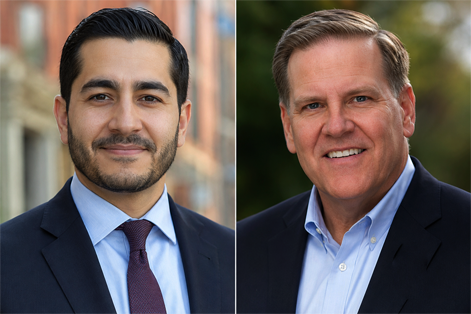
Democrat
Abdul
El-Sayed,
a
physician
and
former
public-health
official
with
deep
roots in
the
party’s
progressive
wing,
against
Republican
Mike
Rogers,
a former
congressman
and FBI
agent
who is
making a
second
bid for
the
Senate.
The
contest
comes as
Michigan
remains
a state
where
neither
party
can
safely
assume
victory.
Democrats
have
built a
formidable
recent
statewide
record,
but
Donald
Trump’s
2024 win
in
Michigan
underscored
the
continuing
volatility
of a
state
shaped
by
working-class
economic
pressures,
suburban
realignment
and
closely
contested
turnout
battles.
El-Sayed
emerged
from a
competitive
Democratic
primary
carrying
a
message
tailored
to
voters
struggling
with
high
prices,
health-care
costs
and
distrust
of
big-money
politics.
His
campaign
has
emphasized
universal
health
care,
affordability
and
curbs on
corporate
influence
in
elections.
It is a
message
designed
to
energize
younger
voters,
progressives
and the
Democratic
base in
Detroit,
Ann
Arbor
and
other
population
centers.
The
question
for
El-Sayed
will be
whether
he can
turn
that
coalition
into the
kind of
broad
statewide
majority
required
in a
general
election
—
particularly
in the
Macomb
County
suburbs,
West
Michigan
and
smaller
industrial
communities
where
Democratic
margins
have
eroded
over
time.
Rogers
offers
voters a
markedly
different
résumé
and
argument.
A former
U.S.
representative
whose
background
includes
service
as an
FBI
special
agent,
Rogers
is
campaigning
on
economic
growth,
inflation,
national
security
and
border
enforcement.
He has
sought
to frame
the race
around
competence
and
experience,
casting
himself
as a
candidate
equipped
to deal
with a
volatile
world
and a
Washington
economy
many
voters
believe
is not
working
for
them.
For
Rogers,
the
strategic
task is
equally
straightforward
but
politically
demanding:
consolidate
the
Republican
base
while
remaining
acceptable
to the
independents
and
center-right
suburban
voters
who
often
decide
Michigan
statewide
races.
His
campaign
will
also be
tested
by
whether
it can
avoid
allowing
a
nationalized
political
environment
to
overshadow
its
local
economic
pitch.
The
contrast
is
stark.
El-Sayed
represents
an
insurgent,
grass-roots
progressive
model
built
around
health
care and
economic
fairness.
Rogers
represents
a more
traditional
Republican
case
centered
on
security,
fiscal
pressures
and
legislative
experience.
Both
campaigns
will
have to
contend
with a
Michigan
electorate
that has
repeatedly
shown it
is
willing
to split
tickets,
change
course
and make
late
decisions.
In a
state
where a
few
thousand
votes
can
alter a
national
map,
neither
candidate
can
afford
to treat
any
region
as an
afterthought.
Voters
can
check
registration
status,
view
sample
ballots
and find
election
information
through
the
Michigan
Voter
Information
Center.
Information
on local
clerks
and
election
administration
is
available
through
the
Michigan
Bureau
of
Elections.
|
|
|
|
|
|
|
|
|




 I
HI TECH NEWS
I
SPORTS
I
I
HI TECH NEWS
I
SPORTS
I