|
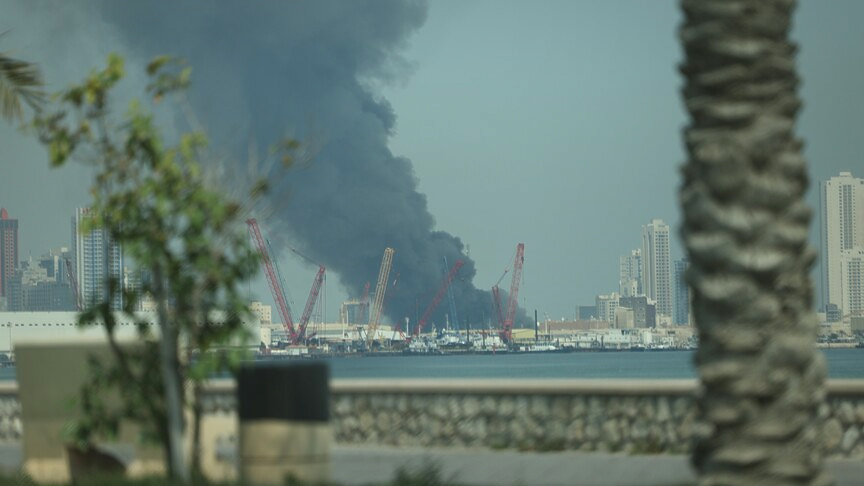
A series
of
satellite
images,
released
by
Iranian
media on
March
24,
provides
a
before-and-after
comparison
of US
military
bases in
Bahrain,
Kuwait,
and
Saudi
Arabia.
(CGTN
satellite
images) |
|
|
|
|
|
 |
 |
 |
|
|
|
|
|
|
 |
|
|
Iran has
inflicted
more
“extensive”
damage
to US
bases
and
equipment
in the
Middle
East
since
the
start of
US and
Israeli
strikes,
NBC News
reported
on
Saturday,
citing
sources. |
| |
Iran
Inflicted
Greater
Damage
on U.S.
Military
Bases
Than
Publicly
Disclosed,
Officials
Say
Jordan
Jenkins,
Senior
Investigative
Reporter
Tell Us
USA News
Network
WASHINGTON
-
Bombshell
investigations
released
on April
26, 2026
reveal
that
damage
to U.S.
military
infrastructure
in the
Middle
East is
far
worse
than
Washington
has
acknowledged.
Major
reports
published
Saturday
by NBC
News and
CBS,
drawing
on
current
and
former
U.S.
officials,
congressional
aides,
and
independent
think
tank
assessments,
present
a
picture
that
contradicts
the
Pentagon’s
own
public
statements
since
Iran
launched
its
retaliatory
strikes.
In the
weeks
after
the
Trump
administration
conducted
strikes
on
February
28, Iran
responded
with a
wave of
attacks
that
struck
dozens
of
targets
across
U.S.
military
bases in
seven
Middle
Eastern
countries.
According
to U.S.
officials
and an
assessment
by the
conservative
American
Enterprise
Institute,
those
attacks
hit
warehouses,
command
headquarters,
aircraft
hangars,
satellite
communications
infrastructure,
runways,
high‑end
radar
systems,
and
dozens
of
aircraft.
AEI’s
analysis
reportedly
found
Iran
struck
more
than 100
targets
spread
across
11 U.S.
bases in
the
region,
including
facilities
in Saudi
Arabia
and
Qatar.
The cost
of
repairing
the
damage
is
expected
to run
into the
billions
of
dollars.
Perhaps
the most
alarming
revelation
concerns
a
previously
undisclosed
breach
in U.S.
air
defenses.
In the
early
days of
the
conflict,
an
Iranian
F‑5
fighter
jet
bombed
the U.S.
base
Camp
Buehring
in
Kuwait
even
though
the base
was
equipped
with
active
air
defenses.
The
strike
marks
the
first
time in
years
that an
enemy
fixed‑wing
aircraft
has
successfully
hit an
American
military
base, a
rare
development
in
modern
U.S.
expeditionary
warfare.
The F‑5
is a
decades‑old
platform,
which
makes
the
penetration
even
more
embarrassing
for U.S.
air
defense
planners.
Secretary
of
Defense
Pete
Hegseth
had
previously
downplayed
Iran’s
military
capabilities,
telling
reporters
in March
that
Iran
could do
little
of real
threat
to U.S.
forces
and that
most
incoming
missiles
would be
shot
down.
NBC
reports,
however,
that a
significant
number
of
missiles
did get
through
at
various
points
during
the
conflict.
The toll
is not
limited
to
hardware
and
infrastructure.
CBS
reporting
centers
on a
March 1
drone
strike
that
killed
six U.S.
service
members
from the
Army’s
103rd
Sustainment
Command
and
wounded
more
than 60
others,
making
it the
deadliest
single
incident
for U.S.
personnel
in the
conflict.
Many of
the
wounded
suffered
traumatic
brain
injuries,
shrapnel
wounds,
and
severe
burns.
Allegations
of a
cover‑up
extend
beyond
the
physical
damage
to
bases.
An
analysis
published
this
week by
The
Intercept
argues
that the
true
number
of
American
service
member
casualties
is
higher
than the
Pentagon
has
disclosed
to
Congress
and the
public.
|
|
|
|
|
|
|
|
|

 I
HI TECH NEWS
I
SPORTS
I
I
HI TECH NEWS
I
SPORTS
I