| |
Key
takeaways
from the
fourth
Republican
debate
By Isaac
Arnsdorf,
Dylan
Wells,
and
Colby
Itkowitz
washingtonpost.com
TUSCALOOSA,
Ala. -
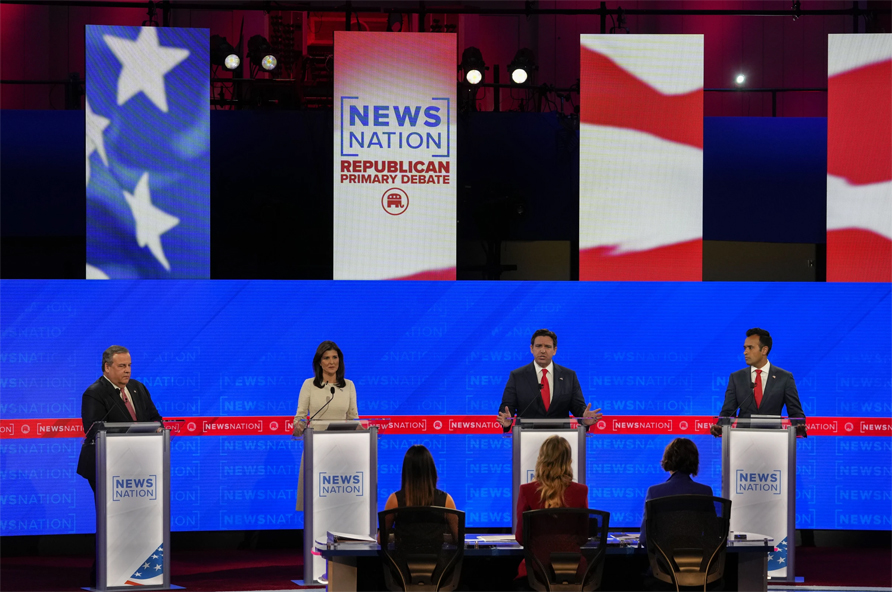
Four
Republican
presidential
contenders
clashed
in
Wednesday’s
presidential
primary
debate,
as
former
U.N.
ambassador
Nikki
Haley
and
Florida
Gov. Ron
DeSantis
sought
to
solidify
their
second-place
position
with
less
than six
weeks
left
before
the Iowa
caucuses.
Former
president
Donald
Trump
once
again
skipped
the
showdown.
Haley,
who has
surpassed
or tied
DeSantis
in early
state
public
polling,
found
herself
the
target
of
attacks
early
on, and
at one
point
former
New
Jersey
governor
Chris
Christie
came to
her
defense.
Haley
and
DeSantis
continued
to
tussle
on
China,
while
Christie
used his
airtime
to hit
Trump
for
skipping
the
debates.
Christie
accused
his
opponents
onstage
of being
hesitant
to cross
Trump,
who
holds a
dominant
polling
lead in
the
primary
race.
Meanwhile,
tech
entrepreneur
Vivek
Ramaswamy
espoused
conspiracy
theories
and
leveled
personal
attacks
on his
rivals.
While
moderators
asked a
range of
questions
from
border
security
to
gender-affirming
care to
Trump’s
fitness
for
office,
the
candidates
were not
asked
about
abortion
— an
animating
issue
for
conservatives
and one
of the
most
divisive
issues
of the
2024
cycle.
The
debate,
held
here
Wednesday
at the
University
of
Alabama,
may be
the
final
forum
sanctioned
by the
Republican
National
Committee,
as the
party
considers
releasing
the
candidates
to face
off in
other
events.
Here’s
what
else
stood
out last
night:
Trump’s
absence
overshadows
the
debate
During
the
Republican
primary
debate
on Dec.
7,
former
New
Jersey
governor
Chris
Christie
attacked
his
opponents‘
failure
to
denounce
Donald
Trump‘s
actions.
(Video:
NewsNation)
The
former
president’s
dismissal
of the
debates
has
continued
to deny
any of
his
rivals
the
opportunity
to
challenge
him
directly
and
diminished
the
events’
draw.
Though
considered
risky at
first,
there is
no sign
Trump
has paid
any
political
price
for
skipping
the
debates
—
Wednesday
he
picked
up the
endorsement
of host
state
Sen.
Katie
Boyd
Britt
(R).
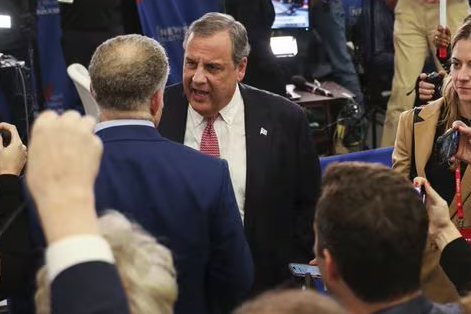
Christie
used his
first
chance
to
speak,
which
didn’t
come
until
roughly
17
minutes
into the
debate,
to go
straight
for
Trump,
and
argue
that his
2024
rivals’
failure
to
attack
Trump
directly
was the
problem.
Christie
called
Trump
unfit
for
office,
echoing
alarms
that the
former
president
would
govern
as an
autocrat
based on
his
recent
threats
to send
the
Justice
Department
after
his
critics.
“They
don’t
want to
talk
about
the fact
that
when you
go and
you say
the
truth
about
somebody
who is a
dictator,
or
bully,
who has
taken
shots at
everybody,”
Christie
said of
his
rivals.
“I’m in
this
race
because
the
truth
needs to
be
spoken.
He is
unfit.”
Toward
the end
of the
first
hour,
Haley
said
Trump
deserved
some
blame
for
adding
to the
national
debt
during
his
administration.
DeSantis
then
agreed
that
Republicans
were
responsible
for
deficit
spending,
but he
did not
single
out
Trump.
Kelly
teased
opening
the
second
hour
with
more
discussion
of
Trump,
but she
kicked
it off
by
asking
the
candidates
to
respond
to
Trump’s
proposals
on
blocking
migrants
based on
ideology
or
religion.
Christie
took
another
opportunity
to turn
back to
Trump’s
character,
drawing
a mix of
cheers
and boos
from the
audience
despite
their
being
instructed
to watch
quietly.
DeSantis
offered
a mix of
critiques,
from
Trump’s
age and
electability
to his
conduct
during
the
pandemic.
While
Trump
sought
to
upstage
those
gatherings
with his
own
counterprogramming,
he
treated
this one
as not
even
worth
competing
with,
spending
the
evening
at a
private
fundraiser
instead.
Viewership
declined
over the
course
of the
previous
debates,
and
because
last
night’s
debate
was
hosted
by an
upstart
network
and
sponsored
by an
alternative
video-hosting
site, it
was
likely
to draw
a
still-smaller
audience.
Haley
faces an
onslaught
and
holds
her
ground
Since
the last
debate
about a
month
ago,
Haley’s
star has
risen as
the
leading
Trump
alternative
in the
race,
surpassing
DeSantis
for a
distant
second
place in
the
three
early
states.
Strong
debate
performances
have
fueled
her
ascent,
earning
second
looks
and
powerful
endorsements
from
both
donors
and
voters.
That
momentum
has
provoked
fresh
attacks
from
DeSantis,
Christie
and
Ramaswamy
that
were all
on
display
Wednesday
night.
Out of
the
gate,
DeSantis
accused
Haley of
caving
to
pressure
from the
left,
the
media
and
donors.
Ramaswamy
criticized
her for
taking
donations
from
Democrats,
including
LinkedIn
co-founder
Reid
Hoffman,
and for
her
proposal
that all
social
media
users
should
be
verified,
which
she
later
walked
back.
Haley
appeared
unruffled
and hit
back
hard,
calling
the
other
candidates
jealous
of the
support
she’s
gaining.
“I love
all the
attention,
fellas,
thank
you for
that,”
she
said.
Christie
came to
Haley’s
defense
after
Ramaswamy
insulted
her
intelligence.
Christie
said he
and
Haley
disagreed
on
policy
but
“what we
don’t
disagree
on is
this is
a smart
accomplished
woman.”
Both
former
governors
have
made
inroads
with the
same
group of
independents
and
anti-Trump
Republican
voters
in New
Hampshire.
Haley
polls
second
behind
Trump in
the
state,
but
Christie
is
pulling
more
than 10
percent
of
potential
primary
voters —
a share
that
could
prove
essential
to GOP
consolidation
efforts
against
Trump.
Leading
up to
the
debate,
Christie
called
out
Haley
for
shifting
positions
and
accused
her of
trying
to have
it both
ways on
Trump.
Everybody
hates
Ramaswamy
During
the
Republican
primary
debate
on Dec.
7,
former
New
Jersey
governor
Chris
Christie
slammed
businessman
Vivek
Ramaswamy
for
making
personal
insults.
(Video:
NewsNation)
Ramaswamy
repeatedly
used his
time for
outrageous
provocations,
promoting
conspiracy
theories
that the
Jan. 6,
2021,
attack
on the
Capitol
was
staged
and that
the 2020
election
was
stolen.
As in
previous
debates,
he made
personal
attacks
on the
other
candidates,
including
calling
Haley a
“fascist,”
drawing
clear
exasperation
from
them,
the
moderators
and the
audience.
After
Ramaswamy
insulted
Haley’s
intelligence,
Christie
came to
her
defense
and
seemed
to
capture
the
collective
animosity
onstage
toward
the
political
newcomer,
engaging
in a
heated
exchange.
“This is
the
fourth
debate
that you
would be
voted,
in the
first 20
minutes,
as the
most
obnoxious
blowhard
in
America,”
Christie
said.
Ramaswamy
swiped
back
with a
dig at
Christie’s
weight.
Later,
Ramaswamy
held up
his
notepad
where
he’d
scrawled
in large
print:
“NIKKI =
CORRUPT,”
drawing
boos
from the
crowd.
Asked by
moderators
whether
she
would
like to
respond,
Haley
replied,
“No.
It’s not
worth my
time.”
Christie
goes on
offense
After
struggling
to get
words in
during
earlier
debates,
Christie
established
a clear
role for
himself
in
demanding
accountability
from
Trump,
as well
as the
other
candidates.
Other
than a
detour
to scrap
with
Ramaswamy,
Christie
was
disciplined
in
finding
ways to
bring
his
answers
back to
Trump.
In
response
to a
question
about
restoring
public
confidence
in
federal
law
enforcement,
Christie
drew on
his own
experience
as a
U.S.
attorney
and
proposed
appointing
an
independent,
well-respected
attorney
general
and
keeping
politics
out of
prosecutions
— a
striking
contrast
to
Trump’s
threats
to
respond
to his
prosecutions
by
turning
federal
power
against
his
political
opponents.
Christie
twice
dinged
DeSantis
for
dodging
questions,
first
for not
specifying
what
steps he
would
take to
rescue
American
hostages
in Gaza,
and
later
for
avoiding
a clear
answer
on
whether
Trump is
too old
to
serve.
The
receptivity
for such
answers
in
today’s
GOP
remains
unclear.
Christie
narrowly
met the
polling
threshold
to be
included
in the
debate.
Candidates
voiced
hostility
toward
immigrants
and
foreign
powers
Haley
joined
Trump in
supporting
a ban on
migration
from
Muslim
countries.
Of Iran,
she
said,
“You’ve
got to
punch
them,
you’ve
got to
punch
them
hard,”
but said
she
didn’t
mean
bombing
the
country
at this
time.
DeSantis
also
supported
restricting
Muslim
immigrants
and
accused
European
countries
of
“importing”
antisemitism.
He even
referred
to
traditional
Arab
clothing
as “man
dresses.”
Ramaswamy
threatened
to
“smoke
the
terrorists”
on the
southern
border,
repeated
his
proposal
to
provide
the
Taiwanese
people
with
firearms,
and
suggested
the
United
States
should
change
its
long-standing
policy
of
“strategic
ambiguity”
in favor
of
committing
to
defend
the
island
nation
from
China.
He also
gave
credence
to the
“great
replacement
theory,”
a racist
conspiracy
theory
that
posits
that
Jews,
racial
minorities
and
immigrants
are
seeking
to
replace
White
Americans
through
higher
fertility
rates
and
migration.
|




 I
HI TECH NEWS
I
SPORTS
I
I
HI TECH NEWS
I
SPORTS
I