|
|
|
|
|
|
|
|
|
|
|
|
Midterm
Outlook
as of
Oct 2,
2026
(Election
Day is
Nov 3)
Marc
Kennedy
-
National-Politics
Tell Us
USA News
Network
National
The
structural
picture
favors
Democrats.
The
president's
party
typically
bleeds
in
midterms,
and this
cycle is
no
exception.
Decision
Desk HQ
puts
Democratic
odds of
winning
the
House at
75% and
the
Senate
at 55%
as of
Sept.
30.
Prediction
markets
are more
aggressive,
with
Polymarket
showing
93% for
the
House
and 63%
for the
Senate
in its
Sept. 28
update.
The
House is
close to
settled
in the
forecasters'
minds.
Charlie
Cook has
said it
has been
"a done
deal"
for some
time,
and he
sees
roughly
a
20-seat
Democratic
gain.
The real
story is
the
Senate.
A year
ago, a
Democratic
majority
was a
fantasy,
but
Democrats
now need
a net
four
seats
and have
a
plausible
path
through
Maine,
Ohio,
Iowa,
Texas,
Alaska
and
Michigan.
Inside
Elections
sees a
two-to-four
seat
gain,
and Cook
has
floated
four to
five.
I'd
treat
the more
bullish
projections
with
some
caution.
Several
of those
seats
are in
states
where
Republicans
still
hold a
structural
edge,
and a
few
points
of
polling
error
would
decide
control.
Michigan
Governor.
This
race has
largely
resolved.
Jocelyn
Benson
leads
John
James in
every
recent
poll,
from a
narrow
48–43 in
the
Siena
survey
to a
wide
51–34 in
Suffolk's.
The
pivotal
event
was Mike
Duggan's
exit in
May. He
had been
polling
around
20% and
was
trailing
Benson
in a
three-way
field.
His
departure
removed
the one
factor
that had
kept the
race
competitive,
since
early
polling
suggested
he was
drawing
more
from
Democrats
than
from
Republicans.
The race
is rated
Leans
Democratic,
and the
markets
give
Benson
roughly
93%.
U.S.
Senate.
This is
the race
to
watch.
Abdul
El-Sayed
and Mike
Rogers
are
separated
by low
single
digits
in most
surveys.
Emerson
has it
48–46,
Siena
49–44,
and
Marist
51–44
among
registered
voters.
Sabato's
Crystal
Ball
moved it
from
Toss-up
to Leans
Democratic
this
week.
The
Washington
Post/Schar
School
poll
captures
the
tension
well. A
majority
of
voters
want
Democratic
Senate
control,
yet
El-Sayed
trails
that
number
by
several
points,
which
suggests
a
candidate-quality
gap that
Rogers
can
exploit.
The
education
divide
is stark
as well.
Rogers
leads
among
non-college
voters,
while
El-Sayed
carries
college
graduates
comfortably.
DDHQ
gives
Democrats
about a
72%
chance
of
holding
the
seat,
and that
seems
about
right to
me. It's
favorable,
but not
safe.
House.
MI-10 is
a
genuine
Toss-up
in
DDHQ's
model,
and Fox
News has
shifted
MI-04
into the
Toss-up
column.
Both
will be
decided
at the
margins.
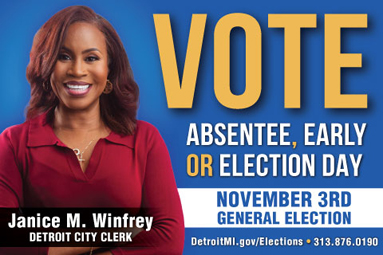
Detroit
The city
is not
competitive
in
November,
but it
matters
for
turnout.
In
MI-13,
the
August
primary
was the
real
contest.
Donavan
McKinney,
a
progressive
state
representative
with
strong
labor
and
local
institutional
backing,
unseated
two-term
incumbent
Shri
Thanedar
51.9% to
48.1%.
Thanedar
had the
money
and the
name
recognition,
but he
couldn't
overcome
questions
about
his ties
to the
city and
his
effectiveness.
McKinney
is a
heavy
favorite
in
November,
and his
win
would
restore
Black
representation
to
Detroit
in
Congress
for the
first
time
since
Thanedar's
2022
victory.
There is
no
mayoral
contest
this
year.
Mary
Sheffield
won in
2025 and
became
the
city's
first
woman
mayor.
Statewide,
what
Detroit
can do
is
deliver
turnout
on a
scale
that
offsets
Republican
strength
in
outstate
Michigan,
and in a
Senate
race
this
close
that
could
decide
the
outcome.
Bottom
line:
Benson
is the
clear
favorite,
and the
Senate
seat is
a
lean-Democratic
hold.
The
House
outcome
is more
settled
than
either
of
those,
and
nationally
the
Senate
map is
the main
uncertainty.
I
couldn't
find
reliable
information
on
Detroit's
local
ballot
questions
or state
legislative
races,
so those
remain a
gap in
this
picture.
This
Tell Us
USA News
Network
report
is
produced
in part
by Ai
and can
make
mistakes.
Please
contact
and let
us know
of any
errors
you may
find.
info@tellususa.com
|
|
|
|
|
|
|
|
|




 I
HI TECH NEWS
I
SPORTS
I
I
HI TECH NEWS
I
SPORTS
I