|
|
|
|
|
|
 |
|
|
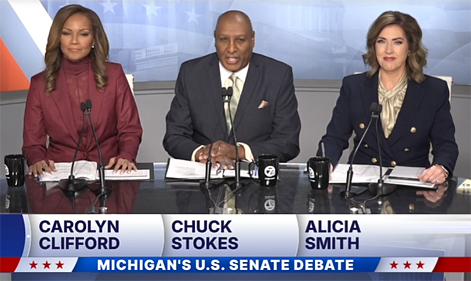
The
debate
was
moderated
by 7
News
Detroit
anchors
Carolyn
Clifford,
7 News
Detroit
Editorial
Director
Chuck
Stokes
and
Alicia
Smith.
(Screenshot
via WXYZ
TV) |
|
|
No
Knockout
in
Southfield:
Rogers
and
El-Sayed
Leave
Michigan’s
Senate
Race
Where
They
Found It
Walter
Hargrove
-
Political
Analyst
Tell Us
Detroit
News
Bureau
SOUTHFIELD,
MI -
Twelve
days
out,
Michigan’s
Senate
race
came
down to
one
question:
which
candidate
scares
voters
more?
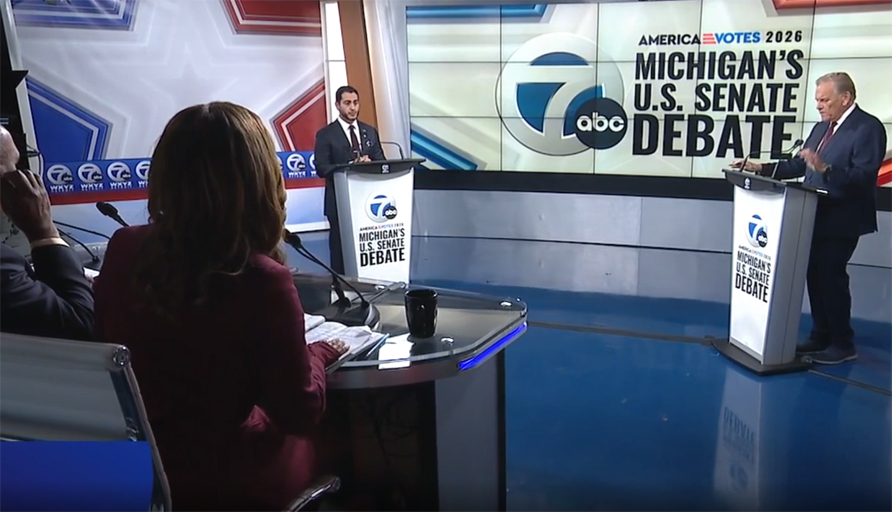
Wednesday
night’s
debate
in
Southfield,
the
second
and last
of the
campaign,
did
nothing
to
settle
it. Mike
Rogers
and
Abdul
El-Sayed
spent an
hour
trying
to
define
each
other
before
voters
could
define
themselves.
The race
is a
dead
heat in
a state
Democrats
hold and
Republicans
badly
want,
and it
could
decide
control
of the
Senate.
Newsweek
had
El-Sayed
up
slightly
in the
polls
going
in.
Nothing
on that
stage
suggests
the
margin
will
widen.
El-Sayed’s
strategy
was to
make the
race a
referendum
on
Donald
Trump,
and he
never
wavered.
He
called
Rogers’
agenda a
MAGA
vision,
blamed
Trump-backed
policies
for
expensive
gas and
groceries,
and
labeled
his
opponent
a “sock
puppet”
for the
president.
He even
turned
the
Republican
talking
points
into a
bit,
inviting
viewers
to play
“MAGA
bingo”
every
time
Rogers
reached
for a
buzzword.
It was a
disciplined
effort
to tie
Rogers
to a
president
whose
approval
ratings
are
historically
low.
Rogers
needed
to get
away
from
that,
and he
didn’t
entirely
manage
it. He
opened
by
conceding
that
Michigan
families
are
hurting,
which is
a long
way from
the
president’s
talk of
a golden
age. He
called
the
tariffs
a mixed
bag and
questioned
the
trade
war with
Canada.
He tried
to flip
the
bingo
joke,
saying
the real
game was
counting
how many
times
El-Sayed
said
Trump’s
name. It
got a
laugh,
but it’s
a weak
counter
when
your
opponent’s
whole
case is
that you
and the
president
are
joined
at the
hip.
Rogers
then
confirmed
after
the
debate
that he
plans to
appear
at
Trump’s
Michigan
rally on
Sunday,
which
handed
El-Sayed
his
argument
a second
time.
So
Rogers
fell
back on
the only
strategy
that
gives
him a
path:
disqualify
the
Democrat.
As CNN
framed
it, his
only
hope is
to
convince
voters
El-Sayed
is
unacceptable.
That is
why the
night’s
sharpest
moment
had
nothing
to do
with
policy.
Rogers
pressed
the
claim
that
El-Sayed
has ties
to the
Muslim
Brotherhood
and
donors
linked
to
terror
groups,
and he
said
El-Sayed
would be
a
national
security
risk.
Afterward
he told
reporters
he
doubts
El-Sayed
could
even get
a
security
clearance.
El-Sayed
has
denied
any
connection
to the
organization.
He
called
the
charge
shameful
and
noted
that it
rests on
his
mother,
a nurse
in
Missouri,
and told
Rogers
it was
beneath
him.
That
exchange
is a
gamble,
and it
cuts
both
ways.
Rogers
is
questioning
the
loyalty
of a
Michigan-born
Muslim
who
would be
the
first of
his
faith
elected
to the
Senate.
Some
voters
will
hear a
legitimate
security
question,
and some
will
hear
something
much
uglier.
Which of
those
lands
will
matter
more
than any
policy
answer
given
Wednesday.
Rogers
is also
leaning
on a
pitch
that
many
Democrats
are
uneasy
about
El-Sayed.
He
claimed
Jewish
Democrats
are
afraid
of him
and that
Democrats
are
abandoning
him as
too
extreme.
If that
is true,
it is
his best
card. If
it
isn’t,
he is
relying
on
perception,
and the
debate
offered
no proof
either
way.
On
the
issues,
both men
landed
blows
and
neither
got a
clean
win. El-Sayed’s
Medicare
for All
plan is
his
biggest
vulnerability.
Rogers
hammered
it as
ruinously
expensive,
saying
it would
mean tax
hikes
and that
even
other
Democrats
won’t
support
it. El-Sayed’s
counter
was to
say the
corporations
draining
voters’
wallets
are the
ones
bankrolling
Rogers,
and to
accuse
him of
being in
bed with
big
pharma.
After
the
debate
he told
CBS the
plan
would
cost
less
than the
current
system.
That is
a claim,
not a
number,
and it
won’t
quiet
the cost
question.
On
Iran,
each man
is
exposed.
El-Sayed
wants a
War
Powers
Resolution
and
blames
the war
for high
prices,
an
argument
that
plays
well
with
voters
tired of
both.
But when
asked
directly
whether
Iran is
a major
threat,
he
hedged,
saying
it has
been one
but had
been
contained
under
the
Obama-era
deal.
Rogers
called
that
answer a
nonstarter
for a
would-be
senator.
Rogers
has his
own
problem.
He says
the war
should
end, yet
he
warned
of $8
gas if
Iran
closes
the
Strait
of
Hormuz
or
builds a
weapon,
which
sounds a
lot like
an
argument
for
staying
in.
El-Sayed
pounced,
saying
Rogers
has a
war for
everything.
The
rest
followed
the
familiar
partisan
script.
Rogers
defended
ICE as
going
after
violent
criminals
and
traffickers
and
accused
El-Sayed
of
wanting
to
defund
the
police,
which
El-Sayed
denies.
El-Sayed
said ICE
agents
operate
in
neighborhoods
without
identifying
themselves.
They
split on
the SAVE
Act,
with
Rogers
calling
photo ID
reasonable
and
El-Sayed
calling
it voter
suppression.
Tonally,
this was
a notch
below
the Oct.
8 debate
in Grand
Rapids,
where
interruptions
and
insults
came in
nearly
every
answer
and
Rogers
called
El-Sayed
a con
man. It
was
still
ugly.
Rogers’
campaign
went
back to
its
“Conman
Abdul”
nickname,
and
neither
man gave
any
ground.
The
honest
scorecard
is that
nobody
landed a
knockout.
El-Sayed
gave
Democrats
a clear,
repeatable
message
tying
Rogers
to Trump
and the
Iran
war.
Rogers
gave
skeptical
voters a
reason
to
worry,
but he
did it
by
making a
charge
about
loyalty
that he
will
have to
live
with. I
found no
snap
poll
showing
who won.
The
question
for the
final
stretch
is
whether
voters
are
angrier
at Trump
or
warier
of
El-Sayed,
and
Wednesday’s
debate
did not
answer
it.
This
Tell Us
USA News
Network
report
is
produced
in part
by Ai
and can
make
mistakes.
Please
contact
and let
us know
of any
errors
you may
find.
info@tellususa.com
|
|
|
|
|
|
|
|
|




 I
HI TECH NEWS
I
SPORTS
I