|
|
|
|
|
|
|
|
|
|
|
|
Special
News
Report:
The U.S.
Economy,
Geopolitics,
and
Washington
Politics
Patricia
Romero -
International
-
Politics
Tell Us
USA News
Network
WASHINGTON
- The
U.S.
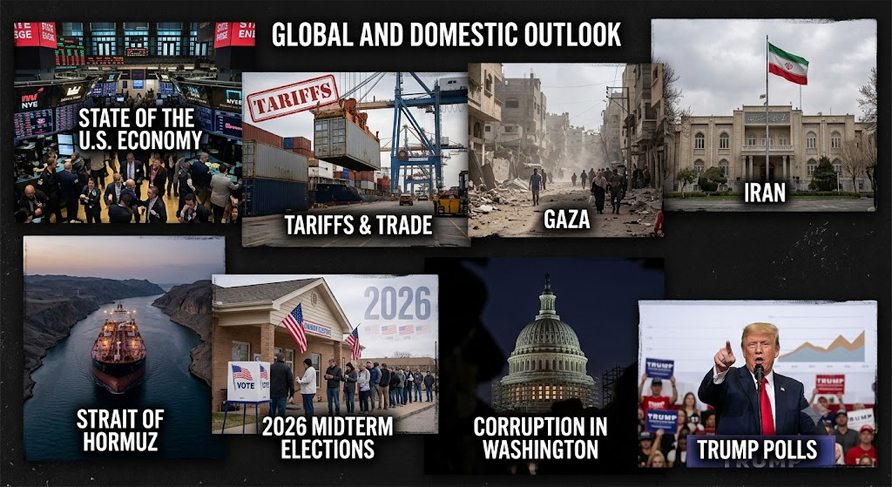
economic
landscape
continues
to
navigate
complex
signals,
balancing
near-record
stock
market
levels
against
persistent
affordability
concerns.
The S&P
500
continues
to trade
near
all-time
highs,
even as
annual
inflation
hovers
around
3.4% to
3.5%. At
the same
time,
energy
price
swings
stemming
from
foreign
conflicts
have
kept the
Federal
Reserve
cautious
regarding
interest
rate
adjustments.
President
Donald
Trump
signed
an
executive
order
imposing
a 15%
tariff
on
imported
polysilicon
derivatives
alongside
a
minimum
import
price
structure.
This
policy
is aimed
at
safeguarding
domestic
supply
chains
for
semiconductors
and
solar
panels,
which
the
administration
framed
as vital
for
national
defense
and
technology
independence.
Geopolitical
developments
in the
Middle
East
remain
central
to
global
market
security
and
energy
flows.
Following
months
of
severe
global
energy
disruptions
caused
by the
conflict
with
Iran,
Tehran
and Oman
have
reached
an
agreement
in
principle
on a
proposed
transit
route
through
the
Strait
of
Hormuz.
The
U.S. and
regional
partners
are
monitoring
final
drafting
steps
that
could
potentially
ease
maritime
blockades
and
stabilize
crude
oil
exports.
Meanwhile,
diplomatic
efforts
continue
toward
establishing
long-term
stabilization
roadmaps
across
Gaza and
maintaining
fragile
ceasefires
in
neighboring
border
regions.
Corporate
influence,
government
spending
oversight,
and
ethics
enforcement
remain
focal
points
on
Capitol
Hill.
Senate
committees
have
launched
inquiries
into
potential
conflicts
of
interest,
executive
lobbying
dynamics,
and
regulatory
policy
shifts
affecting
major
industries
such as
healthcare
and
agriculture.
At
the same
time,
federal
prosecutors
and the
Department
of
Justice
have
announced
major
multi-state
enforcement
actions
targeting
systemic
healthcare
and
pandemic
relief
fraud
schemes.
Economic
conditions,
cost-of-living
concerns,
and
public
sentiment
toward
presidential
policies
are
shaping
the
broader
debate
ahead of
the
upcoming
congressional
elections.
Voters
and
observers
are
closely
monitoring
poll
numbers
and
administration
policies
as both
major
parties
position
themselves
for the
midterms.
For
information
on voter
registration,
polling
locations,
or
election
administration
guidelines
in your
state,
you can
check
official
state
election
portals
or use
Register
and Vote
in Your
State
provided
by the
U.S.
Election
Assistance
Commission.
|
|
|
|
|
|
|
|
|




 I
HI TECH NEWS
I
SPORTS
I
I
HI TECH NEWS
I
SPORTS
I