|
|
|
|
|
|
|
|
|
|
| |
Supreme
Court
Backs
White
House in
Bombshell
Haitian
Immigration
Ruling
Luis
Fernando
Arce -
Latin
America
Tell Us
Worldwide
News
Network
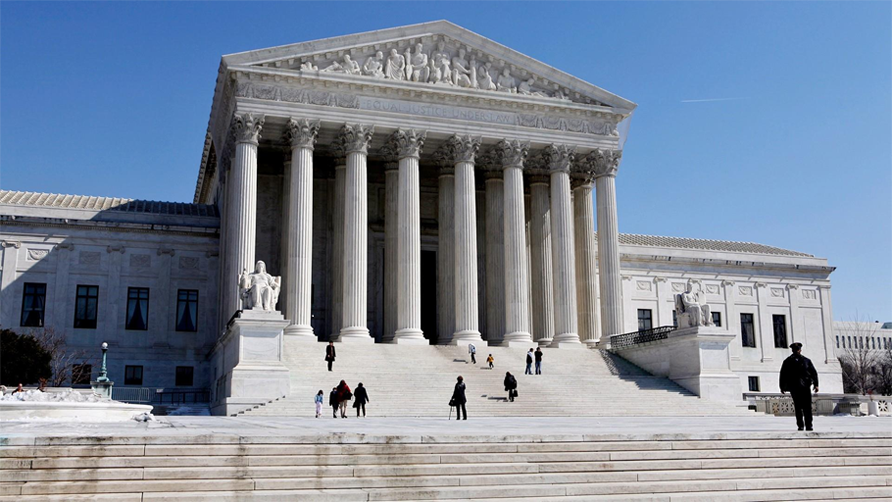
WASHINGTON
- In a
major
victory
for the
White
House's
immigration
agenda,
the
Supreme
Court
ruled
6-3
today
that the
administration
can move
forward
with
plans to
terminate
Temporary
Protected
Status
(TPS)
for more
than
350,000
Haitian
migrants,
stripping
away
long-standing
protections
against
deportation
and
revoking
their
legal
work
authorizations.
The high
court’s
conservative
majority
overturned
lower
court
injunctions
that had
previously
blocked
the
Department
of
Homeland
Security
(DHS)
from
ending
the
humanitarian
program.
Writing
for the
majority,
Justice
Samuel
Alito
stated
that the
1990 TPS
statute
explicitly
shields
executive
branch
determinations
from
judicial
second-guessing.
The TPS
statute
plainly
bars
consideration
of
respondents'
non-constitutional
claims,
the
Court
held,
establishing
that
Congress
gave the
administration,
rather
than
federal
judges,
the
absolute
authority
to
cancel
or renew
these
protections.
While
today's
decision
directly
targeted
cases
involving
350,000
Haitians
and
6,100
Syrians,
the
legal
precedent
effectively
hands
the
administration
a green
light to
dismantle
the
program
on a
much
grander
scale.
This
affects
approximately
1.3
million
immigrants
across
17
protected
nations,
with
protections
targeted
for
termination
in 13 of
those 17
countries.
The
humanitarian
relief
program
was
established
by
Congress
in 1990
to
shield
foreign
nationals
already
in the
U.S.
from
being
sent
back to
countries
destabilized
by
natural
disasters,
war, or
civil
extraordinary
crises.
The
administration
argued
that TPS
was
fundamentally
designed
to be a
temporary
measure.
Government
lawyers
emphasized
that the
word
temporary
defines
the
program,
meaning
it was
never
intended
to grant
permanent
residency
or
indefinite
immunity
from
immigration
enforcement.
Immigration
attorneys
and
civil
rights
groups
argued
that DHS
bypassed
proper
administrative
procedures
in a
rushed
effort
to
cancel
the
program.
They
maintained
that
Haiti—currently
plagued
by
catastrophic
gang
violence
and deep
political
instability—remains
entirely
unsafe
for
returns.
The
plaintiffs
also
alleged
that the
policy
was
infected
by
racial
bias,
pointing
to
hostile
rhetoric
directed
at
Haitian
enclaves
during
the 2024
campaign.
The
Supreme
Court
ultimately
rejected
the
statutory
challenges
and
noted
that the
plaintiffs
were
unlikely
to
succeed
on their
constitutional
equal
protection
claims,
leaving
hundreds
of
thousands
of
long-term
U.S.
residents
facing
an
uncertain
future.
The
ruling
clears
the
runway
for DHS
to begin
winding
down the
protections,
terminating
legal
work
permits
and
opening
the door
to
potential
deportation
proceedings.
Because
the
Court
ruled
that the
judiciary
lacks
the
jurisdiction
to
review
these
executive
decisions,
immigration
advocates
warn
this
could
mark the
beginning
of the
largest
mass
de-documentation
event in
modern
U.S.
history.
Advocacy
groups
expressed
immediate
devastation
following
the
decision,
warning
that
forcing
hundreds
of
thousands
of
integrated
workers
back
into
active
crisis
zones
will
trigger
severe
humanitarian
fallout
both in
the U.S.
and
abroad.
White
House
officials,
conversely,
praised
the
ruling
for
restoring
the
executive
authorities
explicitly
outlined
by
federal
law.
|
|
|
|
|
|
|
|
|




 I
HI TECH NEWS
I
SPORTS
I
I
HI TECH NEWS
I
SPORTS
I