|
|
|
|
|
|
 |
|
|
|
| |
Supreme
Court
hands
Trump
administration
a
pivotal
victory
on
voter-roll
checks
Ashley
Roberts
-
Capitol
Hill
Correspondent
Tell Us
USA News
Network
WASHINGTON
— The
Supreme
Court
cleared
the way
Friday
for the
Trump
administration
to give
states
expanded
access
to a
federal
citizenship-verification
system
for
voter-roll
audits,
an
emergency
ruling
that
intensifies
a
national
fight
over
election
security
and the
risk
that
eligible
Americans
could be
wrongly
targeted
before
the
midterm
elections.
The
court
lifted
lower-court
restrictions
on the
administration’s
use of
the
Department
of
Homeland
Security’s
Systematic
Alien
Verification
for
Entitlements
database,
known as
SAVE.
The
action
allows
state
election
authorities,
at least
temporarily,
to use
the
system
in
citizenship
inquiries
involving
individual
registered
voters.
The
decision
is a
major
legal
and
political
win for
President
Donald
Trump,
who has
made
allegations
of
noncitizen
voting
central
to his
election
agenda
despite
evidence
that
such
voting
is rare.
It also
gives
federal
officials
a
powerful
new role
in a
process
historically
managed
by state
and
local
election
offices.
The
justices
acted
through
the
court’s
emergency
docket,
leaving
no final
resolution
of
whether
the
administration’s
revised
SAVE
system
complies
with
federal
privacy
requirements
or
voting-rights
safeguards.
The
broader
lawsuit
will
continue
in lower
courts.
But
Friday’s
order
gives
the
administration
the
authority
it had
sought
as
states
prepare
for the
Nov. 3
midterm
election:
the
ability
to
provide
election
officials
with
access
to data
intended
to
identify
people
who may
not be
U.S.
citizens.
SAVE was
originally
designed
to help
government
agencies
verify
immigration
status
for
public-benefit
programs.
The
Trump
administration
expanded
its use
following
a March
2025
executive
order
directing
federal
agencies
to
assist
state
election
officials
in
assessing
the
citizenship
status
of
people
on
voter-registration
lists.
The
updated
system
draws on
immigration,
citizenship
and
Social
Security-related
information.
Its
critics
say the
program’s
data may
be
incomplete,
outdated
or
misread,
creating
the
possibility
that
naturalized
citizens
and
other
eligible
voters
could be
improperly
flagged.
That
concern
drove a
lower-court
injunction
issued
by U.S.
District
Judge
Sparkle
L.
Sooknanan.
The
judge
concluded
that
plaintiffs
were
likely
to
succeed
on
claims
that the
expanded
program
violated
privacy
protections
and
posed a
risk of
erroneous
voter
removals.
A
federal
appeals
court
initially
declined
to
disturb
that
decision.
The
Supreme
Court’s
intervention
changes
the
operational
landscape
but does
not give
states
unlimited
power to
remove
voters
from
their
rolls.
Federal
law
generally
prohibits
systematic
voter-list
maintenance
within
90 days
of a
federal
election,
a
guardrail
meant to
prevent
mass
purges
in the
final
weeks of
a
campaign.
States
may
still
conduct
individualized
investigations,
provided
they
comply
with
voter-notice
and
due-process
requirements.
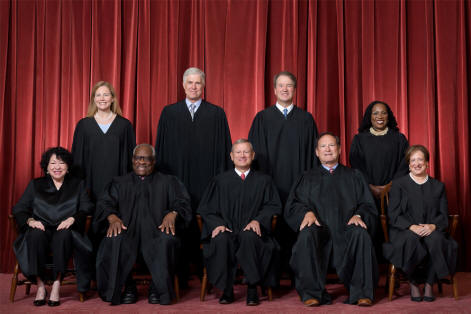
The
court’s
three
liberal
justices
dissented.
Justice
Ketanji
Brown
Jackson
warned
that the
administration’s
request
came too
close to
an
election
and that
even
limited
use of
disputed
data
could
burden
qualified
voters
or
undermine
confidence
in the
election
process.
The
immediate
practical
impact
will
depend
on which
states
move
quickly
to use
the
system,
how they
evaluate
potential
matches,
and
whether
election
officials
treat a
database
result
as a
starting
point
for
verification
rather
than
proof
that a
registered
voter is
ineligible.
For
Trump
and his
allies,
the
ruling
is a
validation
of their
push for
more
aggressive
voter-roll
scrutiny.
For
voting-rights
organizations,
it is an
alarm
that
federal
immigration
and
personal-data
systems
could
now be
deployed
in ways
that
place
eligible
voters
under
heightened
scrutiny
just
weeks
before
ballots
are
cast.
The
Supreme
Court’s
order
does not
settle
the
legality
of the
SAVE
expansion.
It does,
however,
ensure
that the
administration’s
election-verification
policy
will be
in force
during
one of
the most
politically
charged
periods
of the
2026
campaign.
This
Tell Us
USA News
Network
report
is
produced
in part
by Ai
and can
make
mistakes.
Please
contact
and let
us know
of any
errors
you may
find.
info@tellususa.com
|
|
|
|
|
|
|
|
|




 I
HI TECH NEWS
I
SPORTS
I
I
HI TECH NEWS
I
SPORTS
I