|
|
|
|
|
|
 |
|
|
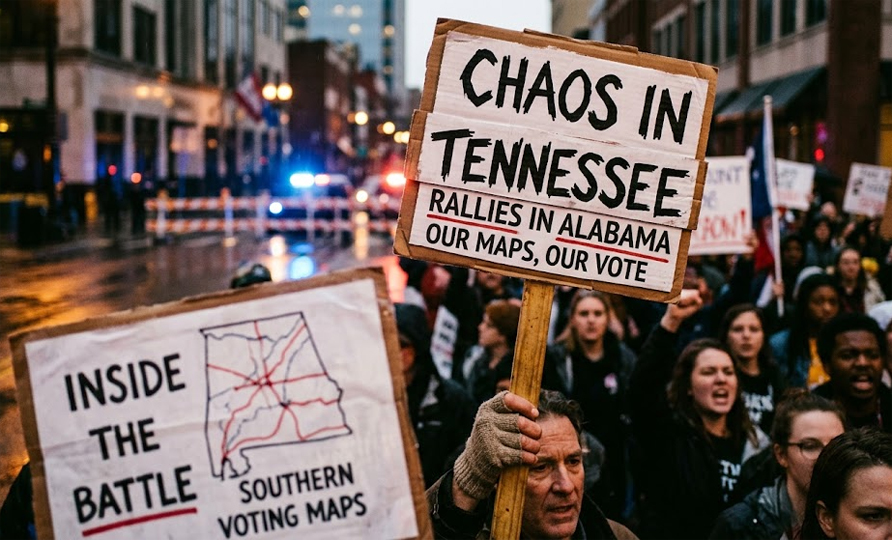
"From
courthouse
steps to
packed
state
chambers,
the
fight
over
Southern
voting
maps is
reshaping
democracy
across
Tennessee
and
Alabama.”
(AI
created
image) |
|
|
Thousands
rally in
Alabama,
Louisiana
in
latest
voting-rights
push
Marc
Kennedy
-
National-Politics/Civil
Rights
Analyst
Tell Us
USA News
Network
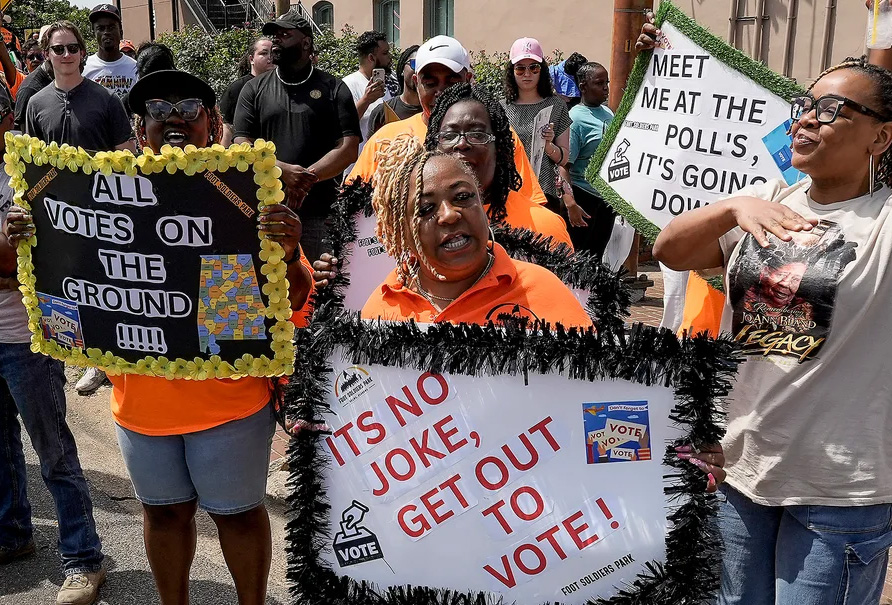
MONTGOMERY,
Ala. —
Thousands
of
protesters,
clergy
members
and
civil
rights
advocates
gathered
Saturday
in
Alabama
and
Louisiana
in
demonstrations
centered
on
voting
rights,
redistricting
and what
organizers
described
as a
renewed
threat
to Black
political
power.
The
rallies,
held on
the
anniversary
weekend
tied to
the
civil
rights
movement,
unfolded
as
activists
pressed
back
against
recent
political
and
legal
battles
over
congressional
maps and
ballot
access.
In
Montgomery,
marchers
gathered
near the
state
Capitol
and
framed
their
protest
as part
of a
long-running
fight
for fair
representation,
drawing
a direct
line
from
Selma-era
activism
to
today’s
disputes
over
voting
rights.
Speakers
at the
events
said
recent
court
rulings
and
partisan
redistricting
efforts
have
weakened
the
influence
of Black
voters
in
several
states,
particularly
across
the
South.
They
argued
that
changes
to
district
boundaries
and
election
rules
could
have
lasting
effects
on who
is
elected
to
Congress
and
state
legislatures,
especially
in
communities
that
have
historically
relied
on the
Voting
Rights
Act to
protect
their
political
voice.
In
Alabama,
protesters
and
elected
allies
used the
demonstrations
to call
for
federal
action
and to
warn
that
civil
rights
protections
cannot
be
treated
as
settled
history.
The
crowd
included
voting-rights
activists
who said
the
fight is
no
longer
only
about
access
to the
ballot,
but also
about
whether
communities
of color
can
still
translate
votes
into
meaningful
representation.
In
Louisiana,
demonstrators
voiced
similar
concerns,
saying
Black
voters
were
being
targeted
by
efforts
to
redraw
districts
and
weaken
electoral
influence.
Organizers
described
the
protests
as both
a
remembrance
of the
civil
rights
movement
and a
modern-day
push to
preserve
it,
arguing
that
political
participation
remains
the most
important
defense
against
dilution
of
minority
voting
strength.
The
protests
also
reflected
the
national
scope of
the
issue.
Across
the
country,
voting
rights,
district
maps and
election
law
continue
to shape
political
power,
and
civil
rights
leaders
have
increasingly
used
public
demonstrations
to keep
pressure
on
lawmakers
and the
courts.
Saturday’s
rallies
showed
that the
debate
remains
deeply
rooted
in
Southern
history,
but also
increasingly
tied to
the
broader
fight
over the
future
of
American
democracy.
|
|
|
|
|
|
|
|
|




 I
HI TECH NEWS
I
SPORTS
I
I
HI TECH NEWS
I
SPORTS
I