|
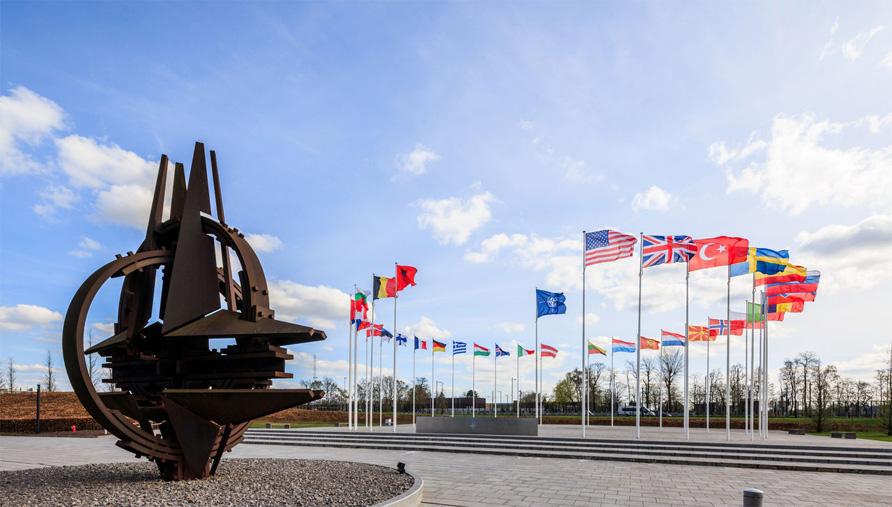
NATO was
created
by 12
countries
from
Europe
and
North
America
on 4
April
1949.
Since
then, 20
more
countries
have
joined
NATO
through
10
rounds
of
enlargement
(in
1952,
1955,
1982,
1999,
2004,
2009,
2017,
2020,
2023 and
2024). |
|
|
|
|
|
 |
 |
 |
|
|
|
|
|
|
|
|
|
|
| |
Trump
Lashes
Out at
NATO
Over
Iran
War,
Exposing
a Web of
Contradictions
Marc
Kennedy
-
National-Politics
Tell Us
USA News
Network
WASHINGTON
-
President
Donald
Trump
escalated
his war
of words
with
NATO
allies
on
Tuesday,
blasting
the
32-nation
alliance
for
refusing
to join
the
United
States'
military
campaign
against
Iran,
before
pivoting
abruptly
to
declare
that
America
never
needed
their
help in
the
first
place —
a
dramatic
reversal
that
critics
say laid
bare the
contradictions
at the
heart of
his
foreign
policy.
Trump's
brief
and
aggressive
attempt
to
corral
an
international
coalition
to
police
the
Strait
of
Hormuz
concluded
in
disappointment
on
Tuesday,
leading
the
president
to lash
out at
European
nations
that
rejected
his
demands
to help
with his
war
against
Iran.
"We
don't
need too
much
help," a
frustrated
Trump
said in
the Oval
Office,
where he
was
hosting
Ireland's
taoiseach
for St.
Patrick's
Day. "We
don't
need any
help
actually."
The
remarks
came as
a
striking
reversal
for a
president
who had
spent
days
urgently
demanding
allies
step up.
In an
interview
with the
Financial
Times,
Trump
warned
that "it
will be
very bad
for the
future
of NATO"
if
countries
fail to
police
the
strait,
and told
reporters
aboard
Air
Force
One: "We
will
remember."
The
immediate
trigger
for
Trump's
outburst
was the
formal
refusal
of
NATO's
European
members
to send
warships
to the
Strait
of
Hormuz,
the
critical
chokepoint
through
which
roughly
one-fifth
of
global
oil
trade
passes.
Iran has
effectively
shut the
waterway,
sending
global
energy
prices
soaring,
with oil
prices
rising
over 40
percent
since
the
start of
the war.
Trump
called
on
China,
France,
Japan,
South
Korea,
the
United
Kingdom,
and
others
to send
warships
to the
strait,
but the
response
from
allies
was
swift
and
cold.
"Let me
be
clear,
that
won't be
and it's
never
been
envisioned
as a
NATO
mission,"
British
Prime
Minister
Keir
Starmer
said.
Germany's
Defense
Minister
Boris
Pistorius
was more
direct:
"This is
not our
war; we
did not
start
it." The
EU's
foreign
policy
chief,
Kaja
Kallas,
echoed
that
position,
saying
simply:
"This is
not
Europe's
war."
Perhaps
the most
striking
element
of
Tuesday's
episode
was how
sharply
it
contradicted
Trump's
own
recent
statements.
For
weeks,
the
president
had
insisted
the US
needed
no
assistance
whatsoever.
On March
9, Trump
said it
was "my
honor"
to work
to
secure
the
Strait
of
Hormuz,
insisting
the oil
supply
was
mostly
helpful
to other
countries.
On
Friday,
he told
a Fox
News
radio
host "we
don't
need the
help in
drone
defense."
And on
Saturday,
he told
NBC News
simply:
"we
don't
need
help."
These
are all
the
comments
of a man
who
didn't
seem to
foresee
needing
help —
and then
there
are some
particularly
pertinent
comments
Trump
made in
late
January
about
NATO:
"We've
never
needed
them.
We have
never
really
asked
anything
of
them,"
Trump
said,
adding
dismissively
that
allied
troops
in
Afghanistan
"stayed
a little
back, a
little
off the
front
lines."
Even in
a
vacuum,
those
comments
were
highly
offensive
to
allies —
especially
since
more
than
1,000
coalition
soldiers
died in
Afghanistan
fighting
alongside
Americans.
Then,
less
than two
months
later,
Trump
demanded
those
same
allies
sacrifice
again —
and
erupted
when
they
declined.
In a
Truth
Social
post
before
his
meeting
with
Ireland's
taoiseach,
Trump
said the
US had
been
informed
by most
NATO
allies
that
they
don't
want to
get
involved
"despite
the fact
that
almost
every
Country
strongly
agreed
with
what we
are
doing."
He
called
NATO "a
one way
street —
We will
protect
them,
but they
will do
nothing
for us,"
before
adding:
"Because
of the
fact
that we
have had
such
Military
Success,
we no
longer
'need,'
or
desire,
the NATO
Countries'
assistance
— WE
NEVER
DID!"
The
outburst
raised
fresh
questions
about
the
future
of the
alliance.
When
asked by
a
reporter
whether
the US
might
exit
NATO,
Trump
said he
was
"disappointed"
in the
alliance,
noting
the US
had
spent
"trillions
of
dollars"
on it
over the
years.
"When
they
don't
help us,
it's
certainly
something
that we
should
think
about. I
don't
need
Congress
for that
decision,"
he said.
Trump
repeatedly
invoked
US
support
for
Ukraine
in his
remarks,
saying
it had
benefited
Europe
over
American
interests.
"We help
them,
and they
didn't
help us,
and I
think
that's a
very bad
thing
for
NATO,"
he said.
Underlying
the
transatlantic
dispute
is a
deeper
disagreement
about
the
war's
origins.
The
Trump
administration
has
argued
it was
defending
against
an
Iranian
preemptive
strike
against
US
assets
in the
region,
though
CNN has
reported
the
intelligence
did not
support
that
claim.
NATO's
foundational
Article
5
collective
defense
clause
has only
ever
been
invoked
once —
after
September
11,
2001,
when
allies
came to
America's
aid. But
it was
the US
and
Israel
that
attacked
Iran,
leading
other
members
to
question
why NATO
would
become
involved
in the
war at
all.
Irish
Taoiseach
Micheál
Martin,
whose
country
is not a
NATO
member,
struck a
more
conciliatory
tone
alongside
Trump,
stressing
that
"the
transatlantic
relationship
between
Europe
and the
U.S. is
very,
very
important"
and
calling
for "a
peaceful
resolution
of
conflict."
He also
acknowledged
that
"everyone
has
recognized
that you
cannot
have a
rogue
state
like
Iran
getting
control
of
nuclear
weapons."
As
the Iran
war
enters
its 19th
day with
no
coalition
in
sight,
Trump's
furious
pivot —
from
demanding
allied
support
to
dismissing
it as
unnecessary
— has
left
analysts
and
foreign
capitals
alike
grappling
with an
American
president
whose
strategic
messaging
appears
to shift
by the
hour.
What
remains
consistent,
however,
is the
deepening
rift
between
Washington
and its
oldest
partners.
|
|
|
|
|
|
|
|
|

 I
HI TECH NEWS
I
SPORTS
I
I
HI TECH NEWS
I
SPORTS
I