|
|
|
|
|
|
|
|
|
|
|
|
Trump’s
Cash
Promise
and
Voting
Comments
Overshadow
Dallas
GOP
Gathering
Li Haung
-
National-Politics
Tell Us
USA News
Network
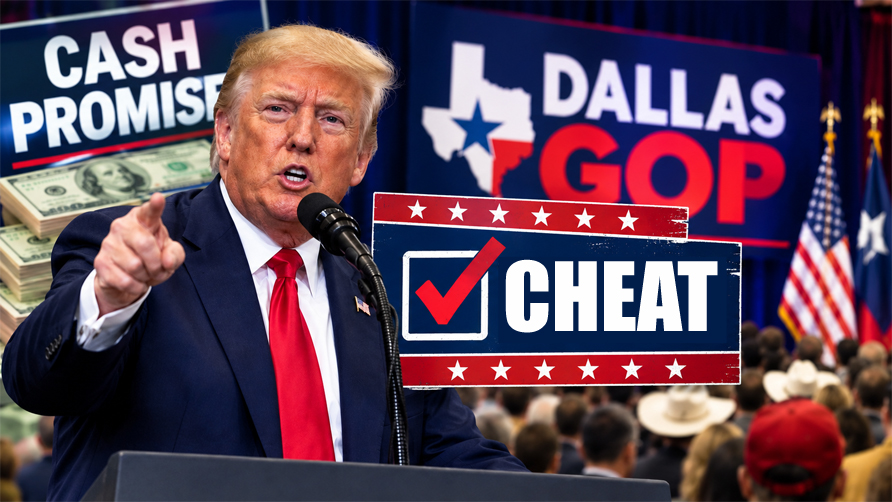
DALLAS —
President
Donald
Trump
used the
Republican
Party’s
midterm
convention
in
Dallas
to make
a series
of
extraordinary
campaign
promises
—
including
a
proposed
$5,000
payment
to every
adult
American
if
Republicans
retain
Congress
— while
also
leading
supporters
in a
voting
pledge
that
included
remarks
about
voting
without
registration
and
“cheat[ing]
like
hell.”
The
two-day
convention,
which
Trump
framed
as a
referendum
on his
presidency,
featured
broad
pledges
on cash
payments
and
energy
prices
but few
details
about
funding,
legal
authority
or
implementation.
It ended
with a
highly
unusual
call-and-response
voting
oath in
which
Trump
told
attendees
to raise
their
right
hands
and
repeat
after
him.
“I don’t
care if
I’m
registered
or not,
I’m
going to
try and
cheat
like
hell
like
they
do,”
Trump
said as
part of
the
pledge,
referring
to
Democrats
and
repeating
unsupported
claims
that
they
cheat in
elections.
Multiple
news
organizations
reported
that the
audience
laughed
at the
remark.
Trump
then
urged
attendees
to bring
family
and
friends
to vote
in
November,
again
asking
Republicans
to treat
the
midterms
as
though
he were
personally
on the
ballot.
Trump
did not
lay out
a
specific
plan for
voters
to cast
illegal
ballots,
and the
comments
were
delivered
amid an
extended,
theatrical
convention
pledge.
Still,
the
language
drew
criticism
because
voting
without
being
properly
registered,
impersonating
a voter
or
knowingly
casting
an
ineligible
ballot
can
violate
state
and
federal
election
laws.
Voter
registration
rules
vary by
state.
Some
states
permit
Election
Day
registration
or other
lawful
same-day
registration
procedures,
while
others
require
registration
before
Election
Day. In
every
case, a
person
must
meet
eligibility
requirements
and
follow
the
jurisdiction’s
registration
and
voting
rules to
legally
cast a
ballot.
The
broader
concern
is that
a
president’s
use of
the
phrases
“I don’t
care if
I’m
registered
or not”
and
“cheat
like
hell”
could be
interpreted
by some
supporters
as
minimizing
the
legal
boundaries
that
protect
election
integrity.
Trump
paired
the
remarks
with his
repeated,
unsubstantiated
allegation
that
Democrats
are the
nation’s
biggest
election
cheaters.
The
centerpiece
of
Trump’s
earlier
convention
address
was his
pledge
to
provide
every
adult
U.S.
citizen
with a
$5,000
“Trump
dividend”
if
Republicans
retain
their
House
and
Senate
majorities.
Trump
did not
identify
a
funding
source,
provide
eligibility
criteria,
name an
agency
that
would
administer
the
benefit
or
explain
when
payments
would
arrive.
He also
said
recipients
would
have to
spend
the
money
domestically,
without
outlining
how such
a
restriction
could be
tracked
or
enforced.
The
proposal’s
potential
cost
would
exceed
$1
trillion
and
could
run
substantially
higher
depending
on
eligibility
and the
number
of
recipients.
A
program
of that
size
would
require
congressional
legislation
and
appropriations;
a
president
cannot
independently
create
and fund
a
nationwide
cash-payment
program.
The
administration
suggested
that
tariff
revenue
could
contribute
to
financing
the
payments,
but
available
reporting
indicates
that
tariff
collections
would be
far
below
what
would be
needed
for a
universal
$5,000
adult
payment.
The plan
also
would
come as
the
federal
government
continues
to
operate
with a
large
annual
deficit.
Trump
also
predicted
that
gasoline
prices
would
decline
after
the U.S.
conflict
with
Iran
ended,
but he
offered
neither
a
projected
price
nor a
policy
roadmap.
Retail
gasoline
prices
depend
on
global
crude-oil
supplies,
refinery
capacity,
fuel
inventories,
seasonal
demand
and
disruptions
in major
transportation
routes —
factors
that
cannot
be set
by
presidential
promise
alone.
He
additionally
proposed
calling
the
Strait
of
Hormuz
the
“Trump
Strait.”
The
strategic
waterway
between
Iran and
Oman is
internationally
recognized
by its
existing
name,
and the
United
States
cannot
unilaterally
rename
it for
global
use.
Trump’s
Dallas
convention
speeches
combined
policy
assertions,
promises
of
direct
financial
benefits
and
unusually
personal
appeals
for
Republican
turnout.
His
repeated
instruction
to
supporters
to
“pretend
I’m on
the
ticket”
made
clear
that he
sees the
congressional
elections
as a
verdict
on his
administration.
But the
convention
also
left
major
questions
unanswered.
The
$5,000
payment
proposal
would
require
congressional
action
and a
credible
funding
plan,
while
Trump’s
“cheat
like
hell”
voting
language
carries
risks
beyond
ordinary
campaign
rhetoric
because
it came
from a
sitting
president
addressing
a
partisan
convention
audience.
The
remarks
may have
been
presented
as a
taunt
aimed at
Democrats,
but the
direct
wording
—
especially
the line
about
voting
regardless
of
registration
status —
provides
opponents
with a
clear
example
of
rhetoric
that
could
undermine
confidence
in
election
rules
and
lawful
voting
procedures.
|
|
|
|
|
|
|
|
|




 I
HI TECH NEWS
I
SPORTS
I
I
HI TECH NEWS
I
SPORTS
I