|
|
|
|
|
|
 |
|
|
|
| |
Trump's
Epstein
Problem:
Explosive
Emails
Released
as
Battle
Over
Files
Intensifies
Li Haung
-
National-Politics
Tell Us
USA News
Network
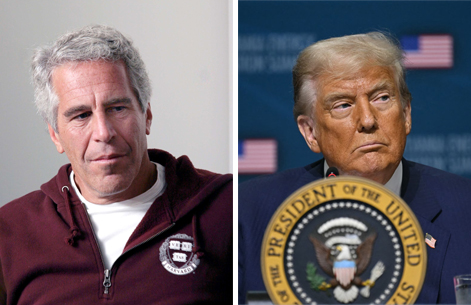
WASHINGTON
- Newly
released
emails
from
convicted
sex
offender
Jeffrey
Epstein
have
ignited
a
political
firestorm,
directly
contradicting
President
Donald
Trump's
repeated
claims
that he
had
minimal
knowledge
of
Epstein's
criminal
activities.
The
documents,
released
just
this
week by
House
Democrats
and
House
Republicans,
contain
stark
statements
suggesting
Trump
had
knowledge
of
Epstein's
sexual
abuse of
young
women.
Most
significantly,
in an
email
dated
January
2019,
Epstein
wrote:
"Trump
said he
asked me
to
resign
(from
Mar-a-Lago),
never a
member
ever. Of
course
he knew
about
the
girls as
he asked
ghislaine
to
stop."
This
statement
appears
to
reference
Trump's
earlier
public
claim
that he
banned
Epstein
from his
Mar-a-Lago
resort
because
of
inappropriate
behavior
toward
young
female
employees.
A
separate
April
2011
email
from
Epstein
to his
co-conspirator
Ghislaine
Maxwell
contains
an even
more
provocative
suggestion.
In that
message,
Epstein
noted
that
Trump
was "the
dog that
hasn't
barked"
and
stated
that an
individual
(named
redacted
in the
public
release)
"spent
hours"
at his
house
with
Trump.
The
House
Oversight
Committee
released
over
20,000
pages of
documents
obtained
from
Epstein's
estate.
Beyond
the
Trump-related
messages,
the
emails
reveal
deeply
unflattering
assessments
of the
president
written
by
Epstein
himself,
with the
financier
describing
Trump as
"dirty,"
"demented,"
"borderline
insane,"
and
"f--king
crazy."
In other
correspondence,
Epstein
suggested
Trump
had
"early
dementia."
Email
exchanges
between
Epstein
and
author
Michael
Wolff
also
surfaced,
showing
discussions
about
how
Trump
should
respond
to press
inquiries
about
his
relationship
with
Epstein.
In one
2015
message,
Wolff
advised:
"I think
you
should
let him
hang
himself.
If he
says he
hasn't
been on
the
plane or
to the
house,
then
that
gives
you a
valuable
PR and
political
currency."
House
Republicans
subsequently
released
their
own set
of
20,000
pages of
documents,
claiming
Democrats
had
selectively
presented
information
to
generate
controversy.
Republicans
argued
the
fuller
tranche
shows no
incriminating
evidence
against
Trump
and
charged
that
Democrats
are
"carelessly
cherry-picking
documents
to
generate
click-bait."
The
unfolding
scandal
has been
particularly
damaging
because
it
directly
contradicts
Trump's
campaign
promises.
During
the 2024
presidential
race,
Trump,
Vice
President
JD
Vance,
and
others
pledged
to
release
the
Justice
Department's
investigative
files on
Epstein—promises
that
energized
supporters
who
viewed
the
documents
as a
vehicle
to
expose
alleged
crimes
by
powerful
elites.
However,
six
months
into his
presidency,
Trump
abruptly
reversed
course.
In July
2025,
the
Justice
Department
announced
it would
not
release
additional
Epstein
records,
citing
privacy
concerns
for
victims
and
stating
that
investigators
had
found no
evidence
that
Epstein
maintained
a
"client
list" or
blackmailed
prominent
individuals.
The
timing
raises
questions
among
critics.
Trump
insiders
suggest
the
president
blocked
the
release
himself.
One
Trump
ally
told
reporters:
"He told
Pam
[Attorney
General
Bondi]
not to
release
the
files.
We don't
exactly
know
why."
White
House
Press
Secretary
Karoline
Leavitt
has
dismissed
the
newly
released
emails
as
proving
nothing,
stating
they
demonstrate
"absolutely
nothing
other
than the
fact
that
President
Trump
did
nothing
wrong."
The
administration
claimed
it has
been
more
transparent
about
the
Epstein
files
than any
previous
administration.
The
email
releases
have
triggered
mounting
pressure
from
both
Democrats
and
Republicans
to
compel
full
disclosure.
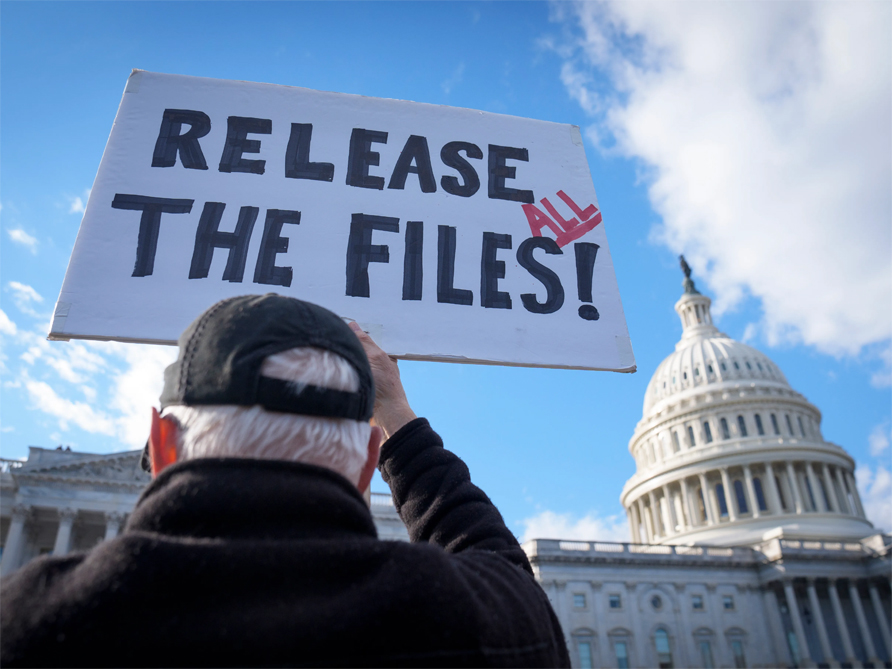
A
bipartisan
coalition
has
gathered
support
for the
"Epstein
Files
Transparency
Act,"
which
would
force
the
Justice
Department
to
release
all
unclassified
records
related
to
Epstein.
A
breakthrough
came
this
week
when
Arizona
Representative
Adelita
Grijalva
was
sworn
in,
providing
the
218th
signature
needed
to force
a House
floor
vote
through
a
discharge
petition.
House
Speaker
Mike
Johnson,
a Trump
ally,
had
previously
delayed
such
votes—most
recently
by
refusing
to swear
in
Grijalva
for
seven
weeks,
effectively
preventing
the
petition
from
reaching
its
threshold.
In
response
to
Grijalva's
swearing-in
and the
likely
House
vote,
Trump
took to
Truth
Social
on
Wednesday
to
denounce
what he
called
the
"Jeffrey
Epstein
Hoax,"
accusing
Democrats
of using
the
scandal
to
distract
from
their
failures,
particularly
the
recently
ended
government
shutdown.
Epstein
survivor
Annie
Farmer
responded
to the
releases
by
calling
for
complete
transparency.
"The
estimated
1,000
women
and
girls
who were
harmed
by
Epstein
and his
associates
deserve
full
transparency,
as do
the
American
people,"
Farmer
said.
Republican
Senator
Tim
Burchett
of
Tennessee,
breaking
with
party
leadership,
told
reporters:
"I'm
tired of
messing
around
with
this
issue.
Let's
just
take it
to the
floor.
Let's
vote on
it.
Let's
get on
with
it."
The
House is
expected
to vote
on the
Epstein
Files
Transparency
Act in
early
December,
after
returning
from
Thanksgiving
recess.
Should
the
measure
pass the
House,
it would
face an
uncertain
path
through
the
Republican-controlled
Senate
and
would
require
Trump's
signature
to
become
law—a
prospect
many
view as
unlikely
given
the
president's
demonstrated
opposition.
Political
analyst
Costas
Panagopoulos
told
reporters
that "by
all
accounts,
Trump
and his
Republican
allies
have
dreaded
this
moment,
but it
was
inevitable
unless
some
Republicans
who
support
the
release
backtrack."
The
crisis
represents
an
unusual
rupture
in
Trump's
otherwise
rock-solid
political
base,
with
some
MAGA
supporters
expressing
frustration
that
promised
transparency
has not
materialized
and
questioning
the
president's
true
relationship
with
Epstein.
|
|
|
|
|
|
|
|
|




 I
HI TECH NEWS
I
SPORTS
I
I
HI TECH NEWS
I
SPORTS
I