|
|
|
|
|
|
|
|
|
|
| |
Trump’s
Rapid
Policy
Shifts
Stir
Concerns
About
Leadership
Under
Pressure
Marc
Kennedy
-
National-Politics
Tell Us
USA News
Network
WASHINGTON
-
President
Trump’s
decision-making
is
coming
under
renewed
scrutiny
after a
cluster
of
recent
incidents
that
have
fueled
questions
about
his
judgment
under
pressure,
especially
during
the Iran
war and
in
abrupt
policy
moves at
home.
Reporting
and
polling
show the
issue is
increasingly
political
as well
as
personal,
with
many
Americans
saying
he has
become
more
erratic
with
age.
The
sharpest
concerns
have
centered
on
Trump’s
handling
of the
Iran
conflict,
where
reporting
indicates
he
signaled
shifting
positions
on
ceasefire
terms,
possible
talks,
and U.S.
military
involvement
over a
matter
of days.
The war
has also
intensified
pressure
inside
the
administration,
including
discussion
of a
broader
cabinet
shake-up.
At the
same
time,
Trump
has made
a series
of
rapid-fire
domestic
decisions
that
have
reinforced
the
impression
of a
president
heavily
influenced
by
immediate
events
and
voices
around
him.
Those
moves
include
an
executive
order
speeding
review
of
psychedelic
therapies,
including
ibogaine,
after
input
from
advocates
such as
Joe
Rogan.
Polling
suggests
the
concern
is not
confined
to
political
opponents.
A recent
survey
found
that 61
percent
of
Americans
said
Trump
has
become
“erratic
with
age,”
while 79
percent
said
elected
officials
are too
old,
indicating
broader
unease
about
presidential
age and
temperament.
Many
Americans
have
also
questioned
Trump’s
temperament
amid the
Iran war
and
other
recent
political
disputes.
A news
report
on this
subject
should
stay
tightly
framed
around
observable
events
rather
than
speculative
diagnosis.
The
strongest
factual
thread
is that
recent
crisis
decisions,
especially
on Iran,
have
coincided
with
public
moves
that
appear
reactive,
inconsistent,
or
unusually
personalized,
intensifying
doubts
about
how
Trump
performs
under
stress.
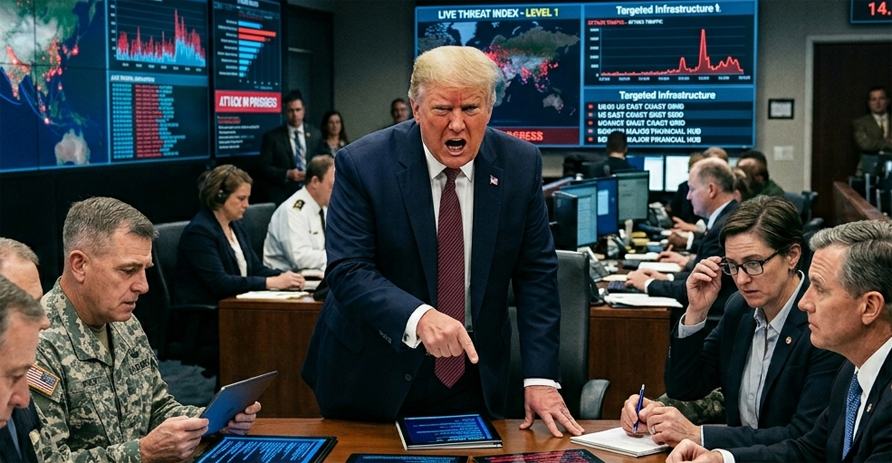
President
Donald
Trump is
facing
fresh
questions
about
his
decision-making
under
pressure
after a
series
of
recent
incidents
involving
the Iran
war,
abrupt
policy
shifts
and a
new
round of
public
concern
about
his
temperament.
Recent
reporting
indicates
that
Trump
has
shifted
his
stance
repeatedly
on key
issues
tied to
the
conflict,
including
ceasefire
terms,
the
prospect
of
renewed
talks
and the
possibility
of
deeper
U.S.
involvement.
Those
moves
have
added to
scrutiny
of how
the
president
handles
fast-moving
crises,
particularly
when
advisers,
foreign
leaders
and
public
pressure
are all
pulling
in
different
directions.
The
concern
has
spilled
into
public
polling.
In a
recent
survey,
61
percent
of
Americans
said
Trump
has
become
“erratic
with
age,”
while 79
percent
said
elected
officials
are too
old,
underscoring
broader
doubts
about
temperament
and
fitness
in a
high-stress
presidency.
Many
Americans
have
also
questioned
Trump’s
temperament
amid the
Iran war
and
other
recent
political
clashes.
The
issue is
not
limited
to
foreign
policy.
Trump
has also
issued
fast-moving
domestic
directives,
including
an
executive
order
accelerating
review
of
psychedelic
therapies
such as
ibogaine
after
advocacy
from
supporters
including
podcaster
Joe
Rogan.
Supporters
cast the
move as
innovative,
but
critics
see the
pattern
as
further
evidence
of a
presidency
driven
by
impulse,
personalities
and
immediate
headlines
rather
than a
steady
decision-making
process.
The
latest
incidents
are
likely
to keep
the
focus on
how
Trump
responds
when the
stakes
are
highest
and
whether
his
instincts
in
crisis
are an
asset or
a
liability.
|
|
|
|
|
|
|
|
|




 I
HI TECH NEWS
I
SPORTS
I
I
HI TECH NEWS
I
SPORTS
I