|
For
Washington,
the
appeal
is
clear. A
deal
that
lowers
the
temperature
in the
Middle
East
would
reduce
the
threat
to U.S.
forces,
ease
pressure
on
shipping
lanes
and
offer
the
administration
a
diplomatic
off-ramp
from a
conflict
that has
already
carried
serious
economic
and
security
consequences.
For
Tehran,
any
agreement
that
includes
sanctions
relief
or a
pause in
military
pressure
could
provide
badly
needed
breathing
room and
a chance
to claim
that it
forced
the
United
States
to
negotiate
on more
equal
terms. |
|
|
|
|
|
 |
 |
 |
|
|
|
|
|
|
|
|
|
|
| |
Critics
Take Aim
at
Trump’s
Upfront,
Concessions
$300B
Reconstruction
Pledge
to Iran
Daoud
Al-Jaber
- Middle
East
Affairs
Analysis
Tell Us
Worldwide
News
Network
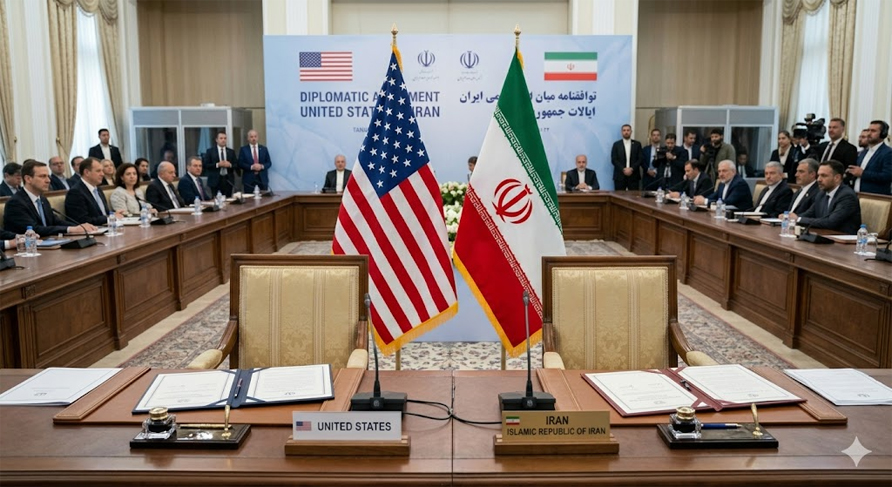
GENEVA —
President
Donald
Trump
has
signed a
historic
14-point
memorandum
of
understanding
(MOU)
with
Iran,
bringing
an
immediate,
permanent
halt to
the
three-month-old
military
conflict
on all
fronts.
Signed
electronically
ahead of
a formal
ceremony
in
Geneva,
Switzerland,
the
agreement
effectively
establishes
a 60-day
window
to
negotiate
a
permanent
peace
treaty
and a
final
nuclear
settlement.
President
Trump
hailed
the deal
at the
G7
summit
as a
major
win that
averts a
worldwide
depression.
However,
the
document—essentially
a 60-day
structured
ceasefire—is
already
drawing
fierce
pushback
from
hardliners
in
Washington
and
leadership
in
Israel,
who
argue
the
administration
conceded
too much
upfront
economic
leverage
to
Tehran.
Here is
the
breakdown
of what
the
United
States
gained
and what
Washington
gave up
in the
initial
accord.
What the
United
States
Gained
The
primary
American
objectives
focused
on
immediate
global
economic
stabilization,
halting
regional
hostilities,
and
capping
Iran’s
nuclear
path.
•
Reopening
of the
Strait
of
Hormuz:
Iran has
agreed
to
remove
all
military
and
technical
obstacles
to allow
the
safe,
toll-free
passage
of
commercial
vessels
through
the
strait
for the
next 60
days.
This
immediately
restores
a major
choke
point
responsible
for
one-fifth
of the
world’s
oil
supply.
•
On-Site
Nuclear
Dilution:
Iran has
conceded
to a
minimum
methodology
of
down-blending
its
current
440-kilogram
stockpile
of 60%
highly
enriched
uranium
on its
own
soil,
under
the
direct
supervision
of the
International
Atomic
Energy
Agency.
•
Regional
Ceasefire:
The
accord
mandates
an
immediate,
permanent
termination
of
military
operations
on all
fronts.
Crucially
for the
U.S.,
this
includes
Lebanon,
legally
binding
Iran to
restrain
its
regional
proxy,
Hezbollah.
• A
"Back to
Bombing"
Trigger:
The
agreement
maintains
the
status
quo of
Iran's
nuclear
program
during
talks.
President
Trump
explicitly
noted
that the
U.S.
retains
the
military
leverage
to walk
away,
warning
that the
U.S.
would
resume
military
action
if the
terms
were not
met to
his
satisfaction.
•
What the
United
States
Gave Up
Critics
point
out that
the
Trump
administration
has
granted
Iran
sweeping
financial
and
geopolitical
concessions
before a
finalized,
long-term
nuclear
treaty
is
actually
locked
in.
•
Immediate
Oil
Sanctions
Waivers:
The U.S.
Department
of the
Treasury
must
immediately
issue
waivers
allowing
the
export
of
Iranian
crude
oil,
petroleum
products,
and
derivatives,
along
with
associated
international
banking
and
transport
services.
Critics
argue
this
immediately
refills
Tehran's
coffers
before
permanent
concessions
are
made.
•
Lifting
the
Naval
Blockade:
The U.S.
has
committed
to
entirely
dismantling
its
naval
blockade
of
Iranian
ports
within
30 days,
restoring
shipping
traffic
to
pre-war
levels.
•
Massive
$300
Billion
Reconstruction
Pledge:
The U.S.
has
undertaken
a
commitment
to work
with
regional
partners
to
develop
a $300
billion
economic
development
and
reconstruction
plan for
the
Islamic
Republic
of Iran,
to be
finalized
within
the
60-day
window.
•
Release
of
Frozen
Assets:
The U.S.
has
promised
to make
all
frozen
or
restricted
Iranian
funds
and
assets
worldwide
fully
available
for use
by
beneficiaries
designated
by the
Central
Bank of
Iran.
• Path
to Total
Sanctions
Elimination:
The MOU
binds
the U.S.
to a
schedule
to
terminate
all
forms of
economic
penalties,
including
unilateral
U.S.
primary
and
secondary
sanctions,
UN
Security
Council
resolutions,
and IAEA
Board of
Governors
restrictions.
• U.S.
Troop
Withdrawal:
The U.S.
has
agreed
to pull
its
military
forces
away
from the
immediate
proximity
of Iran
within
30 days
after a
final
deal is
reached.
•
The
Geopolitical
Friction:
While G7
allies
like
France
praised
the deal
for
ending
global
economic
instability,
the
inclusion
of
clauses
protecting
Lebanon's
territorial
integrity
has
alienated
Israel.
Israeli
leadership
was not
a party
to the
negotiations,
has
rejected
demands
to
withdraw
from its
southern
Lebanon
buffer
zones,
and
maintains
it will
continue
to
defend
itself
regardless
of the
accord.
Furthermore,
Iranian
negotiators
have
already
stated
that
once the
60-day
toll-free
window
expires,
they
intend
to
charge
fees to
ships
traversing
the
Strait
of
Hormuz.
|
|
|
|
|
|
|
|
|

 I
HI TECH NEWS
I
SPORTS
I
I
HI TECH NEWS
I
SPORTS
I