|
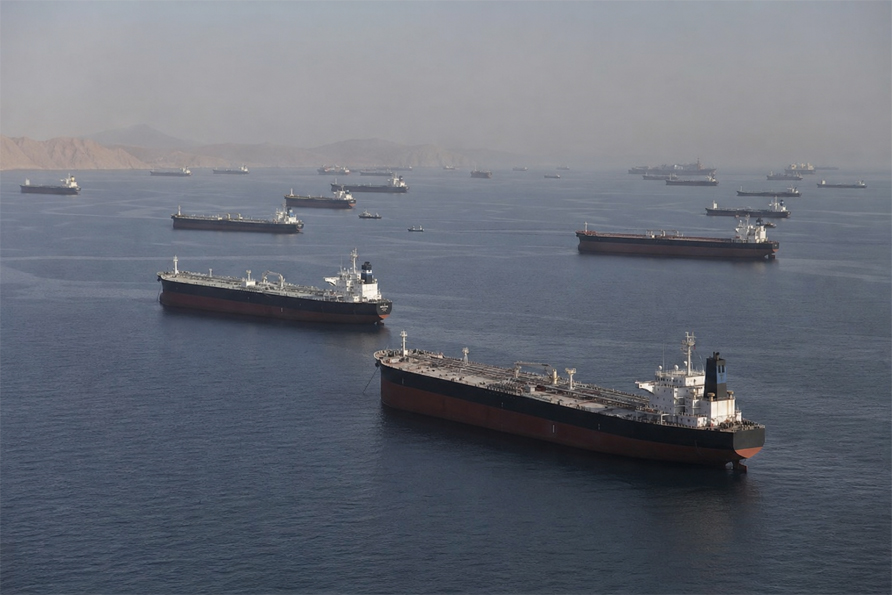
In a
move
that
nearly
sparked
an
immediate
escalation,
Iranian
state
media
claimed
today
that
they had
struck a
U.S.
Navy
destroyer
with two
missiles.
However,
the
Pentagon
and
CENTCOM
have
flatly
denied
these
reports,
stating
that all
American
military
vessels
are
unharmed
and that
no
kinetic
strikes
have
occurred
during
today's
operations.
(AI
generated
image) |
|
|
|
|
|
 |
 |
 |
|
|
|
|
|
|
|
|
|
|
| |
Chokehold:
Iran Has
the
World's
Oil in
Its
Grip,
and the
U.S. Is
Running
Out of
Options
Daoud
Al-Jaber
- Middle
East
Affairs
Analysis
Tell Us
Worldwide
News
Network
ABU
DHABI -
On
February
28, the
United
States
and
Israel
launched
coordinated
airstrikes
on Iran
under
Operation
Epic
Fury,
targeting
military
facilities,
nuclear
sites,
and
leadership
—
resulting
in the
death of
Supreme
Leader
Ali
Khamenei.
Iran
responded
with
missile
barrages
on
Israeli
cities
and U.S.
bases
across
the
Gulf,
including
in the
UAE,
Qatar,
and
Bahrain.
On March
4, Iran
declared
the
Strait
of
Hormuz
"closed"
and
threatened
to
attack
any
vessel
attempting
to pass.
The move
sent
shockwaves
through
global
energy
markets.
Before
the
conflict,
around
20% of
global
petroleum
and 20%
of the
world's
liquefied
natural
gas
traversed
the
strait
each
month,
with
approximately
3,000
vessels
using
it.
Those
numbers
have now
fallen
to
around
5% of
pre-war
levels,
pushing
oil and
gas
prices
sharply
higher
worldwide.
President
Trump
launched
"Project
Freedom"
on
Monday,
framing
it in
humanitarian
terms as
an
effort
to aid
stranded
seafarers
on
hundreds
of ships
stuck in
the
Persian
Gulf
since
the war
began.
He had
warned
the day
before
that
Iranian
efforts
to halt
passage
through
the
strait
"will,
unfortunately,
have to
be dealt
with
forcefully."
Iran's
response
was
swift.
Iran's
military
warned
that any
foreign
armed
forces —
"especially
the
aggressive
US army"
— would
be
attacked
if they
approached
the
strait.
Hours
later,
Iran's
semiofficial
Fars
news
agency
reported
that two
missiles
struck a
U.S.
warship
at the
southern
end of
the
Strait
of
Hormuz.
The U.S.
military
said it
fired on
Iranian
forces
and sank
six
small
boats
targeting
civilian
ships.
The UAE
meanwhile
said it
had come
under
attack,
with a
major
fire
breaking
out at
the
Fujairah
Oil
Industry
Zone
after
Iranian
drone
strikes.
Four
missile
alerts
were
issued
urging
UAE
residents
to seek
shelter
— the
first
such
alerts
since
the
ceasefire
took
effect
weeks
ago.
Senior
U.S.
officials
said
Monday
that
Washington
is
edging
closer
to
restarting
major
combat
operations
against
Iran,
with the
final
decision
resting
with
President
Trump
and
Tehran's
new
leadership.
"We are
closer
to the
resumption
of major
combat
operations
than we
were 24
hours
ago,"
officials
told
reporters.
The U.S.
military
"stands
ready to
respond"
and is
"rearmed
and
retooled,"
they
added.
Only two
U.S.-flagged
vessels
made it
through
the
strait
under
military
protection
on the
first
day of
Project
Freedom,
and
independent
analysts
warned
that
scaling
up the
operation
would be
extremely
difficult.
Al
Jazeera's
correspondent
in
Tehran
reported
that
Iran
views
any U.S.
intervention
in the
strait
as a
ceasefire
violation.
"The
Iranian
military
establishment
and
political
officials
say that
the war
has
changed
many
things
and that
Iran in
one way
or
another
is going
to keep
control
over the
waterway,"
the
correspondent
said.
Iran has
submitted
a
14-point
proposal
to end
the war,
and
officials
said
they
were
reviewing
a U.S.
counterproposal
delivered
through
Pakistan.
Iran's
foreign
ministry
spokesperson
said the
U.S.
practice
of
making
"excessive
and
unreasonable
demands"
made the
proposal
difficult
to
engage
with.
Trump's
anticipated
visit to
Beijing
next
week
adds a
further
complication.
China
has
called
for the
reopening
of the
strait,
through
which
much of
its
energy
supply
passes.
Treasury
Secretary
Scott
Bessent
urged
Beijing
to use
its
diplomatic
leverage
with
Tehran,
saying,
"Let's
see if
China
steps up
with
some
diplomacy
and get
the
Iranians
to open
the
strait."
China
and
Russia
vetoed a
UN
Security
Council
resolution
in April
that
called
for an
end to
Iranian
attacks
and
coordinated
defensive
escorts
for
shipping.
The UK
and
France
have
since
hosted
two
international
conferences
on
reopening
the
strait,
with 38
countries
signing
a
statement
expressing
readiness
to
ensure
safe
passage.
Cruise
ships
reduced
activity
in the
Persian
Gulf and
stopped
using
the
strait,
stranding
approximately
15,000
passengers
on at
least
six
major
vessels.
The UK
Maritime
Trade
Operations
agency
has
maintained
a
critical
threat
level in
the
strait,
advising
mariners
to
consider
routing
through
Oman's
territorial
waters
instead.
Saudi
Crown
Prince
Mohammed
bin
Salman
condemned
Iran's
renewed
strikes
on the
UAE as
unjustified,
reaffirming
Riyadh's
support
for Abu
Dhabi
and
underscoring
growing
regional
alignment
against
Tehran.
As of
Tuesday
morning,
no
orders
have
been
given to
end the
ceasefire
— but
with
both
militaries
actively
exchanging
fire,
the
window
for a
diplomatic
resolution
is
narrowing
rapidly.
This
report
is based
on
breaking
developments
as of
May 5,
2026.
The
situation
remains
fluid.
|
|
|
|
|
|
|
|
|

 I
HI TECH NEWS
I
SPORTS
I
I
HI TECH NEWS
I
SPORTS
I