|
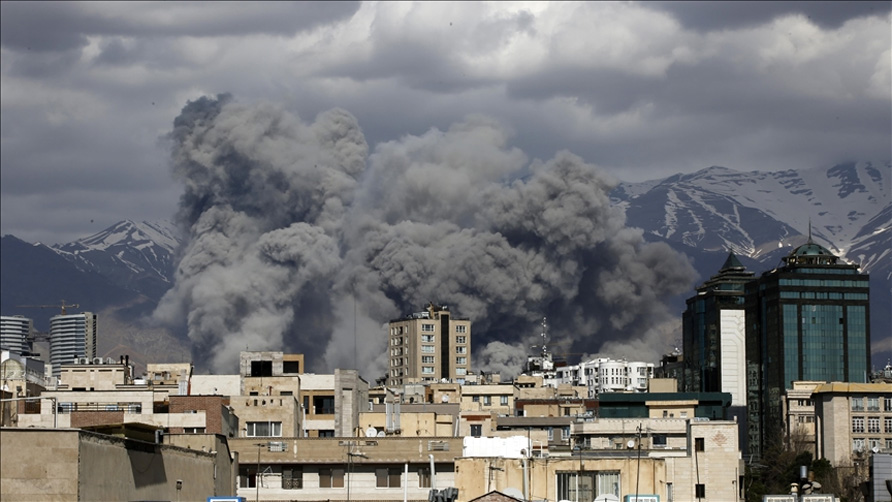
The
Israeli
army
claimed
Tuesday
that it
struck a
"command
headquarters"
in
Tehran,
in the
latest
wave of
joint
attacks
with the
US
against
Iran in
the
heart of
Tehran.
Photo by
AFP |
|
|
|
|
|
 |
 |
 |
|
|
|
|
|
|
|
|
|
|
| |
Gulf
Allies
Strain
Under
U.S.-Iran
War:
Saudi
Upset,
UAE
Ports
Hit as
Strikes
Rage On
Daoud
Al-Jaber
- Middle
East
Affairs
Analysis
Tell Us
Worldwide
News
Network
RIYADH,
SAU -
U.S.-Iran
fighting
intensified
into a
fourth
day
Tuesday,
with
U.S. and
Israeli
forces
continuing
strikes
inside
Iran
while
Tehran
launched
missiles
and
drones
toward
targets
across
the
Gulf,
raising
fears of
a wider
regional
war.
President
Donald
Trump
said the
campaign’s
aim is
to
dismantle
Iran’s
nuclear
and
ballistic-missile
capabilities,
while
Iran has
cast the
attacks
as
unprovoked
and
occurring
amid
ongoing
negotiations.
The U.S.
military
has
reported
striking
more
than
1,250
targets
in the
first 48
hours of
what it
calls
Operation
Epic
Fury and
destroying
Iranian
naval
vessels,
as the
administration
framed
the
operation
around
protecting
U.S.
forces
and
keeping
maritime
traffic
moving
through
the
Strait
of
Hormuz.
U.S.
officials
said the
American
death
toll has
risen to
six
service
members,
following
Iranian
retaliatory
attacks
in the
region.
Across
the
Gulf,
Iran has
targeted
U.S.
military
and
commercial
interests
in
multiple
countries
and
surrounding
waterways
with
“hundreds”
of
missiles
and
drones,
according
to U.S.
accounts
carried
by major
outlets.
Israeli
Prime
Minister
Benjamin
Netanyahu
said he
does not
expect
the war
to take
years,
as
Israel
expanded
operations
against
Iran-linked
targets
beyond
Iran’s
borders.
U.S.
relations
with key
Middle
East
governments
have
become
more
complicated
and
fragile
as the
war with
Iran
drags
them
into the
line of
fire and
exposes
differences
over
Washington’s
strategy.
Saudi
Arabia
and the
Gulf
monarchies
publicly
condemned
Iran’s
missile
and
drone
barrages
on their
territory
and
affirmed
their
right to
self-defense,
reinforcing
security
ties
with
Washington
while
signaling
that
Iran has
badly
damaged
its own
standing
with
Arab
neighbors.
At the
same
time,
reporting
indicates
senior
Saudi
officials
were
“deeply
upset”
by the
scale
and
timing
of
U.S.–Israeli
strikes
on Iran,
having
earlier
urged
Washington
to avoid
triggering
a
regional
war,
which
has
injected
new
tension
into the
partnership
despite
ongoing
military
coordination.
In the
United
Arab
Emirates,
Qatar,
Kuwait
and
other
Gulf
Cooperation
Council
states,
Iran’s
targeting
of
airports,
ports,
hotels
and
energy
infrastructure
has
forced
governments
that
host
U.S.
bases
onto the
front
line of
a
conflict
many had
tried to
hedge
against,
increasing
their
dependence
on U.S.
air and
missile
defenses
while
also
heightening
domestic
political
sensitivity
about
the
American
footprint.
Analysts
say
Tehran
appears
to be
striking
U.S.-linked
assets
in these
countries
partly
to
pressure
Gulf
leaders
to lean
on
Washington
for a
quick
ceasefire,
a tactic
that
could
leave
local
rulers
resentful
of both
Iran and
the
United
States
if the
conflict
is
prolonged.
The war
has also
prompted
a
sweeping
U.S.
security
alert
urging
American
citizens
to
“depart
now”
from
more
than a
dozen
countries,
including
Egypt,
Jordan,
Lebanon,
Saudi
Arabia,
Qatar
and the
United
Arab
Emirates,
and has
led to
partial
embassy
closures
and
drawdowns
in
several
capitals.
Diplomats
and
regional
experts
warn
that the
evacuation
orders
and
shuttered
missions
risk
reducing
U.S.
day-to-day
diplomatic
influence
just as
Washington
is
trying
to
manage
escalation,
even as
they
underscore
the
seriousness
of the
threat
faced by
American
partners.
While
traditional
U.S.
allies
such as
Saudi
Arabia,
the UAE
and
Jordan
still
rely on
American
security
guarantees,
they are
simultaneously
pressing
for an
end to
the
fighting
and, in
Oman’s
case,
voicing
open
dismay
that
earlier
mediation
efforts
were
overtaken
by war,
exposing
a
widening
gap
between
Washington’s
military
calculus
and
regional
governments’
desire
to
contain
the
conflict.
Regional
analysts
suggest
that,
over
time,
the
combination
of
battlefield
dependence
and
political
discomfort
could
drive
some
governments
to
diversify
their
security
ties
beyond
Washington,
even as
they
work
with the
United
States
to deter
further
Iranian
attacks
in the
near
term.
|
|
|
|
|
|
|
|
|

 I
HI TECH NEWS
I
SPORTS
I
I
HI TECH NEWS
I
SPORTS
I