|
For
Washington,
the
appeal
is
clear. A
deal
that
lowers
the
temperature
in the
Middle
East
would
reduce
the
threat
to U.S.
forces,
ease
pressure
on
shipping
lanes
and
offer
the
administration
a
diplomatic
off-ramp
from a
conflict
that has
already
carried
serious
economic
and
security
consequences.
For
Tehran,
any
agreement
that
includes
sanctions
relief
or a
pause in
military
pressure
could
provide
badly
needed
breathing
room and
a chance
to claim
that it
forced
the
United
States
to
negotiate
on more
equal
terms. |
|
|
|
|
|
 |
 |
 |
|
|
|
|
|
|
|
|
|
|
| |
Ceasefire
Shattered:
Iran
Closes
Hormuz
While
Talks
Stall
Over
Israeli
Sabotage
Daoud
Al-Jaber
- Middle
East
Affairs
Analysis
Tell Us
Worldwide
News
Network
GENEVA/WASHINGTON/TEHRAN
- The
US-Iran
peace
framework
that
briefly
offered
a way
out of
the
region's
latest
spiral
is now
hanging
by a
thread,
and it
is being
strangled
by the
very
dynamic
it was
meant to
end: the
unresolved
war
between
Israel
and Iran
and
Israel's
broader
campaign
to keep
diplomacy
from
succeeding.
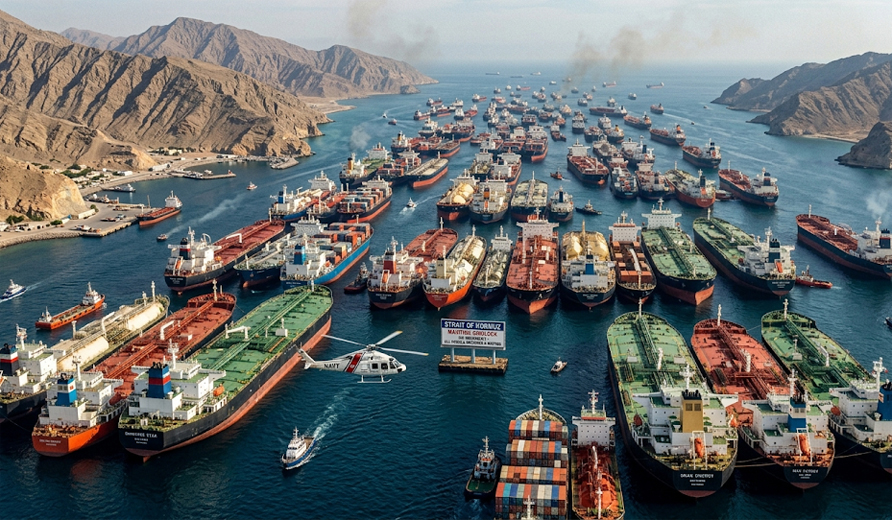
Iran
announced
Friday
that it
had
closed
the
Strait
of
Hormuz
to all
shipping,
citing
Israel's
violation
of the
ceasefire
as
justification.
The
closure
came on
the same
day that
planned
US-Iran
talks in
Switzerland
were
postponed
or
effectively
canceled.
The
Strait
of
Hormuz,
where a
significant
share of
the
world's
oil and
LNG
flows
through
a narrow
chokepoint,
is now a
potential
blackout
zone for
global
energy
markets.
The move
is not
just a
retaliatory
gesture;
it is a
leverage
play
designed
to make
Washington
pay for
its
inability
to keep
Israel
restrained.
The
terms of
the
deal, as
negotiated,
were
modest
by any
standard:
a 60-day
memorandum
of
understanding
to
extend
the
ceasefire,
reopen
the
Strait,
and keep
indirect
talks
alive on
Iran's
nuclear
program.
It was
never a
final
peace
treaty.
It was a
pause.
But even
a pause
is now
in
danger.
Israel's
reaction
to the
deal has
been
hostile
from the
outset.
Israeli
officials
have
publicly
and
privately
rejected
the
agreement,
arguing
that it
accomplishes
none of
Israel's
stated
war aims
and may
even
strengthen
Tehran's
position.
One
major
outlet
reported
that
Israeli
leaders
see the
deal as
a form
of
capitulation,
and that
the
fractures
it has
exposed
between
Netanyahu
and
Trump
are
deeper
than
previously
understood.
The
more
immediate
pressure,
however,
is not
merely
in the
opinions
of the
Israeli
cabinet
but in
the
field.
Israeli
strikes
on
southern
Lebanon
and
along
the
wider
regional
front
have
continued
even
after
the
ceasefire
was
announced.
Al
Jazeera
said
Tehran
has been
holding
back
from
talks to
cement
the deal
because
of these
attacks,
and that
the
strikes
were
steering
the
region
toward
renewed
escalation
rather
than
toward
diplomacy.
There
are
repeated
claims
in
Tehran
that
Israel
is
trying
to
sabotage
the
negotiations,
and
those
claims
are not
being
dismissed
as mere
rhetoric.
Trump
has
publicly
warned
that
Israeli
strikes
on
Lebanon
"should
not have
happened,"
and that
further
Israeli
attacks
on
Lebanon
should
not
occur.
Yet the
field
has not
fully
aligned
with the
rhetoric.
The
Israeli
military
has
continued
to
exchange
fire
with
Hezbollah,
and the
US has
been
unable
to
impose a
political
or
military
brake on
Israel's
campaign.
The gap
between
Washington's
diplomatic
posture
and
Jerusalem's
battlefield
posture
is now
the
single
most
dangerous
variable
in the
emerging
peace
track.
The
closure
of
Hormuz
is a
direct
challenge
to this
dynamic.
By
closing
the
strait,
Iran has
turned
the
agreement
into a
high-stakes
test of
whether
Washington
can keep
Israel
from
blowing
up a
diplomatic
track it
has
heavily
invested
in. The
deal
remains
alive in
name,
but it
is
increasingly
fragile
in
practice.
The
combination
of
Israeli
military
pressure,
Iranian
retaliation,
and
stalled
diplomacy
has left
the
agreement
vulnerable
to a
broader
regional
escalation
that
could
erase
the
ceasefire
before
it
hardens
into
anything
durable.
If
the
Hormuz
closure
holds
and
Israeli
strikes
continue,
the
agreement
could
quickly
shift
from a
diplomatic
breakthrough
to
another
failed
ceasefire.
The next
round of
talks,
whether
in
Switzerland
or
elsewhere,
will be
the
moment
when the
deal is
either
saved or
buried.
Until
now, the
most
important
thing
the deal
was
supposed
to do
was to
give the
region a
chance
to cool
down.
That
chance
is now
in
jeopardy.
|
|
|
|
|
|
|
|
|

 I
HI TECH NEWS
I
SPORTS
I
I
HI TECH NEWS
I
SPORTS
I