|
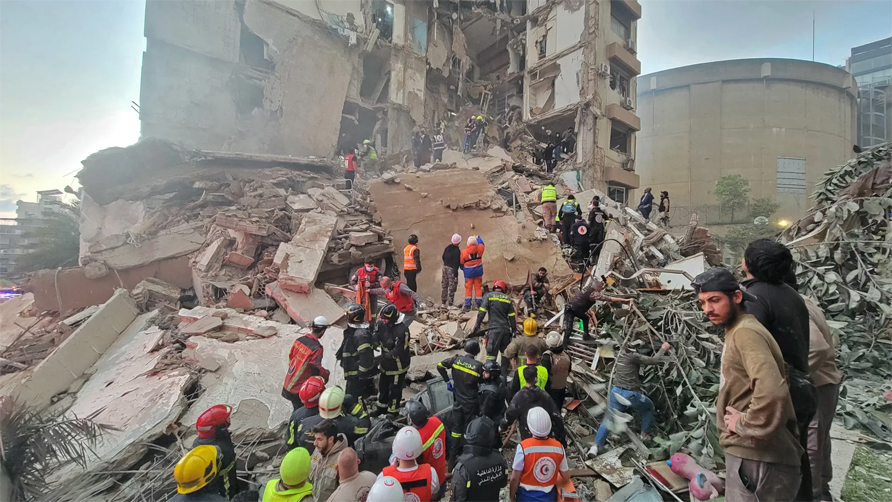
First
responders
and
residents
gather
at the
site of
an
Israeli
air
attack
in
Beirut's
Tallet
al-Khayyat
neighbourhood,
on April
8, 2026
[AFP] |
|
|
|
|
|
 |
 |
 |
|
|
|
|
|
|
|
|
|
|
| |
The
Ceasefire
That
Wasn't:
Israel's
Lebanon
Campaign
is
Unraveling
the
U.S.-Iran
Truce
Daoud
Al-Jaber
- Middle
East
Affairs
Analysis
Tell Us
Worldwide
News
Network
BEIRUT,
Lebanon
- Anyone
with
even
passing
familiarity
with
Israeli
strategic
doctrine
could
have
predicted
this.
The ink
was
barely
dry on
the
Pakistan-brokered
ceasefire
between
Washington
and
Tehran
when
Israeli
jets
were
already
over
Beirut.
That is
not
coincidence.
It is
policy.
The
two-week
truce
announced
on April
8 —
hailed
by
Pakistani
Prime
Minister
Shehbaz
Sharif
as a
triumph
of
regional
diplomacy
— has
been
exposed
within
48 hours
for what
veteran
observers
of this
conflict
long
suspected
it might
be: an
agreement
whose
most
consequential
terms
were
never
agreed
upon at
all.
The
Ambiguity
Was the
Strategy
Prime
Minister
Benjamin
Netanyahu
endorsed
the
ceasefire
while
simultaneously
declaring
it
inapplicable
to
Israel's
war
against
Hezbollah
in
Lebanon.
This is
not a
contradiction
in
Netanyahu's
mind —
it is a
carefully
constructed
position
that
Israel
has
deployed
in
virtually
every
ceasefire
negotiation
since
October
2023.
Agree to
the
framework,
dispute
the
scope,
and
continue
operations
in the
gaps.
Pakistani
and
Iranian
officials
insist
the deal
explicitly
included
a halt
to
Israeli
strikes
on
Lebanon.
Washington
and
Jerusalem
insist
it did
not. In
the fog
of that
disagreement,
Israeli
forces
struck
100
Hezbollah
targets
in ten
minutes
on the
very
morning
the
truce
took
effect —
the most
intense
bombardment
of
Beirut
since
the war
began.
By the
end of
that
day,
Lebanese
authorities
had
counted
at least
112
dead,
with
hundreds
more
wounded
across
residential
and
commercial
neighborhoods
struck
without
warning.
This is
what
analysts
at
King's
College
London
have
described
as
Israel's
preference
for
"ambiguous
ceasefire"
arrangements
— deals
structured
loosely
enough
to allow
a return
to
military
operations
whenever
the
battlefield
calculus
favors
it. The
pattern
has
repeated
itself
with
enough
regularity
that it
can no
longer
be
attributed
to
miscommunication.
Tehran's
Leverage
and Its
Limits
Iran's
response
was
swift
and
pointed.
It
declared
the
strikes
a "grave
violation"
of the
agreement,
warned
of
"strong
responses,"
and
moved to
suspend
tanker
traffic
through
the
Strait
of
Hormuz —
the very
concession
that had
given
the
ceasefire
its
global
economic
significance.
The
deputy
foreign
minister
made
Tehran's
position
plain to
the BBC:
the
strait
reopens
when the
attacks
on
Lebanon
stop,
and not
a moment
before.
This is
Iran
playing
its most
effective
card,
and it
knows
it. More
than 600
vessels
remain
stranded
in the
region.
Oil
prices,
which
had
briefly
dipped
below
$100 a
barrel
on
ceasefire
euphoria,
are
climbing
again.
J.P.
Morgan
has
estimated
that
even a
full
resolution
tomorrow
would
take
four
months
to
unwind
the
disruption
to
global
energy
markets.
The
economic
pain is
real,
and
Tehran
understands
that it
is also
political
pain for
Washington.
Yet
Iran's
leverage
has
limits.
Its
supreme
leader
is dead,
killed
in the
opening
U.S.-Israeli
strikes
of late
February.
Its
military
infrastructure
has been
systematically
degraded
across
40 days
of
bombardment.
The new
leadership
—
asserting
publicly
that
Iran
"won"
the war
while it
negotiates
the
terms of
a
ceasefire
it did
not seek
— is
operating
from a
position
of
considerable
internal
pressure.
The
posturing
is
understandable.
The
vulnerability
beneath
it is
not well
hidden.
Washington's
Uncomfortable
Position
The
Trump
administration
finds
itself
managing
a
contradiction
it
helped
create.
It has
assured
Israel,
through
back
channels,
that
final
negotiations
with
Iran
will
include
demands
for
uranium
removal,
an end
to
enrichment,
and the
dismantling
of
Iran's
ballistic
missile
capabilities.
It has
simultaneously
asked
Netanyahu,
in a
direct
phone
call, to
scale
back the
Lebanon
strikes
to
preserve
the
diplomatic
process
in
Islamabad.
Netanyahu
obliged
with
words
and not
much
else. He
announced
Israel
would
open
talks
with
Lebanon
— a
concession
that
Beirut,
which
says it
has
received
no
formal
invitation,
has
greeted
with
skepticism.
Lebanese
officials
have
stated
clearly
there
will be
"no
negotiations
under
fire."
That is
not a
negotiating
position.
It is a
description
of
reality.
President
Trump,
for his
part,
called
Israel's
continued
bombardment
of
Lebanon
"a
separate
skirmish"
— a
characterization
that
will
strike
anyone
who has
spent
time in
Beirut
this
week as
somewhere
between
tone-deaf
and
deliberately
evasive.
U.N.
Secretary-General
António
Guterres
used
considerably
starker
language,
offering
an
unequivocal
condemnation
of
strikes
that
killed
hundreds
of
civilians
on the
day a
ceasefire
was
supposed
to
begin.
The
Regional
Stakes
What is
unfolding
this
weekend
is not
merely a
test of
one
ceasefire
agreement.
It is a
test of
whether
the
United
States
has the
will or
the
ability
to
impose
meaningful
constraints
on
Israeli
military
action
when
those
actions
directly
undermine
American
diplomatic
objectives.
The
evidence
so far
is not
encouraging.
Britain's
Foreign
Secretary
Yvette
Cooper
has
called
the
strikes
"completely
wrong"
and
demanded
Lebanon's
inclusion
in the
truce.
China
has
urged
both
parties
to
"seize
the
opportunity
for
peace."
Gulf
states,
whose
energy
infrastructure
has
borne
the
brunt of
months
of
Iranian
retaliation,
are
watching
Islamabad
closely
— hoping
that
negotiations
beginning
today
will
produce
something
more
durable
than the
arrangement
currently
threatening
to
collapse
before
the
weekend
is out.
Iran has
now
reportedly
placed
sea
mines in
the
Strait
of
Hormuz,
according
to
semiofficial
Iranian
news
agencies
— a
signal,
if
accurate,
that
Tehran
intends
to
retain
physical
leverage
over the
waterway
regardless
of what
is
agreed
on
paper.
That is
the kind
of move
that
suggests
Iran's
negotiators
are
heading
to
Islamabad
not to
conclude
a peace
but to
extend a
standoff
on more
favorable
terms.
The
Bottom
Line
Seasoned
observers
of the
Middle
East
have
learned
to be
skeptical
of the
word
"ceasefire"
in this
region,
where
the term
has too
often
functioned
as a
pause
button
rather
than a
genuine
cessation.
What we
are
watching
this
weekend
is a
familiar
dynamic
playing
out at
unprecedented
scale: a
fragile
agreement,
a
determined
actor
unwilling
to be
bound by
it, and
a
superpower
patron
caught
between
its
strategic
ally and
its
diplomatic
ambitions.
Whether
the
Islamabad
talks
produce
anything
of
substance
will
depend,
in no
small
part, on
whether
Washington
is
finally
willing
to tell
Jerusalem
that
there
are
limits —
and mean
it.
History
suggests
that
conversation,
if it
comes at
all,
comes
late.
|
|
|
|
|
|
|
|
|

 I
HI TECH NEWS
I
SPORTS
I
I
HI TECH NEWS
I
SPORTS
I