|
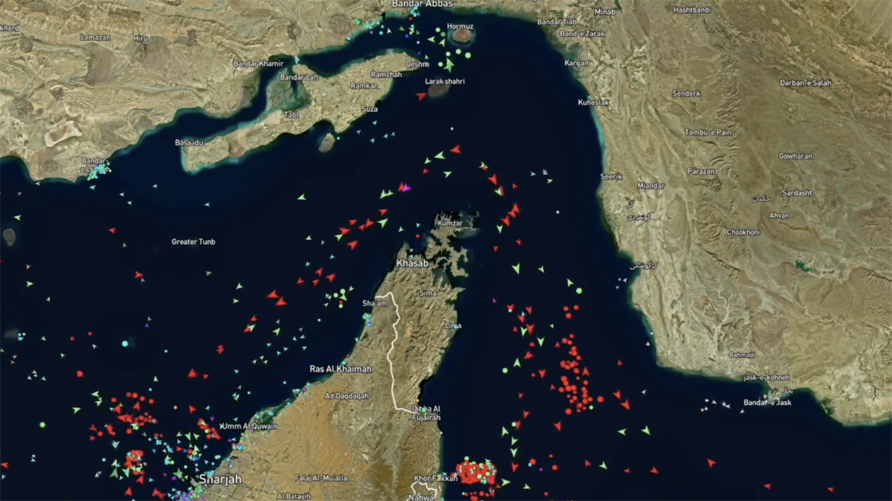
The
strategically
vital
Strait
of
Hormuz —
through
which
roughly
one-fifth
of
global
oil
supplies
pass —
has been
the
focal
point of
a
weeks-long
standoff
between
Washington
and
Tehran. |
|
|
|
|
|
 |
 |
 |
|
|
|
|
|
|
|
|
|
|
| |
The
Strait
Holds
the
Peace:
Trump’s
Gamble
on
Hormuz,
Craps
Out
Patricia
Romero -
International
-
Politics
Daoud
Al-Jaber
- Middle
East
Affairs
Analysis
Tell Us
Worldwide
News
Network
WASHINGTON/TEHRAN
-
President
Donald
Trump on
Wednesday
stepped
back
from the
brink of
military
action
against
Iran,
announcing
a 14-day
extension
of his
ultimatum
just
hours
before
U.S.
strikes
on
Iranian
infrastructure
were set
to
begin.
The
unexpected
reprieve
hinges
on a
single
condition:
Iran
must
keep the
Strait
of
Hormuz
open to
international
shipping.
The
strategically
vital
waterway
—
through
which
roughly
one-fifth
of
global
oil
supplies
pass —
has been
the
focal
point of
a
weeks-long
standoff
between
Washington
and
Tehran.
Trump
described
the move
as a
“double-sided
pause,”
a mutual
suspension
of
offensive
operations,
and
called
Iran’s
preliminary
negotiating
stance a
“workable
basis”
for
broader
talks.
Tehran
signaled
conditional
acceptance,
pledging
safe
passage
through
the
strait
while
diplomacy
proceeds.
A
Last-Minute
Mediation
The
breakthrough
followed
intense
back-channel
diplomacy.
Pakistan
played a
pivotal
role in
brokering
the
pause,
with
Prime
Minister
Shehbaz
Sharif
emerging
as a key
mediator
between
Washington
and
Tehran.
Formal
negotiations
are
expected
to
unfold
throughout
the
two-week
window,
reportedly
starting
around a
10-point
proposal
delivered
by Iran.
According
to
diplomatic
sources
familiar
with the
text,
Tehran’s
plan
calls
for:
•
Immediate
easing
of
selected
U.S.
economic
sanctions,
especially
on
humanitarian
trade
and oil
exports.
•
Recognition
of
Iran’s
right to
civilian
nuclear
energy
under
IAEA
supervision.
• A halt
to U.S.
drone
surveillance
and
naval
build-up
near the
Strait
of
Hormuz.
• Joint
oversight
of
maritime
security
operations
in the
Gulf.
•
Guarantees
for safe
navigation
and
energy
transit
routes.
• U.S.
assurances
of
non-aggression
during
negotiations.
•
Gradual
normalization
of
banking
channels
frozen
under
sanctions.
•
Regional
talks
involving
Gulf
states
to
reduce
hostilities.
• An
exchange
framework
for
detained
citizens
held by
both
nations.
• A
long-term
roadmap
toward
diplomatic
recognition
and
mutual
economic
cooperation.
Sources
emphasize
that
Washington
views
many of
these
demands
as
“negotiable
starting
points”
rather
than
fixed
conditions.
Markets
Rally,
World
Watches
News of
the
ceasefire
rippled
across
global
financial
markets.
Oil
prices
fell
sharply
while
stock
markets
rallied,
as
investors
priced
in a
lower
risk of
open
conflict
in the
Persian
Gulf.
World
leaders
broadly
welcomed
the
pause,
though
diplomats
and
analysts
noted
that
optimism
remains
cautious.
Fragile
Peace,
High
Stakes
Despite
the
détente,
officials
warned
against
mistaking
the
extension
for
resolution.
The
multi-week
conflict
has
already
claimed
lives
and
unsettled
regional
stability.
Reports
indicate
limited
military
activity
continues
even as
both
sides
pledge
restraint,
with
deep
divisions
lingering
over
sanctions,
U.S.
presence,
and
wider
regional
influence.
Analysts
caution
that if
talks
fail,
hostilities
could
resume
swiftly
— and
with
greater
intensity
than
before.
By most
accounts,
the next
14 days
represent
a narrow
and
uncertain
window
to avert
a wider
war.
|
|
|
|
|
|
|
|
|

 I
HI TECH NEWS
I
SPORTS
I
I
HI TECH NEWS
I
SPORTS
I