|
Seven
nights
running
now, the
bombers
have
come
back to
Iranian
skies,
and the
ceasefire
that
once
seemed
like the
war's
ending
has
instead
become
its
middle
chapter.
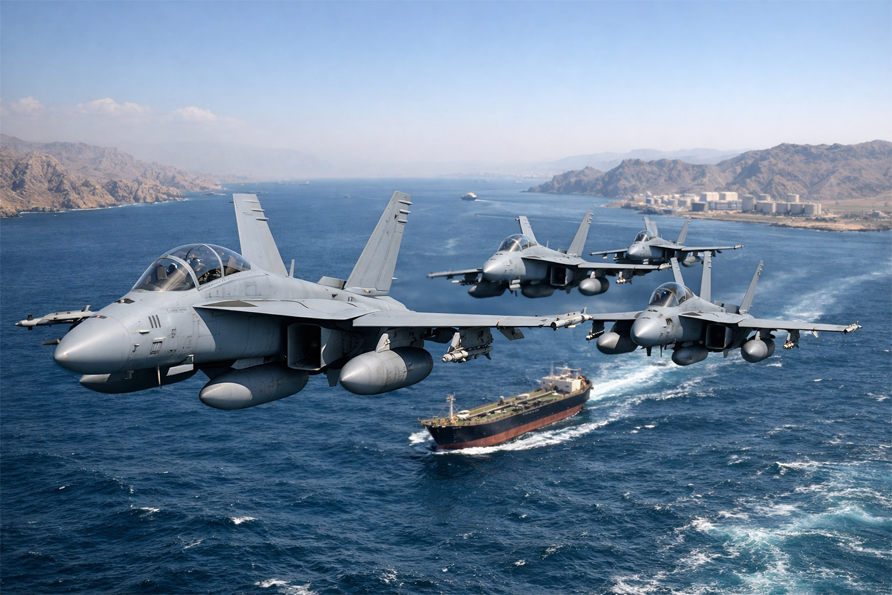
AI image |
|
|
|
|
|
 |
 |
 |
|
|
|
|
|
|
|
|
|
|
| |
War
Without
an Exit:
The US
and
Iran's
Return
to the
Battlefield
Daoud
Al-Jaber
- Middle
East
Affairs
Analysis
Tell Us
Worldwide
News
Network
TEHRAN/WASHINGTON
— Seven
nights
running
now, the
bombers
have
come
back to
Iranian
skies,
and the
ceasefire
that
once
seemed
like the
war's
ending
has
instead
become
its
middle
chapter.
It has
been
less
than
five
months
since
the
United
States
and
Israel
opened
this
conflict
with a
strike
that no
one in
Tehran
saw
coming —
a
decapitation
campaign
that
killed
the
Supreme
Leader
himself
and a
tier of
officials
beneath
him,
launched
in the
middle
of
negotiations
over
Iran's
nuclear
program.
What
followed
was the
brief,
brittle
peace
that so
often
follows
wars
fought
to a
stalemate
rather
than a
conclusion.
A
memorandum
of
understanding,
hammered
out over
two
exhausting
months
of
diplomacy,
held the
guns
quiet
just
long
enough
for
people
to start
using
the word
"ceasefire"
without
flinching.
It took
three
weeks to
fall
apart.
The
trigger,
as it so
often is
in this
stretch
of the
world,
was the
water.
Iran
struck
at
commercial
shipping
in the
Strait
of
Hormuz —
the
chokepoint
through
which a
fifth of
the
world's
oil
still
has to
pass,
war or
no war —
and
Washington
answered
with a
fury
that
made the
February
opening
salvo
look
almost
restrained.
More
than
eighty
targets
in a
single
wave:
radar
sites,
command
networks,
small
boats by
the
dozen.
The
sanctions
went
back on
the same
week.
Whatever
fiction
remained
about
the
truce
being
merely
"paused"
evaporated.
What has
followed
since
has the
grinding,
familiar
shape of
a war
that
neither
side
quite
knows
how to
end.
Night
after
night
the
American
strikes
have
continued
— seven
now, and
counting
—
reaching
deeper
into
Iranian
territory
each
time.
Tehran
has
answered
in kind,
but has
widened
its aim,
sending
drones
and
missiles
not just
at
American
positions
but at
the Gulf
states
hosting
them.
Qatar,
Kuwait,
Jordan,
Bahrain
— the
map of
this war
keeps
growing,
and
countries
that had
hoped to
stay
adjacent
to the
fighting
are
finding
themselves
inside
it. A
desalination
plant
hit
here, an
oil
facility
there.
This is
what
regional
war
looks
like
when it
settles
in: not
a single
dramatic
front,
but a
hundred
small
wounds
opening
across a
hundred
small
places.
The
human
cost is
the
number
that
ought to
stop
people,
and
rarely
does.
Iran's
health
ministry
puts the
dead at
fifty
and the
wounded
past
five
hundred
in less
than two
weeks of
renewed
bombing
—
figures
that, as
with all
wartime
tallies
from a
government
fighting
for its
survival,
deserve
both
attention
and a
measure
of
skepticism.
What is
harder
to
dispute
is the
account
from
Ahvaz,
from a
business
owner
watching
his city
broil
past 112
degrees
with the
power
failing
and no
one, he
says,
willing
to admit
how bad
it has
gotten.
That is
the
texture
of this
war away
from the
strike
reports
and the
Pentagon
briefings
— heat,
thirst,
and the
particular
exhaustion
of a
population
that has
been
told to
keep
living
normally
through
something
that is
not
normal
at all.
The oil
markets,
ever the
war's
most
honest
barometer,
have
registered
the fear
if not
yet the
full
alarm.
Crude
jumped
nearly
ten
percent
in a
single
session
this
month,
though
it
remains
a good
distance
from the
triple-digit
peaks
the
first
phase of
this war
produced
back in
the
spring.
Shipping
through
Hormuz
has
slowed
to a
trickle
— a
handful
of
vessels
a day
where
dozens
once
passed —
and
India,
which
supplies
more of
the
world's
merchant
sailors
than
almost
anyone,
has
simply
pulled
its
people
out of
the
strait
altogether
after
losing
one of
its own
in a
tanker
strike.
And
diplomacy,
for the
moment,
has
nothing
to
offer.
Tehran
says
there is
no
appetite
for
talks,
and has
all but
declared
the
earlier
agreement
dead.
Those
who
study
this
conflict
for a
living
are
starting
to use a
word
that
should
worry
everyone
with a
stake in
the
region's
stability:
forever.
Not a
war that
ends,
but one
that
simply
continues,
flaring
and
subsiding,
until it
becomes
background
noise to
the
people
forced
to live
inside
it. That
is the
trajectory
this
week's
fighting
suggests,
and
nothing
in the
last
seven
nights
has
offered
much
reason
to doubt
it.
|
|
|
|
|
|
|
|
|

 I
HI TECH NEWS
I
SPORTS
I
I
HI TECH NEWS
I
SPORTS
I