|
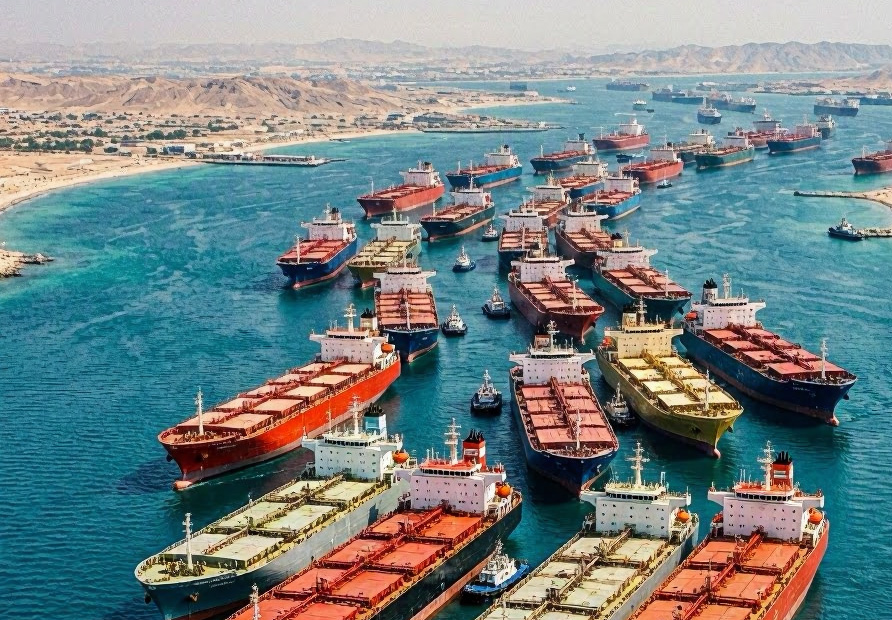
Oil
tankers
crowd
the
Strait
of
Hormuz
as
global
shipping
delays
ripple
across
trade
routes.
(AI
image) |
|
|
|
|
|
 |
 |
 |
|
|
|
|
|
|
|
|
|
|
| |
Trump
Iran
Deal
Nears as
Strait
of
Hormuz
Tensions
Keep
Region
on Edge
Daoud
Al-Jaber
- Middle
East
Affairs
Analysis
Tell Us
Worldwide
News
Network
DOHA,
QATAR -
Washington
and
Tehran
are
edging
toward a
deal
that
could
halt a
widening
war, but
the
agreement
remains
unfinished
and
fragile,
with the
Strait
of
Hormuz
at the
center
of the
standoff.
President
Donald
Trump
has said
the
framework
is
largely
negotiated,
yet
officials
on both
sides
continue
to
signal
that
major
disputes
over
enforcement,
sanctions
relief
and
Iran’s
nuclear
program
still
have to
be
resolved.
The
negotiations
appear
to be
moving
in
phases:
first, a
stop to
the
fighting;
then, a
reopening
of the
Strait
of
Hormuz;
and only
after
that, a
broader
process
meant to
settle
the
deeper
political
and
security
issues.
That
sequencing
matters
because
the
maritime
choke
point is
not just
a
shipping
lane,
but a
pressure
point
that has
helped
define
the pace
of the
crisis.
For now,
the
strait
remains
a live
flash
point.
Recent
reporting
has
described
seizures,
attacks
and
heavy
naval
friction
in the
waterway,
underscoring
how
quickly
the
situation
could
turn if
diplomacy
breaks
down.
Any deal
that
leaves
shipping
vulnerable
would be
more
ceasefire
than
settlement,
and both
sides
know it.
What
remains
unresolved
is the
hard
core of
the
conflict:
Iran’s
enrichment
program,
the
scale
and
timing
of
sanctions
relief,
and the
question
of
whether
Washington
is
prepared
to
accept a
verified
rollback
rather
than a
temporary
pause.
Iran,
for its
part, is
seeking
guarantees
that
economic
pressure
will
ease and
that the
military
threat
will
recede,
while
the U.S.
is
pressing
for
enforceable
limits
and
inspections
that
cannot
be
easily
reversed.
If the
talks
fail,
both
sides
have
already
laid
down
markers
for
escalation.
U.S.
officials
have
publicly
discussed
military
options
ranging
from
airstrikes
to
maritime
interdiction
and
other
limited
operations
meant to
restore
leverage,
while
Iran has
warned
that it
could
retaliate
against
U.S.
forces
and
shipping
and
intensify
pressure
in the
Strait
of
Hormuz.
That is
why the
current
diplomacy
is best
understood
not as a
clean
path to
peace,
but as a
race
between
negotiation
and
deterrence.
The
coming
days
will
likely
determine
whether
the
parties
can turn
a
tentative
framework
into
something
that
holds,
or
whether
the
region
slips
back
into a
cycle of
strikes,
blockade
threats
and
retaliation.
For now,
the most
important
fact is
that
neither
side has
yet
secured
what it
wants
most:
Iran
wants
relief
without
capitulation,
and
Washington
wants
compliance
without
another
open-ended
war.
|
|
|
|
|
|
|
|
|

 I
HI TECH NEWS
I
SPORTS
I
I
HI TECH NEWS
I
SPORTS
I