|
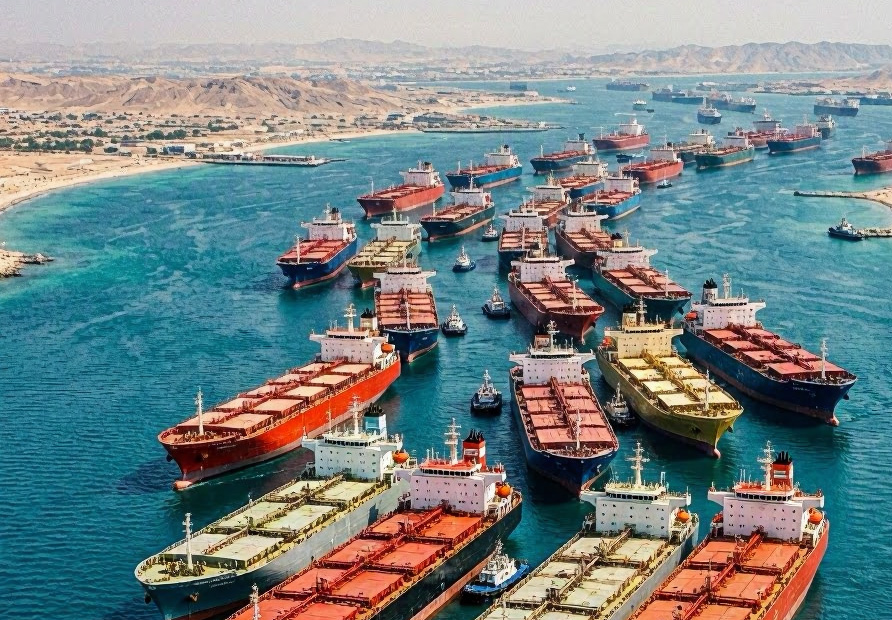
Oil
tankers
crowd
the
Strait
of
Hormuz
as
global
shipping
delays
ripple
across
trade
routes.
(AI
image) |
|
|
|
|
|
 |
 |
 |
|
|
|
|
|
|
|
|
|
|
| |
Trump
Says
Iran
Deal Is
'Largely
Negotiated.'
Tehran
Says
Otherwise.
Daoud
Al-Jaber
- Middle
East
Affairs
Analysis
Tell Us
Worldwide
News
Network
WASHINGTON
— Nearly
three
months
after
U.S. and
Israeli
warplanes
opened
the
latest
chapter
in
America's
long
confrontation
with
Iran, a
deal to
end the
war has
never
seemed
closer —
or more
elusive.
On
Saturday,
President
Donald
Trump
announced
on
social
media
that an
agreement
was
"largely
negotiated,"
promising
it would
reopen
the
Strait
of
Hormuz
and end
a
conflict
that has
rattled
global
energy
markets
since
the
first
strikes
on
February
28. By
Sunday,
his own
team was
walking
it back.
A senior
administration
official
told NBC
News the
agreement
would
not be
signed
Sunday,
though
"progress"
had been
made.
Trump
himself
said he
would
not
"rush
into a
deal"
after
senior
Republican
lawmakers
warned
that
doing so
could be
a
"disastrous
mistake."
It is a
pattern
that has
become
familiar
to
anyone
who has
followed
this
conflict
from the
beginning.
Since
originally
claiming
the war
would be
over in
a matter
of days,
Trump
has
repeatedly
announced
the
conflict
is
nearing
an end,
amid a
fragile
ceasefire,
only for
talks to
fall
through.
Each
announcement
has been
accompanied
by
Iranian
denials.
Each
round of
optimism
has
curdled
into
stalemate.
This
time may
be
different
— or it
may not.
What is
taking
shape,
according
to
officials
on both
sides
and the
mediators
threading
between
them, is
a
memorandum
of
understanding
— a
preliminary
framework,
not a
final
peace.
The
agreement
being
discussed
would
involve
a 60-day
ceasefire
extension
during
which
the
Strait
of
Hormuz
would be
reopened,
Iran
would be
able to
freely
sell
oil, and
negotiations
would be
held on
curbing
Iran's
nuclear
program.
The
draft
MOU
includes
commitments
from
Iran to
never
pursue
nuclear
weapons
and to
negotiate
over a
suspension
of
uranium
enrichment
and the
removal
of its
stockpile
of
highly
enriched
uranium.
The
American
position,
stripped
of
diplomatic
language,
amounts
to
sequenced
coercion.
One U.S.
official
put it
plainly:
"No
dust? No
dollars.
As the
Strait
opens,
the
blockade
loosens
proportionately"
—
describing
the
approach
as
"trust
but
verify
on
steroids."
Secretary
of State
Marco
Rubio,
speaking
from New
Delhi,
said
"significant
progress,
although
not
final
progress"
had been
made,
and that
the
world
would no
longer
need to
fear
Iran
obtaining
a
nuclear
weapon —
without
elaborating
on how
that
assurance
would be
enforced.
Tehran's
response
was
swift
and
pointed.
Iran's
embassy
in India
fired
back on
social
media,
saying
the
country
had an
"inalienable"
right to
nuclear
technology.
Iranian
President
Masoud
Pezeshkian
offered
a softer
formulation,
telling
state
television
his
government
was
ready
"to
assure
the
world
that we
are not
after a
nuclear
weapon"
—
language
calibrated,
as it
always
is in
Tehran,
to say
something
without
conceding
anything.
The
central
fault
line of
these
negotiations
has not
shifted
since
the war
began:
Washington
wants
Iran's
highly
enriched
uranium
removed
and its
nuclear
infrastructure
dismantled
or
neutered;
Tehran
insists
the
nuclear
question
is
separate
from any
ceasefire
arrangement
and can
only be
addressed
after
hostilities
formally
end.
A senior
Iranian
source
told
Reuters
that
Tehran
had not
agreed
to hand
over its
highly
enriched
uranium
stockpile,
and that
the
nuclear
issue
was not
part of
any
preliminary
agreement.
Iranian
state
media
dismissed
Trump's
announcement
as
"incomplete
and
inconsistent
with
reality."
The
Strait
of
Hormuz
has
proven
equally
contentious.
Rubio
accused
Iran of
attempting
to
create a
tolling
system
that
would
charge
commercial
vessels
for
passage
through
the
waterway,
warning
that if
such a
precedent
were set
in the
Strait,
it would
be
replicated
at
strategic
chokepoints
around
the
world.
Iran's
state
media,
meanwhile,
reported
that
under
the
terms of
the
latest
draft,
the
Strait
would
remain
under
Iranian
management
—
directly
contradicting
Washington's
insistence
that the
waterway
be
freely
reopened.
As of
Sunday,
roughly
240
ships
were
waiting
for
Iranian
permission
to pass
through
the
Strait,
according
to the
IRGC
Navy —
though
the
Guards
said
they had
authorized
33
vessels,
including
oil
tankers,
to
transit
in the
previous
24
hours.
The
passage
of those
ships,
conditional
and
controlled,
illustrated
the
central
tension
in the
talks:
Iran has
no
intention
of
relinquishing
leverage
it has
never
previously
held.
What
makes
this
moment
different
from
prior
impasses
is the
degree
to which
both
governments
face
mounting
pressure
to close
something.
U.S.
officials
said
Washington
understood
that
Iran's
Supreme
Leader
had
endorsed
the
broad
template
of the
deal,
though
there
was no
immediate
confirmation
from
Tehran.
The
Trump
administration
is
acutely
aware
that
midterm
elections
loom
later
this
year,
and an
unresolved
war of
its own
making
is not a
comfortable
political
position.
Iran's
calculus
is
equally
stark.
Its
economy
has been
in
crisis
for
years;
the
strikes
on its
nuclear
facilities
have
left its
deterrent
capacity
uncertain;
and the
naval
blockade
imposed
on April
13 has
severed
a
critical
artery
of
revenue.
The
question
is not
whether
Tehran
wants
relief —
it is
how much
it is
prepared
to
surrender
to
obtain
it.
Looming
over all
of it is
Israel.
Netanyahu's
government
has
signaled
that if
the
diplomatic
framework
fails to
meet its
standards,
Israel
is fully
prepared
to
resume
and
expand
military
operations
independently.
That
threat
is not
idle; it
is, in
effect,
the
ceiling
on any
deal
Washington
can
offer
Tehran.
Pakistani
Foreign
Minister
Ishaq
Dar, one
of the
key
mediators,
offered
the most
measured
assessment:
the
negotiations,
he said,
provide
"grounds
for
optimism
that a
positive
and
durable
outcome
is
within
reach."
In the
diplomacy
of the
Middle
East,
that is
about as
close to
a
guarantee
as
anyone
gets.
|
|
|
|
|
|
|
|
|

 I
HI TECH NEWS
I
SPORTS
I
I
HI TECH NEWS
I
SPORTS
I