| |
U.S.,
Iran
Exchange
Strikes
as
Weeks-Long
Lull in
Fighting
Ends
Daoud
Al-Jaber
- Middle
East
Affairs
Analysis
Tell Us
Worldwide
News
Network
WASHINGTON
—
WASHINGTON
— The
United
States
and Iran
traded
fresh
military
attacks
across
the
Middle
East
this
week,
ending a
weeks-long
lull in
their
six-month
conflict
and
renewing
fears of
a wider
regional
war and
disruption
to oil
shipments
through
the
Strait
of
Hormuz.
U.S.
Central
Command
said
American
forces
completed
strikes
Tuesday
against
Islamic
Revolutionary
Guard
Corps
targets
in Iran,
including
air-defense
sites,
radar
systems,
maritime
assets,
mine-laying
capabilities
and
communications
facilities.
The
Pentagon
said the
action
followed
alleged
Iranian
attempts
to
target
commercial
shipping
in the
Strait
of
Hormuz
and U.S.
personnel
deployed
in the
region.
Iran
responded
with
missile
and
drone
attacks
against
U.S.-linked
sites
and
regional
partners.
Iranian
officials
said
they had
struck
U.S.
assets
in
Jordan
and
Iraq,
while
reports
also
indicated
attacks
or
attempted
attacks
involving
Bahrain,
Kuwait
and the
Kurdistan
Region
of Iraq.
The
latest
escalation
followed
a U.S.
strike
Sunday
on Larak
Island
in
southern
Iran and
Iranian
missile
launches
toward a
base
housing
American
personnel
in
Jordan.
The
exchange
marked
the
first
major
round of
fighting
since
July,
after an
interim,
Pakistan-mediated
agreement
in June
had
reduced
large-scale
hostilities
without
resolving
the
underlying
dispute.
Iranian
authorities
said
U.S.
attacks
had
killed
civilians,
including
five
people
at a
wedding
near
Sirik on
the
Strait
of
Hormuz,
and
wounded
dozens
more.
The
United
States
had not
publicly
confirmed
that
account.
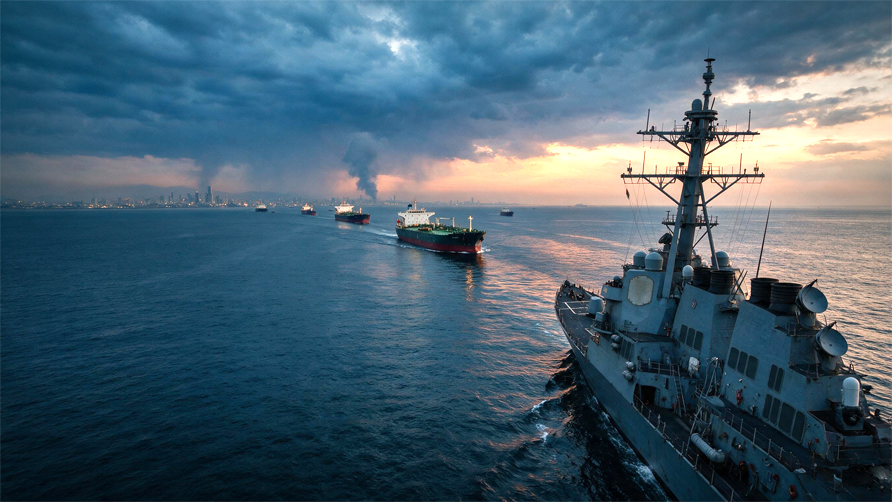
The
strategic
waterway
remains
at the
center
of the
confrontation.
Iran has
threatened
or
impeded
tankers
moving
through
the
strait,
while
Washington
has
cited
risks to
commercial
shipping
as a
principal
reason
for its
latest
military
action.
The
renewed
fighting
pushed
oil
prices
higher
amid
concern
that a
prolonged
conflict
could
further
restrict
energy
flows
from the
Gulf.
The
current
conflict
began
Feb. 28,
when the
United
States
and
Israel
struck
Iran’s
nuclear
and
military
infrastructure
after
Tehran
rejected
U.S.
demands
to end
all
uranium
enrichment.
A June
agreement
temporarily
halted
broad
fighting
and
contemplated
reopening
the
Strait
of
Hormuz,
but the
core
disputes
— Iran’s
nuclear
program,
sanctions
relief
and
maritime
security
—
remained
unresolved.
President
Donald
Trump
warned
that
additional
U.S.
strikes
could
follow
if Iran
continued
retaliatory
attacks.
Tehran,
meanwhile,
portrayed
the
latest
U.S.
campaign
as an
escalation
and
vowed
further
responses,
leaving
prospects
for
renewed
negotiations
uncertain.
Russia
has
reportedly
stepped
up
support
for
Iran,
chiefly
through
satellite-derived
intelligence
that
could
help
Tehran
track
U.S.
troop,
ship and
aircraft
movements.
U.S.
intelligence
reporting
cited by
CNN said
Moscow
had
shared
imagery
from its
overhead-satellite
network
with
Iran.
Analysts
also
have
reported
Russian
transfers
or
potential
transfers
of
air-defense
equipment,
drones,
drone
components,
weapons
expertise
and
electronic-warfare
guidance.
Russia
has
publicly
sent
humanitarian
supplies,
including
medicines
and
food, to
Iran.
Russia
and Iran
have a
strategic-partnership
agreement,
but it
does not
include
a
mutual-defense
obligation.
Moscow
has not
publicly
committed
combat
troops
or
directly
entered
the
fighting
on
Iran’s
behalf.
The
reported
intelligence
support
could
improve
Iran’s
ability
to
locate
and
target
U.S.
military
assets
while
allowing
the
Kremlin
to
assist
Tehran
without
risking
a direct
Russia-U.S.
military
confrontation.
The
relationship
also
reflects
a
reversal
from
earlier
in the
war in
Ukraine,
when
Iran
supplied
Russia
with
Shahed
drones
and
related
assistance.
|




 I
HI TECH NEWS
I
SPORTS
I
I
HI TECH NEWS
I
SPORTS
I