|
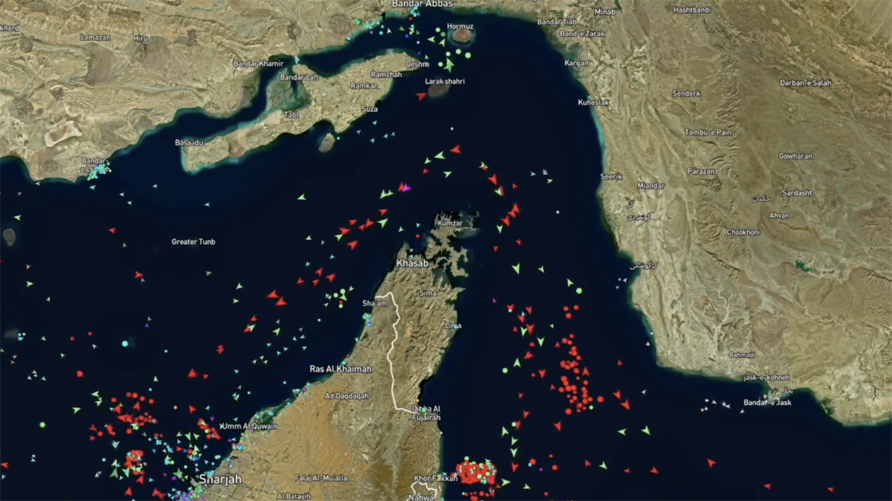
The
strategically
vital
Strait
of
Hormuz —
through
which
roughly
one-fifth
of
global
oil
supplies
pass —
has been
the
focal
point of
a
weeks-long
standoff
between
Washington
and
Tehran. |
|
|
|
|
|
|
 |
 |
 |
|
|
|
|
|
|
|
|
|
|
| |
U.S.-Iran
Ceasefire
Holds on
Paper as
Israel
Keeps
Raising
the
Stakes
Daoud
Al-Jaber
- Middle
East
Affairs
Analysis
Tell Us
Worldwide
News
Network
WASHINGTON/TEHRAN
- The
war
between
the
United
States
and Iran
is no
longer
moving
in a
straight
line. It
has
become a
three-way
contest
of
pressure,
restraint,
and
escalation,
with
Israel
acting
as the
most
unpredictable
force in
the room
and the
Strait
of
Hormuz
standing
as the
region’s
most
dangerous
pressure
valve.
A
provisional
ceasefire
may
exist on
paper,
but in
practice
the
region
remains
on edge.
Over the
past
several
days,
Israeli
strikes
and
warnings
have
complicated
efforts
by
Washington
and
Tehran
to
stabilize
the
conflict,
while
fighting
in
Lebanon
and
across
other
fronts
has kept
the risk
of wider
war very
much
alive.
For the
Trump
administration,
the goal
is to
force
Iran
into a
broader
settlement
that
reins in
its
nuclear
and
military
ambitions
while
keeping
the Gulf
open and
avoiding
a
regional
economic
shock.
But that
effort
is being
undercut
by the
reality
that
Israel
is not
following
a
predictable
timetable,
instead
pursuing
its own
battlefield
logic
shaped
by
security
fears,
the
fight
against
Hezbollah,
and a
belief
that
pressure
now may
create
leverage
later.
Iran,
for its
part, is
trying
to use
the
uncertainty
to its
advantage.
Tehran
may be
willing
to
accept a
pause in
the
fighting,
but it
also
wants
terms
that
protect
its
interests
and
preserve
its
regional
stature.
The
problem
is that
even if
Iran can
negotiate
with
Washington,
it
cannot
fully
control
Israel’s
next
move,
and any
new
strike
can
quickly
force
Tehran
to
decide
between
restraint
and
retaliation.
That is
where
Hormuz
becomes
central.
The
Strait
of
Hormuz
is not
just a
shipping
lane; it
is the
war’s
economic
choke
point,
through
which
roughly
a fifth
of
globally
traded
oil
moves.
Any
sustained
disruption
there
would
not only
hit Gulf
states
and
energy
exporters,
but also
ripple
into
fuel
prices,
shipping
costs,
insurance
rates,
manufacturing,
and
inflation
around
the
world.
In
regional
terms,
Hormuz
is the
hinge
between
war and
stability.
Even the
threat
of
closure
can
rattle
markets,
because
traders
are not
just
pricing
barrels
— they
are
pricing
fear.
Gulf
states
that
depend
on
uninterrupted
shipping
face
immediate
exposure,
while
refiners,
port
operators,
and
freight
companies
across
the
region
have to
plan for
delays
and
rerouting.
The
larger
strategic
picture
remains
unresolved.
The
United
States
has not
secured
the
decisive
result
it
wanted,
Iran has
not won
the
relief
it
sought,
and
Israel
has not
shown
any sign
that it
is
prepared
to stop
shaping
the
conflict
through
force on
its own
terms.
What
remains
is a
dangerous,
crowded
war zone
in which
ceasefire
language,
battlefield
reality,
and
regional
rivalry
no
longer
line up
neatly.
|
|
|
|
|
|
|
|
|

 I
HI TECH NEWS
I
SPORTS
I
I
HI TECH NEWS
I
SPORTS
I